هذا المحتوى متاح حالياً باللغة الإنجليزية فقط — الترجمة ليست جاهزة بعد.
The $105 Paradox: Why Brent Is Falling While Tankers Go Dark in Hormuz
A regional war should be sending oil to the moon. Instead, Brent slipped to $105.84. The market is telling us something — and it isn't reassuring.
Brent crude closed at $105.84 a barrel on Wednesday, down $1.61 on the day. WTI followed it lower to $101.28. If you read nothing else this morning, read those two numbers again — and then read the headlines sitting on top of them.
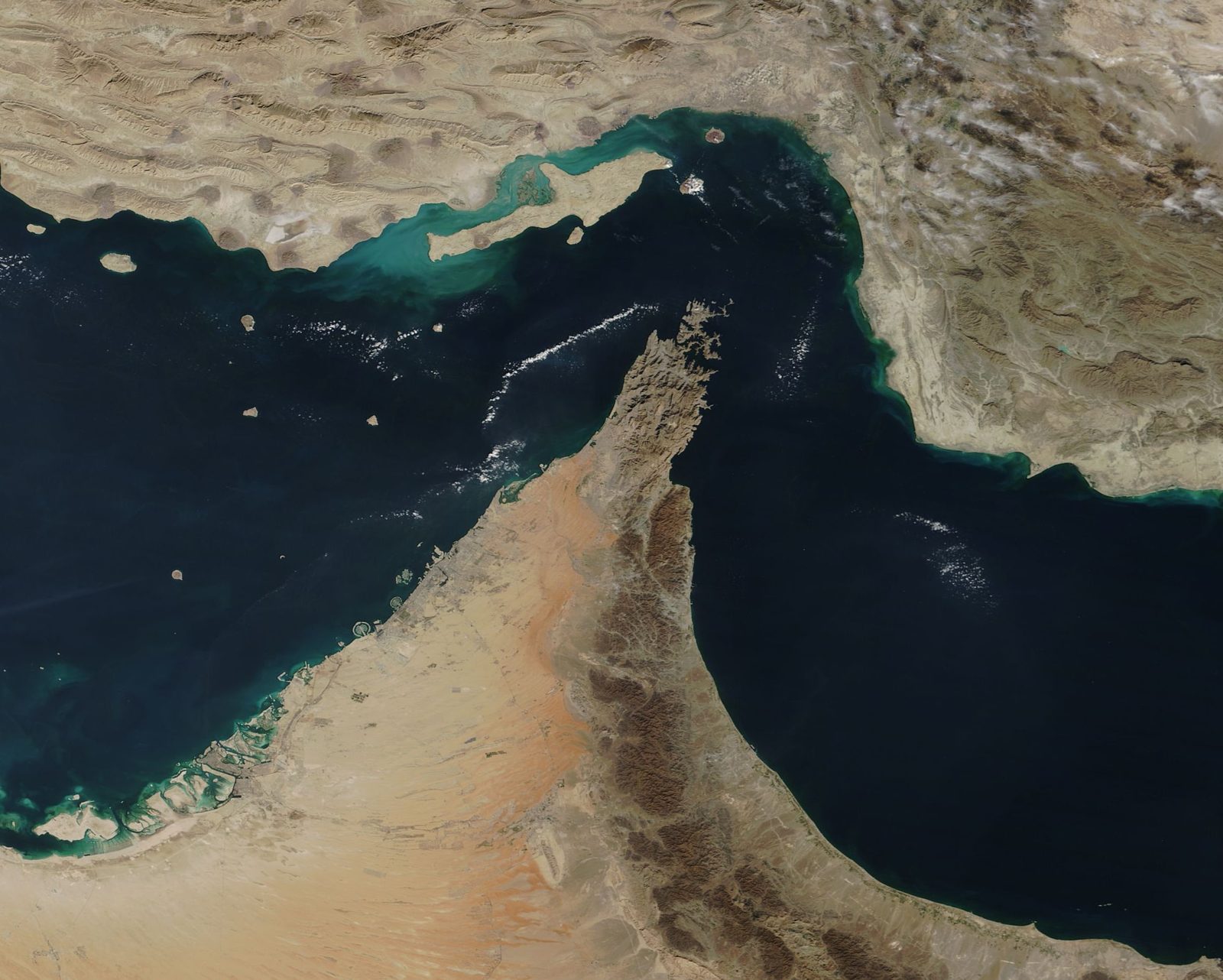
Qatar has asked LNG vessels at its key export hub to go dark for safety reasons. A second Qatari LNG tanker has just successfully transited the Strait of Hormuz to Pakistan. Reuters is reporting, citing sources, that Saudi Arabia launched covert attacks on Iran as the regional war widened. The Guardian and CBS confirm Benjamin Netanyahu made a secret trip to the UAE at the height of the conflict.
And yet, oil is falling.
For the better part of my fourteen years trading the Gulf energy markets, I was taught a simple heuristic: when missiles fly near Hormuz, you buy crude and you don't ask questions until Monday. That heuristic is broken this week. Understanding why it broke is the most important exercise a Gulf investor, a Russian exporter, or a Pakistani importer can do right now.
Let me try to unpack it forensically.
The first thing to notice is what the price is NOT doing. We are in the middle of what the international press is openly calling a regional war. Saudi and Emirati involvement is now on the front page of Newsweek and Reuters. A sitting Israeli prime minister is reportedly shuttling to Abu Dhabi in secret. Qatar — the single most important LNG exporter on the planet — is telling tankers to switch off their transponders inside its own waters. Any one of these stories, in a normal decade, would have been worth ten dollars on Brent by lunchtime.
Instead, Brent is down 1.5% on the session and trading with a $105 handle. That is not a war premium. That is a war premium that has already been bled out.
The second thing to notice is what is happening underneath the headline price. US weekly crude production printed at 13.71 million barrels per day for the week ending May 8. That is, by any historical standard, an enormous number. American shale is not blinking. If anything, the producer response to elevated prices over the past several quarters has been textbook: drill, hedge, ship.
"The market has stopped pricing the war as a tail risk and started pricing it as a known cost of doing business — and that is a far more dangerous regime than panic."
That is the line I keep coming back to this week. Panic is loud and self-correcting. Resignation is quiet and structural.
The third thing — and this is where my Gulf readers should lean in — is the behaviour of the regional anchors. The Saudi riyal sits exactly where it always sits, at 3.7500 to the dollar. The dirham is glued to 3.6725. SAMA and the CBUAE are doing what they are paid to do: absorbing the noise so that the rest of the economy doesn't have to hear it. The Tadawul closed at 11,020.07, down a modest 0.28%. That is not a market in crisis. That is a market that has decided the adults are still in the room.
Gold tells a more interesting story. At $4,688.79 an ounce — even after slipping $23 on the day — we are at levels that historically would only have been justified by a full-blown systemic event. Some of that is the multi-year debasement trade. Some of it is central bank accumulation across the BRICS bloc. But a non-trivial slice of it, in my reading, is the hedge that institutional money has put on AGAINST the very calm we are seeing in oil and equities. Somebody, somewhere, does not believe the quiet.
Now let me address the LNG question directly, because it is the one my Doha-based readers have been emailing me about.
The Bloomberg and OilPrice reports indicate Qatar has asked vessels at its key LNG port to go dark — meaning, in practical terms, to disable their Automatic Identification System transponders. This is not a minor request. AIS is the backbone of maritime traffic safety, insurance underwriting, and commodity flow tracking. Asking ships to switch it off is the maritime equivalent of asking pilots to fly without transponders through a busy corridor. It is done only when the perceived threat from being visible exceeds the very real threat of collision.
The fact that a second Qatari LNG tanker has successfully crossed Hormuz to Pakistan, per Reuters, tells us two things simultaneously. One: the corridor is still functioning. Two: every successful transit is now news, which means the baseline assumption has shifted from "these ships move" to "these ships might not."
For Pakistan — a country whose power grid runs on imported gas in summer — that distinction is existential. For Qatar, whose entire fiscal model is built on uninterrupted LNG outflow, it is the central question of the year. And yet, again, the global price of energy is falling on the week.
Why?
My working hypothesis has three legs.
Leg one: US shale is doing exactly what it was designed to do. At 13.71 million bpd, American production is functioning as the world's swing supply in real time. Every barrel that doesn't leave Ras Tanura is being replaced, at the margin, by a barrel out of the Permian. The geographic risk premium has been arbitraged down by the physical response of North American producers.
Leg two: demand expectations have quietly softened. I won't put a number on it because I don't have one I trust, but the macro tone out of China and Europe over recent months has been, charitably, ambiguous. A war that would normally add $15 to Brent is being offset by a demand outlook that has quietly subtracted $10.
Leg three — and this is the uncomfortable one — the market has begun to assume that the major Gulf producers WANT prices contained. A Saudi Arabia that is, according to DW's framing, watching Vision 2030 strain under the weight of regional conflict has every incentive to ensure that the global economy keeps buying its barrels at a price that doesn't trigger a Western recession. Riyadh is not OPEC's swing producer by accident. It is the swing producer because, in moments exactly like this one, it chooses to be.
So where does that leave us?
The ruble at 73.47 is, frankly, the data point I find most telling. A Russian currency this firm, with oil this soft, tells you that the CIS export complex is still functioning, sanctions architecture notwithstanding. The CIS economies I cover are not, at this moment, in stress. They are in a holding pattern, and the holding pattern is being subsidised by Asian demand for discounted barrels.
For the GCC investor, the playbook this week is unglamorous. The pegs hold. The Tadawul is doing what mature markets do in geopolitical noise — drifting, not diving. Gold remains the insurance policy of choice for those who suspect the calm is borrowed rather than earned.
For the policymaker, the question is sharper. If a shooting war involving four regional powers, a closed-transponder LNG corridor, and confirmed covert strikes cannot move Brent above $110, then the old assumptions about energy as a strategic lever need to be retired. The lever still exists. It just requires far more force to move than it used to.
And for the ordinary reader — the one who wants to know whether the petrol pump and the grocery aisle are about to get more expensive — the honest answer this week is: probably not yet. The market has decided, for now, that the war is a manageable cost. The market has been wrong before.
The question I am sitting with this Sunday is this: if Brent cannot rally on THIS news flow, what news flow, exactly, would be required to break $115 — and would we want to be around to see it?