This story is currently available in Englisch only — a translation isn't ready yet.
IMF: Oil at $130 a barrel will cut Uzbekistan's economic growth by 0.5 pp
The fund's baseline scenario is $96 a barrel this year and $86 next year; the alternative scenario assumes a further drop in global production of 4 million barrels per day
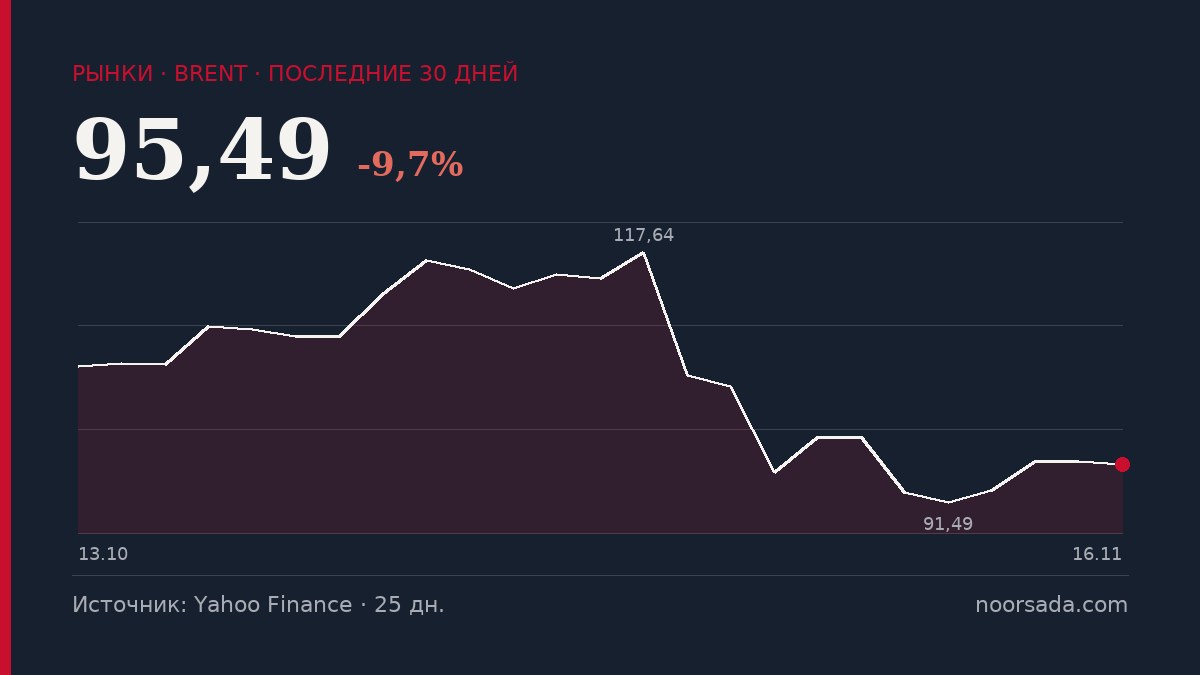
A prolonged conflict in the Middle East and a rise in the Brent price to $130 a barrel could reduce Uzbekistan's economic growth by 0.5 percentage points relative to the baseline forecast — this scenario is set out in the International Monetary Fund's regional economic outlook for the Caucasus and Central Asia, presented at the Central Bank of Uzbekistan.
The IMF's baseline scenario assumes the conflict ends and world oil prices decline: the average Brent price is projected at $96 a barrel this year and $86 next year, and energy supplies through the Strait of Hormuz are expected by the fund to return to pre-conflict levels by the third quarter of 2027.
Roberto Cardarelli, Assistant Director of the IMF's Middle East and Central Asia Department, noted that growth in the region remains resilient but will gradually slow to its potential level; remittances and strong growth in real credit are supporting activity.
The alternative scenario assumes Brent at $130 in 2026 and a further reduction in global oil supply of 4 million barrels per day. Exporters — Azerbaijan, Kazakhstan and Turkmenistan — could benefit from high prices, whereas for energy importers such as Uzbekistan growth will slow by about 0.5 percentage points.
"0.5% is not a huge figure, but the shock is not huge either... Nevertheless, it is significant," said Cardarelli. At the start of the conflict he had feared prices would rise to $200 a barrel, but no such increase occurred.
IMF economist Carmen reported that since the start of the war inflation has risen in Kyrgyzstan, Georgia and Tajikistan and declined in Uzbekistan and Kazakhstan; Cardarelli linked this to the tightest monetary policy in those two countries.
A separate study by the fund showed that with low central bank independence, a shock to global supply chains raised inflation by 6.3% over two years, while with high independence it raised it by 1.5%. The IMF warned that future external shocks could hit countries with small credit markets harder — Uzbekistan, Tajikistan and Kyrgyzstan.
IMF Senior Economist Florian Misch noted that the region is comparable to the rest of the world in the diversification of export markets and import sources, but lags in the diversity of goods it exports: most countries have not achieved significant progress here in 20 years. According to the fund's calculations, export subsidies and industrial support measures require significant spending but have little effect on diversification; structural reforms — labor market flexibility and higher spending on education — are more effective.
In conclusion, Cardarelli said that changes in the global trade system offer the region more opportunities than threats, and named the development of the Middle Corridor and rail links with China as promising.
Sources — how we know this
- PrimaryUzDaily
Energy Portfolio
Check your broker for the latest on energy stocks.
View Now →