This story is currently available in Englisch only — a translation isn't ready yet.
Five European Countries Plan to Establish Migrant Deportation Center in Rwanda by 2027
Germany, Denmark, Austria, Greece and the Netherlands say the center targets those who have exhausted legal avenues to stay, and Rwanda speaks of a 'safe, legal and dignified solution'
ℹ️ Browser-Stimme · KI-Studiostimme bald verfügbar
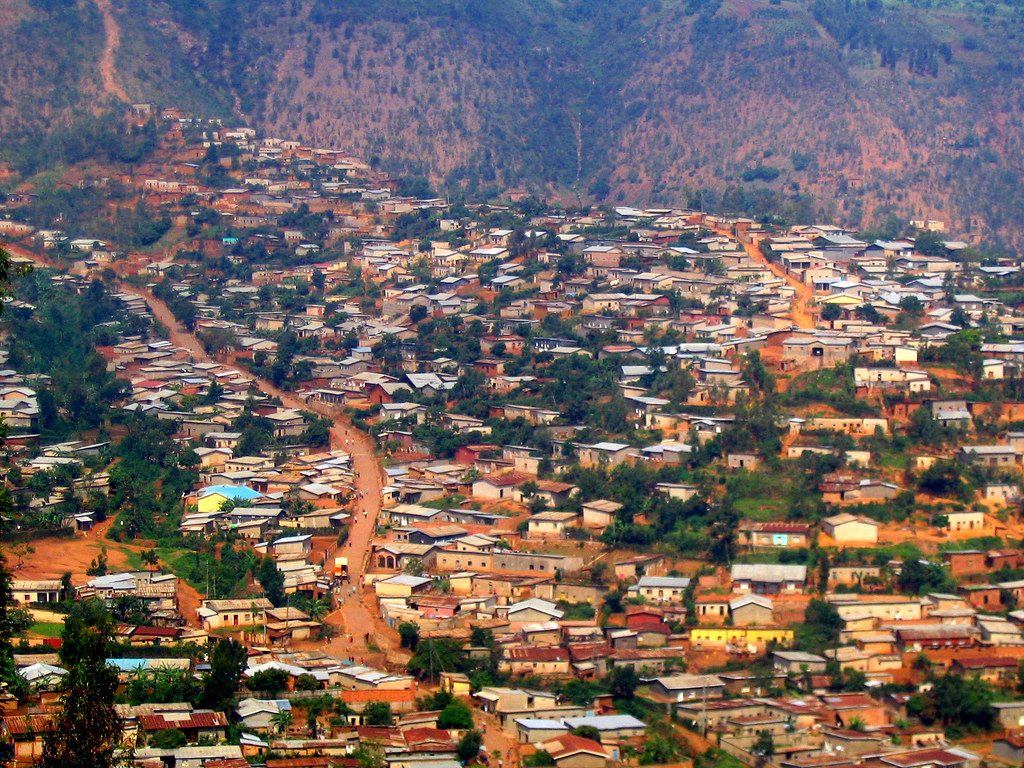
The Dutch and Danish governments announced, in two separate statements, that Germany, Denmark, Austria, Greece and the Netherlands intend to open a 'return center' to receive deported migrants in Rwanda by 2027.
The program applies to migrants residing illegally on the territory of the five countries and subject to deportation orders, and targets those who have exhausted all legal avenues to remain. The Dutch government said the center would provide an alternative in cases where returning migrants to their home countries is not possible, and that the first phase would be limited to 'single men only,' with a Dutch focus on 'people coming from countries located in the same geographic region as Rwanda.'
The program differs from the British agreement that was later cancelled, which had aimed to send migrants to Rwanda to process their asylum claims there; legal challenges prevented its implementation before the Labour government cancelled it in 2024. The British Prime Minister's Office did not rule out the possibility of the United Kingdom joining, indicating that it would follow developments 'with interest.'
In a joint press conference held in Vienna on Monday, Austrian Chancellor Christian Stocker stated that the five countries aim through this step to ease pressure on European asylum systems and to put an end to the activities of smugglers who organize perilous journeys across the Mediterranean. Rwandan Interior Minister Vincent Biruta affirmed his country's commitment to work with European partners to provide 'a safe, legal and dignified solution for migrants,' and to 'correct the global imbalance in economic opportunities,' which he described as 'a main driver of irregular migration.'
Before the announcement, Agence France-Presse reported, citing diplomatic sources, that the center would operate in its first phase as a pilot experiment, hosting about 100 people, with each of the five countries sending about 20 migrants. A spokesperson for the International Organization for Migration said the organization 'has a long history of providing assistance to migrants as they move, including in complex circumstances,' and that it is holding discussions with some EU states 'about plans to establish return centers or similar mechanisms.'
The five countries affirm that the plan to send migrants abroad is consistent with European Union law and international law, while rights organizations warn that it may violate migrants' rights. Clementine de Montjoye, senior researcher on Africa at Human Rights Watch, said Rwanda has 'a documented record of suppressing the opposition, arbitrary detention, and ill-treatment inside detention centers,' adding that paying Kigali to host a deportation program 'will also provide funding and political influence to a government responsible for grave human rights violations,' and will not be limited to inflicting suffering and harm on deportees.
The European Union Agency for Fundamental Rights affirmed that any third country hosting a return center should 'respect fundamental rights,' and stressed the necessity of not sending unaccompanied minors to return centers, which the Dutch government has affirmed will not happen.
According to the border and coast guard agency Frontex, about 110,000 irregular border crossings into the European Union were recorded during the first ten months of 2024, representing a 29 percent decrease compared to the previous year, and in October about 18,100 crossings were detected, roughly 6 percent fewer than October 2023 and 22 percent more than September, largely due to 'a sharp rise in the number of arrivals via the West African route to the Canary Islands.'
Sources — how we know this
- PrimaryBBC Arabic