This story is currently available in Englisch only — a translation isn't ready yet.
Israeli Opposition Secures Parliamentary Majority With Arab Party Support After Knesset Elections
Eisenkot and Lapid coordinate to form a coalition that surpasses Netanyahu by over 500,000 votes, with Arab parties achieving historic representation with 19 seats
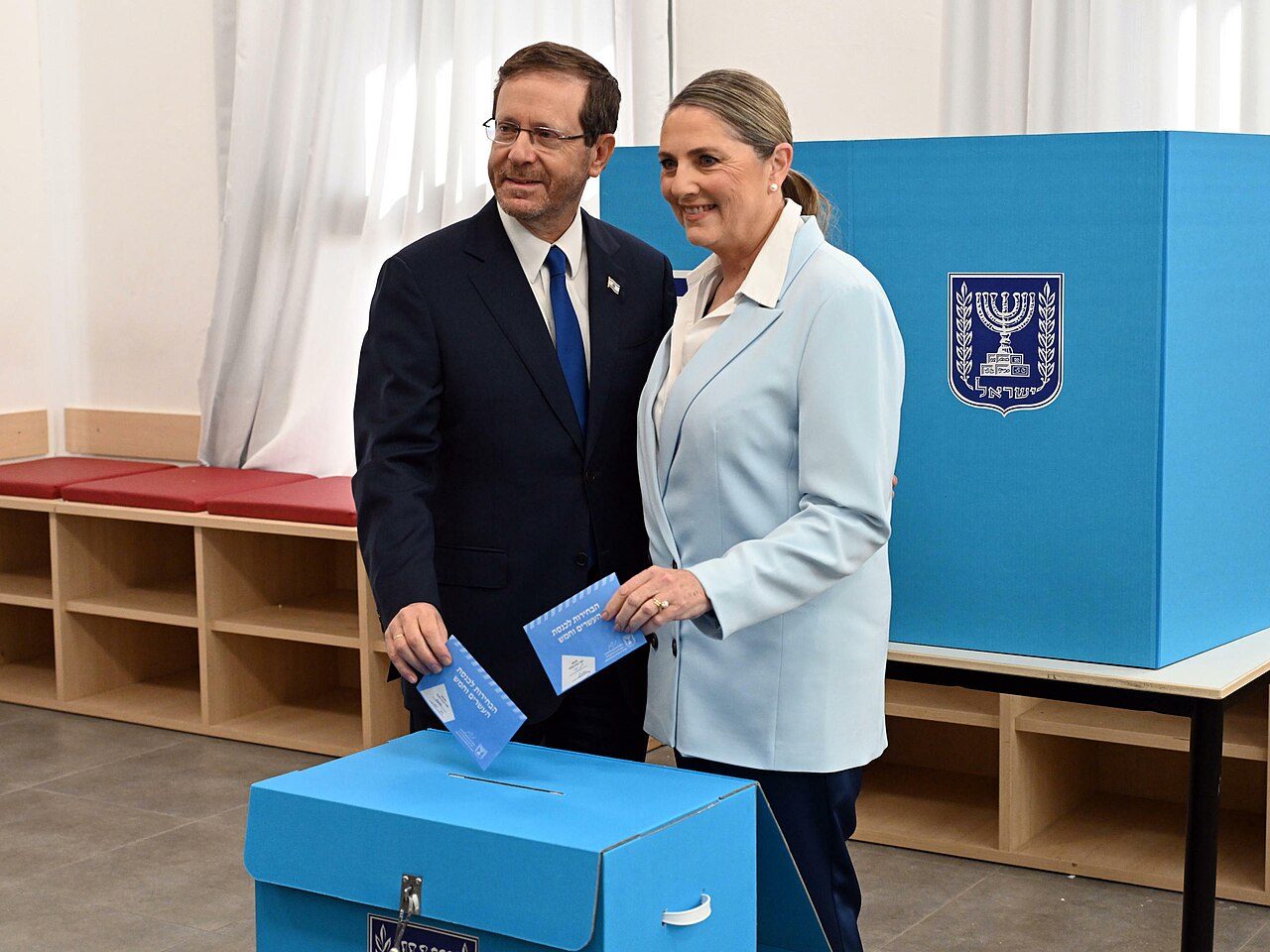
Gadi Eisenkot, leader of the Yisrael Beiteinu party, announced that the Israeli opposition will immediately begin leveraging the parliamentary majority it obtained with the support of Arab parties, following Knesset elections held on October 27 in which 5.6 million voters cast their ballots.
Eisenkot clarified in a written statement that Israeli citizens chose change "by a margin exceeding 500,000 votes" against Netanyahu's government. He pointed to the opposition's parliamentary priorities, which will include establishing a government commission of inquiry into the October 7 events, enacting legislation for mandatory military service that includes the Haredi community (ultra-Orthodox Jews), and repealing what the opposition described as "the coup against an independent judiciary."
On the coordination front between opposition parties, Eisenkot met with Yair Lapid, the number two figure in the Yesh Atid party and former prime minister, in their first publicly announced formal contact since the elections. Lapid wrote on the X platform that they discussed the election results and coordination of upcoming steps "with awareness of shared responsibility to implement the voters' will."
According to preliminary results, Netanyahu's bloc secured 53 seats compared to 48 seats for Eisenkot's bloc, with neither side reaching the 61 seats required to form a government in a Knesset composed of 120 seats.
Parties representing Palestinian citizens of Israel registered a historic figure of 19 seats: 11 seats for the Joint List composed of Hadash, Ta'al, and Balad, and 8 seats for the Ra'am party led by Mansour Abbas. Eisenkot opened the door to the possibility of forming a government with their support, on the condition of recognizing Israel as a Jewish state, commitment to the values of the Declaration of Independence, and classifying Hamas as a terrorist organization.
Eisenkot pointed to reports indicating that U.S. President Donald Trump intends to pressure Netanyahu to form a national unity government, declaring that "the decision to form a government is exclusively for Israeli citizens, without any external interference." Trump for his part had announced that Netanyahu is "in good shape," noting that he has not yet considered engaging in efforts to form a national unity government.
Sources — how we know this
- PrimaryTRT Haber