This story is currently available in Englisch only — a translation isn't ready yet.
Moyale clashes spread to Arero and Washile, and nearly 40,000 Ethiopians have crossed into Kenya
Clashes between Somali Region police and Oromo militias spread to Arero and Washile, mediation between the two administrations fails, and nearly 40,000 have crossed into Kenya
ℹ️ Browser-Stimme · KI-Studiostimme bald verfügbar
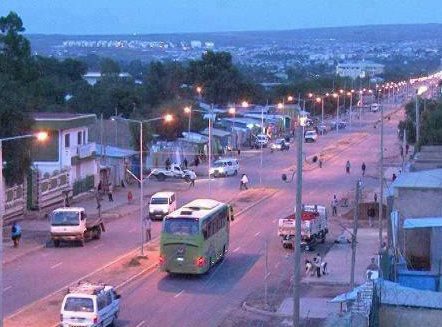
Clashes are continuing in the border town of Moyale in southern Ethiopia, and in the neighboring areas of Arero and Washile, between police forces and armed groups affiliated with the Oromia and Somali regional administrations, disrupting daily life, commercial activity, the livestock trade and transport services in the southern Borana zone.
According to the Armed Conflict Location and Event Data Project (ACLED), the current escalation began on 18 October, when Somali Region police clashed with Oromo militia elements after an office for the regional administration was opened and its flag was raised in a disputed area in Moyale. Jalali Getachew Biru, senior East Africa analyst at ACLED, said that a 13-year-old Oromo girl was killed in the confrontation, with accounts differing over the circumstances of her death between those who say she fell in crossfire and those who say she was killed while trying to lower the flag.
The Ethiopian National Defense Force intervened to stop the initial fighting, and the next day Oromo residents organized a demonstration against the opening of the office and the killing of the girl, closing the main road and forcing shops to shut. Elders and security officials from both sides agreed to lower the Somali Region flag and suspend the opening of the office, but the agreement did not prevent later confrontations; Somali residents demonstrated on 20 October against the arrangement and closed the main road. On 22 October, fighting escalated again between Somali Region police, Oromia police and Oromo militias in several locations in Moyale, and clashes were recorded in Arero and Washile.
A resident of Moyale, who asked not to be named for security reasons, said that nighttime gunfire raised concerns for residents' safety and restricted movement inside the town, and that shops and transport operators were affected.
On the Kenyan side, Musalia Mudavadi, Prime Cabinet Secretary in the Kenyan Presidency Office, said on 9 November that he had spoken with his Ethiopian counterpart and urged Addis Ababa to help restore stability for the return of those who fled to Kenya, putting the number of Ethiopians who crossed the border at about 40,000.
The confrontations stem from long-standing disputes over administrative boundaries, political representation and access to land and natural resources. On 24 October 2004, a referendum was organized to determine the affiliation of 463 small communities on the border between Oromia and Somali, according to the Ethiopian National Election Board, but research by Boku Tache published in a doctoral dissertation in 2008 concluded that the referendum was held in Liban and parts of Arero, and the Moyale file remained unresolved.
Cameron Hudson, a political and security analyst and former director for African affairs at the U.S. National Security Council, said that the crisis reflects broader challenges facing Ethiopia's federal system, and that federal forces are preoccupied with other fronts, pointing to a feeling among Somali communities that Prime Minister Abiy Ahmed and the Prosperity Party favor the Oromo. A security official familiar with the situation in Moyale reported that clashes are continuing and that attempts to reach an agreement between representatives of the two administrations have failed, and that resolving the crisis requires direct and immediate intervention from the federal government.
Sources — how we know this
- PrimaryAl Jazeera English