This story is currently available in Englisch only — a translation isn't ready yet.
Washington Establishes 'Iron Gate Task Force' to Cut Iranian Weapons Transfer Routes by Land and Sea
U.S. Central Command announces a unit of 20 personnel to monitor Iran's seven land borders and the Caspian Sea, while the Islamic Revolutionary Guard Corps rejects it as 'mere wordplay'.
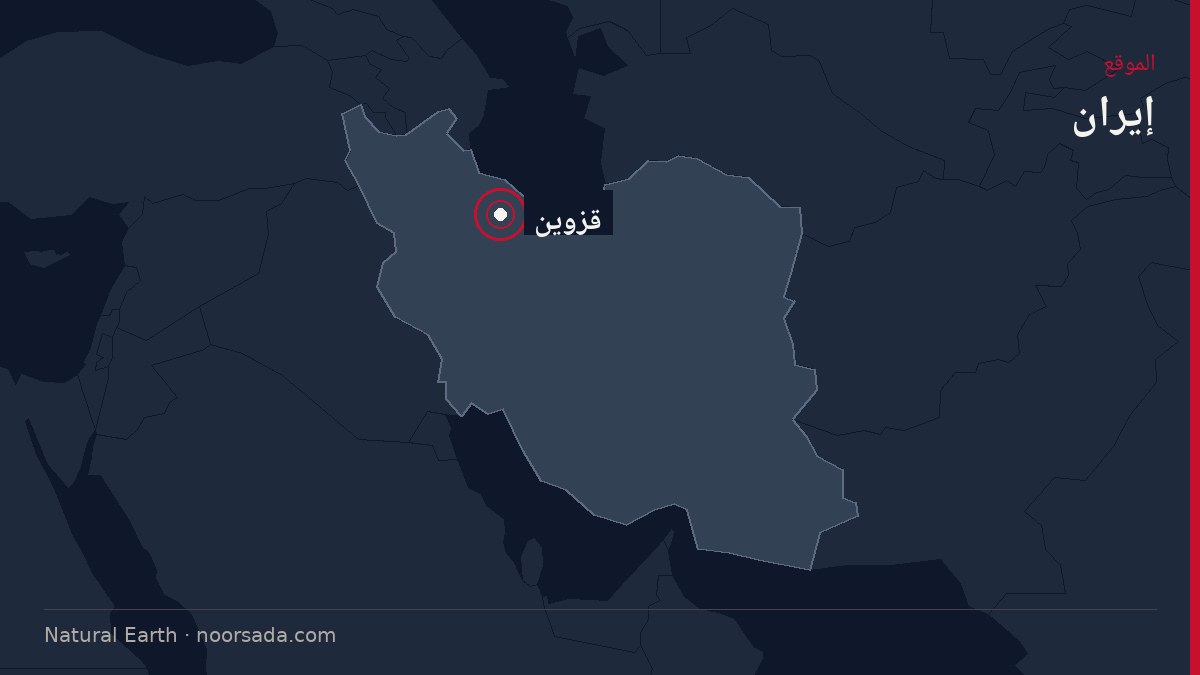
U.S. Central Command (CENTCOM) announced the establishment of the 'Iron Gate Task Force,' a unit comprising 20 civilian and military personnel based in Tampa, Florida, tasked with tracking the movement of advanced weapons, dual-use technologies, and illicit revenues across Iran's land borders and the Caspian Sea.
CENTCOM Commander Admiral Brad Cooper affirmed that the task force will strengthen 'the success of the stringent maritime blockade against Iran at sea,' while former U.S. official Michael Mulroy—deputy assistant secretary of defense for Middle East affairs—described the unit as seeking to determine 'where weapons systems are entering and how they can be cut off' and how Iran transfers its capabilities.
In response, Islamic Revolutionary Guard Corps spokesman Sardar Mohebi rejected the American plan, saying it was 'mere wordplay,' adding that Washington previously claimed Iran would collapse economically within two weeks 'but we have not seen that.'
On the same day, the Islamic Revolutionary Guard Corps announced plans to establish underground facilities capable of continuing production of missiles and unmanned aircraft under bombardment.
Analyst Mahjoub al-Zwayri, professor of history and contemporary politics at Qatar University, believes the task force may 'lead to a confrontation with Russia,' pointing to the absence of any American military presence in the Caspian Sea and the lack of cooperation from neighboring countries such as Azerbaijan and Armenia out of fear of angering Moscow. He notes that the Caspian Sea's share of Iran's economy does not exceed 11 percent.
For his part, Rami al-Khouri, fellow at the American University of Beirut, contends that Washington 'does not fully know what to do about Iran,' citing the network of Iranian commercial relations extending thousands of years into the region and Asia. He pointed out that many components of Iranian weapons are purchased from other countries and transferred through Asian companies.
Former U.S. official Joe Kent described the move as an attempt by CENTCOM to disrupt ongoing diplomatic negotiations, writing on platform X: 'CENTCOM is calling on Iran to escalate while the vice president seeks to negotiate with it.'
Sources — how we know this
- PrimaryAl Jazeera English