This story is currently available in Englisch only — a translation isn't ready yet.
US sends third aircraft carrier to the Middle East, Iran responds: 'We will not wait'
USS Theodore Roosevelt arrived in the region on November 15; CENTCOM announced the ship was sailing in the Indian Ocean, and a retaliation signal came from Iran's Foreign Ministry.
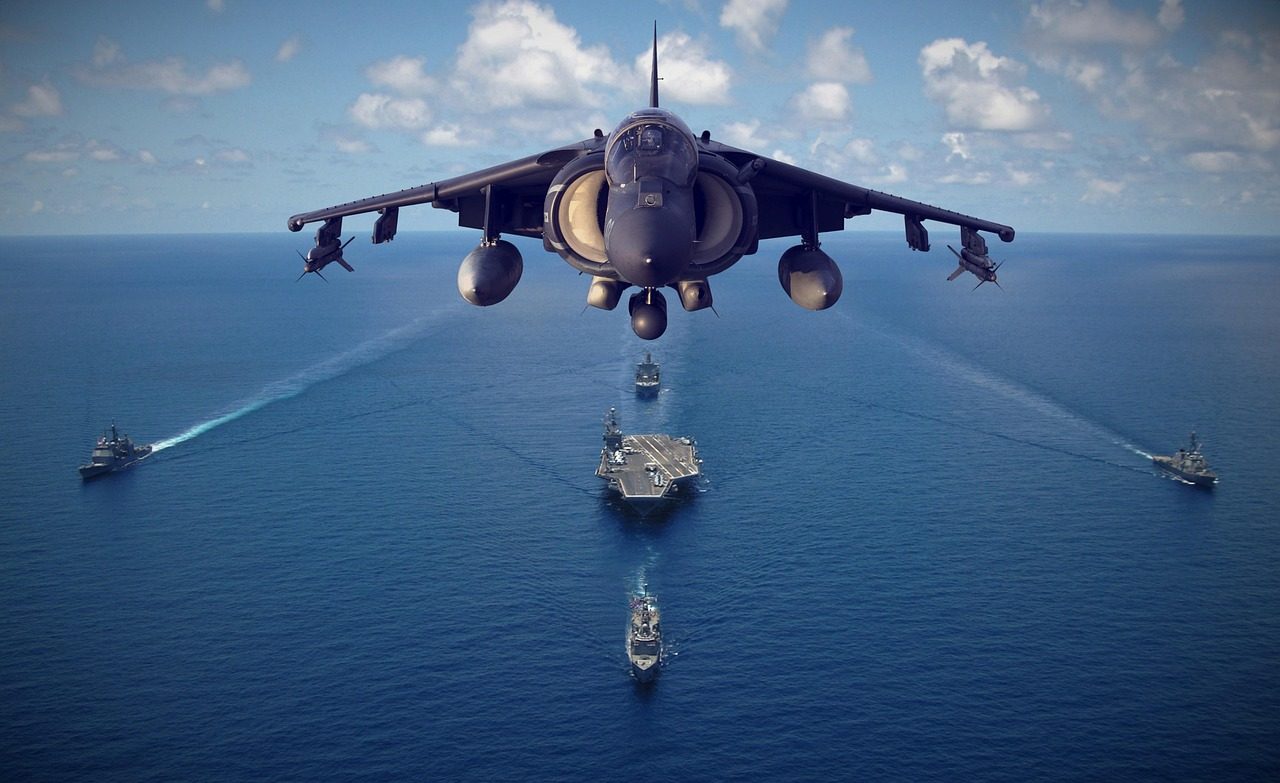
The US nuclear-powered aircraft carrier USS Theodore Roosevelt arrived in the Middle East on November 15, raising the number of US aircraft carriers in the region to three. According to Diken, citing Al Jazeera, US Central Command (CENTCOM) announced on November 16 that the ship had deployed to the region in a post reading: "USS Theodore Roosevelt (CVN 71) is underway in the Indian Ocean."
Two more US aircraft carriers are in the region: USS George Washington and USS George HW Bush. The ship, which entered service in the US Navy in 1975, carries more than five thousand personnel and more than 60 aircraft, including F-18s. The vessel was assigned to the Mediterranean and the Red Sea during the 1990-91 Gulf War and in 2003 to support US airstrikes in the Iraq War.
On November 15, Iran carried out its second drone attack in three days on the US base in Bahrain, close to Iran's own shores. Kazem Gharibabadi, the Iranian Foreign Ministry's deputy for legal and international affairs, said: "We will not wait for the US to act first." Gharibabadi added that "the US is buying time by exploiting diplomatic channels" and that Washington may in the meantime be trying to prepare the ground for a new attack, warning: "Iran is neither like Cuba, which you can blockade, nor Venezuela, which you can force to surrender." Saying that the Islamic Revolutionary Guard Corps is producing missiles "with new ranges," Gharibabadi argued that the US has failed to achieve success in Iran "whether in an air blockade or a land blockade." Iranian Foreign Minister Abbas Araghchi also said that US attacks endanger stability across the entire Middle East and called for regional energy cooperation.
US President Donald Trump said last week, after meeting with the Qatari prime minister, that new military strikes on Iran were "not very likely," adding that the US military was on alert. Trump said he told his chief negotiator and vice president, JD Vance, "We don't need a deal with Iran": "Those days are long gone. We have their money, hundreds of billions of dollars in our hands. We have the (Hormuz) Strait too!" US Secretary of State Marco Rubio, for his part, says economic pressure on Iran will gradually intensify but that there will be no need to resume military operations.
The US has bases in the region, eight of them permanent: Bahrain, Egypt, Iraq, Jordan, Kuwait, Qatar, Saudi Arabia and the United Arab Emirates. As of 2025, between 40,000 and 50,000 US troops were stationed in and around the Middle East. According to open-source intelligence analysts and military flight tracking data, before going to war with Iran the US had deployed more than 120 aircraft to the region from the beginning of February; this was the largest increase in US air power in the Middle East since the Iraq War. Since the start of the war, nearly seven thousand additional troops have been sent to the region.
According to Ali Vaez of the International Crisis Group, both countries are locked on the question of who will pull the trigger first, and both sides believe that acting first is safer. Rashid al-Muhanadi of the Center for International Policy Research said that regional powers such as Pakistan and Qatar have taken on mediation and that the region is clearly opposed to an all-out war. According to al-Muhanadi, the Iranians believe they hold more trump cards, while the Americans believe the opposite. "In such a situation, reaching a diplomatic solution is quite difficult."