This story is currently available in Englisch only — a translation isn't ready yet.
Estonia plans to run its government from the cloud if it is occupied
Tallinn is building a 'doomsday resilience' strategy to keep public services online from data embassies abroad, with a full state backup already in Luxembourg.
ℹ️ Browser-Stimme · KI-Studiostimme bald verfügbar
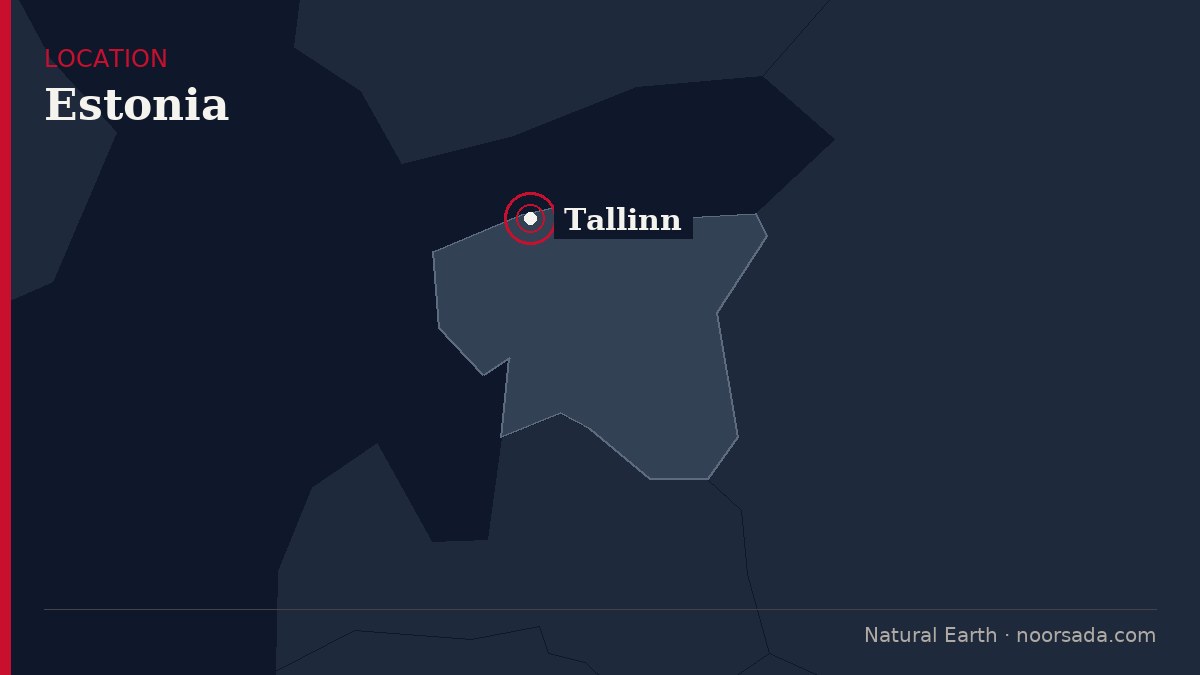
Estonia is preparing a strategy that would let its government run digital services entirely from abroad if the country is occupied, a plan officials call hukukindlus — doomsday resilience.
The Baltic country of 1.3 million people, which shares a 294-kilometer border with Russia, already keeps a backup of its state in a "digital embassy" in Luxembourg — effectively a copy of everything from citizen registries to land registries and its legal code. The new plan goes further: Tallinn wants public services to keep running "when data centers are destroyed or there's boots on the ground" and they cannot operate, said Tõnu Grünberg, an architect of the new strategy and former deputy secretary general for digital infrastructure and cybersecurity at Estonia's Ministry of Justice and Digital Affairs.
"Now we want to really be online, whatever happens," Grünberg said. "All critical services stay online … Everything needs to stay operational."
The government is building secure applications on cloud providers including Microsoft Azure and Amazon Web Services as well as its own state cloud platform, and shipping the system to its data embassy and other places in Europe, said Grünberg, who started a job as CEO of tech infrastructure provider Levira this month.
Allan Allmere, an adviser for IT architecture and infrastructure at the Ministry of Justice and Digital Affairs, said Estonia wants to minimize the impact of the worst-case scenario. He said that ideally they would like to build systems that can withstand every possible crisis, "but in reality no country can predict or eliminate every risk." He said that in the most severe scenarios, they also need to preserve a trusted foundation "from which Estonia's digital state can be rebuilt."
Estonia's focus on digital survival dates to 2007, when a wave of cyberattacks lasting 22 days brought down large swathes of commercial and government services; the country's authorities later attributed the attacks to Russia. Joseph Jarnecki, senior research fellow at the Royal United Services Institute (RUSI) think tank in London, said: "They have taken a remarkably forward-leaning approach in terms of digitizing government services."
Recent attacks on data centers in Russia underlined the stakes: Ukraine struck three data centers belonging to Russian provider Yandex last month. On Thursday, the United Kingdom and Norway announced they are looking at ways to host each others' secure data by setting up their own "data embassies."
Allmere said the next challenge is continuity. "The first question was how to make sure Estonia's state data would not disappear," he said. He said the next challenge is how to ensure "the state can continue functioning with that data during a crisis." He added that they also need to ensure the same data remains "understandable and usable decades from now."
Sources — how we know this
4 independent sources corroborated this
- PrimaryPOLITICO Europe
- CorroboratingKommersant
- CorroboratingUkrainska Pravda (EN)
- CorroboratingMeduza