This story is currently available in Englisch only — a translation isn't ready yet.
EU leaders clash over Ukraine peace seat as Merz warns on budget
Europe's 47-leader Dublin summit exposed rival formats and a €70bn funding hole, with no consensus on who represents the bloc at Russia talks.
ℹ️ Browser-Stimme · KI-Studiostimme bald verfügbar
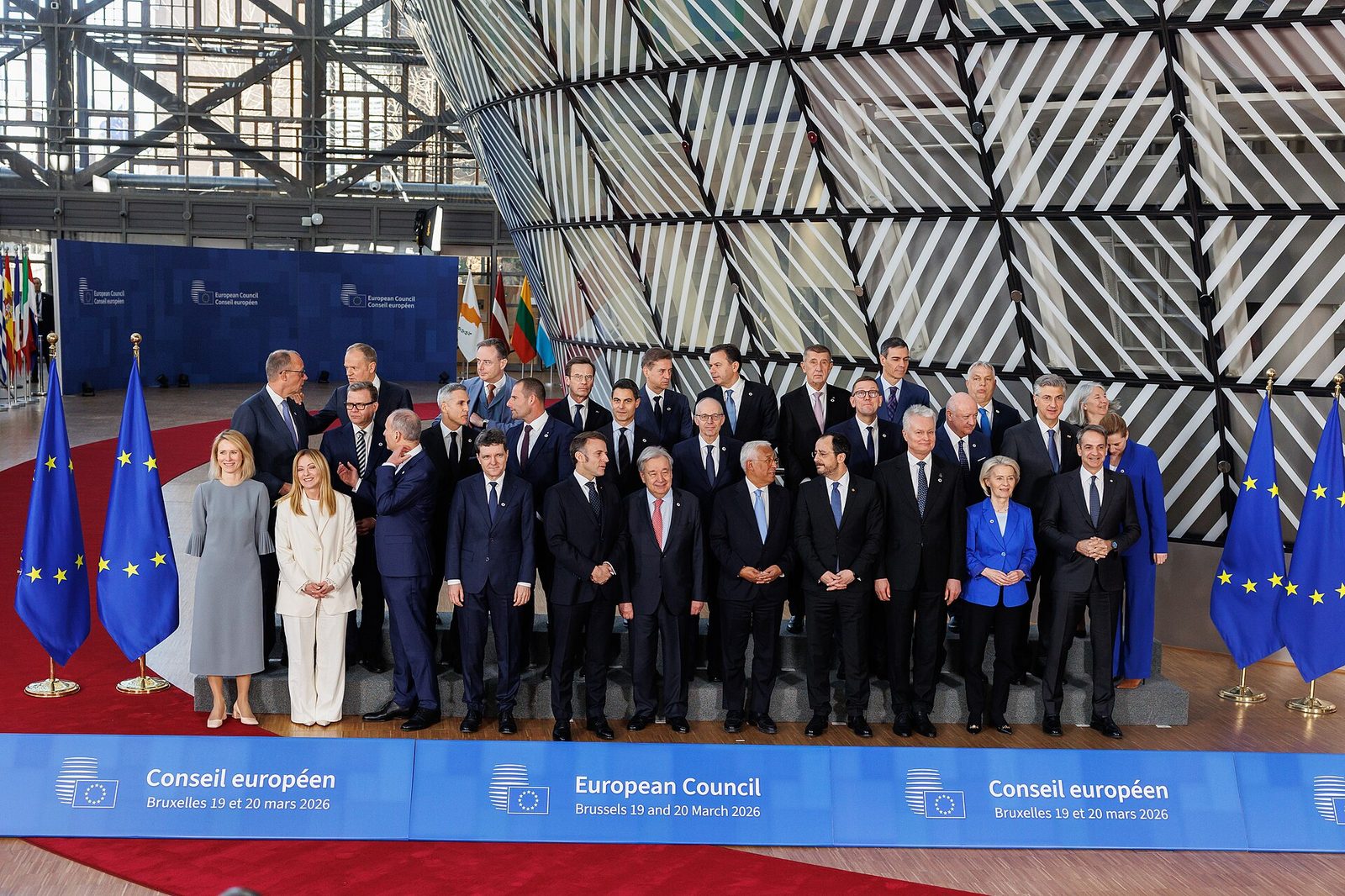
European leaders gathered at the European Political Community summit in Dublin have failed to agree on a single representative for future Ukraine peace negotiations, even as US envoy Steve Witkoff confirmed Europeans would join the next round of talks after his Moscow meeting with President Vladimir Putin.
The summit of 47 European leaders in Dublin comes in the wake of a diplomatic tour by two Donald Trump administration advisers — the president's son-in-law Jared Kushner and special envoy Steve Witkoff — to talks in Abu Dhabi, followed by a meeting with Russian President Vladimir Putin in Moscow. The pair then travelled to Dublin to debrief Ukrainian President Volodymyr Zelensky.
German Chancellor Friedrich Merz told reporters Europe must have a seat alongside Ukraine, the United States and Russia. He said that "Ukraine, Europeans, Americans, and Russia" must all be sitting at the table in Dublin. Like many other leaders, however, he played down the idea of appointing a special envoy for the talks.
EU foreign policy chief Kaja Kallas is among the figures most likely to represent the EU in any future talks, alongside EU Council President Antonio Costa. As yet, the EU has not been able to land on one central figure to send, with many national leaders wanting to be present themselves.
Zelensky said Europe must be involved in the peace process. He told the other leaders during the Dublin meetings that while Europeans were already involved, Europe needed to become a regular part of these negotiations, according to Zelensky.
Italy's Prime Minister Giorgia Meloni had already written a sharp letter to EU Council President Antonio Costa warning that projecting "the image of a Europe that is in disarray" serves the interests of those who want the war to continue. Slovenian Prime Minister Janez Jansa said the impasse was creating a "bad mood" among leaders, though Latvian Prime Minister Andris Kariņš disputed that characterisation, saying "I don't feel that."
The palpable fear among the leaders in Dublin is that the US will accept Russia's demands that Europe changes the way it structures its own security, mainly through the NATO military alliance, in exchange for a seat at the table. Putin said a commitment that Ukraine will never join NATO — and even the potential rolling back of the alliance to remove new joiners Finland and Sweden — could be among his demands.
Putin, speaking after his meeting with Kushner and Witkoff in Moscow, said that if Europeans deployed troops to Ukraine following a peace agreement, this would constitute a legitimate target for Russia and the war would resume immediately, according to Putin.
Estonian Prime Minister Kristen Michal warned that "right now, we are in the Russian trap," questioning whether one should discuss defense matters with the source of the threat itself, according to Michal.
US President Donald Trump said publicly that he was hoping for a "very big, beautiful agreement" that "might involve all of Europe." Zelensky said he found the US approach "a bit strange."
Many of Europe's leaders speaking in Dublin referenced previous agreements with Russia that they believe Moscow has breached. They include the 1975 Helsinki Accords, the 1990 Paris Charter, the 1997 NATO-Russia Founding Act and the one they consider most important: the 1994 Budapest Memorandum, which forbids Russia from using force against Ukraine unless in self-defense.
Funding remains an equally sharp pressure point. The European Commission has identified a €70 billion hole in the EU's promised financing for Ukraine's economy. Merz warned he could block the EU's next seven-year budget unless member states agree to contribute to Ukraine's financing. Slovakia's Prime Minister Robert Fico has opposed any further financial or military support for Ukraine.
Sources — how we know this
2 independent sources corroborated this
- PrimaryDeutsche Welle (EN)
- CorroboratingTASS English