AgendaVerified
This story is currently available in Englisch only — a translation isn't ready yet.
Hormuz as Rhetorical Weapon: Washington Reaches for a Chokepoint It Cannot Hold
Trump's claim to police the strait is a domestic performance with foreign consequences — and Tehran already knows the script.
Tempo:
ℹ️ Browser-Stimme · KI-Studiostimme bald verfügbar
NV
Natasha Volkov
· 3 min read
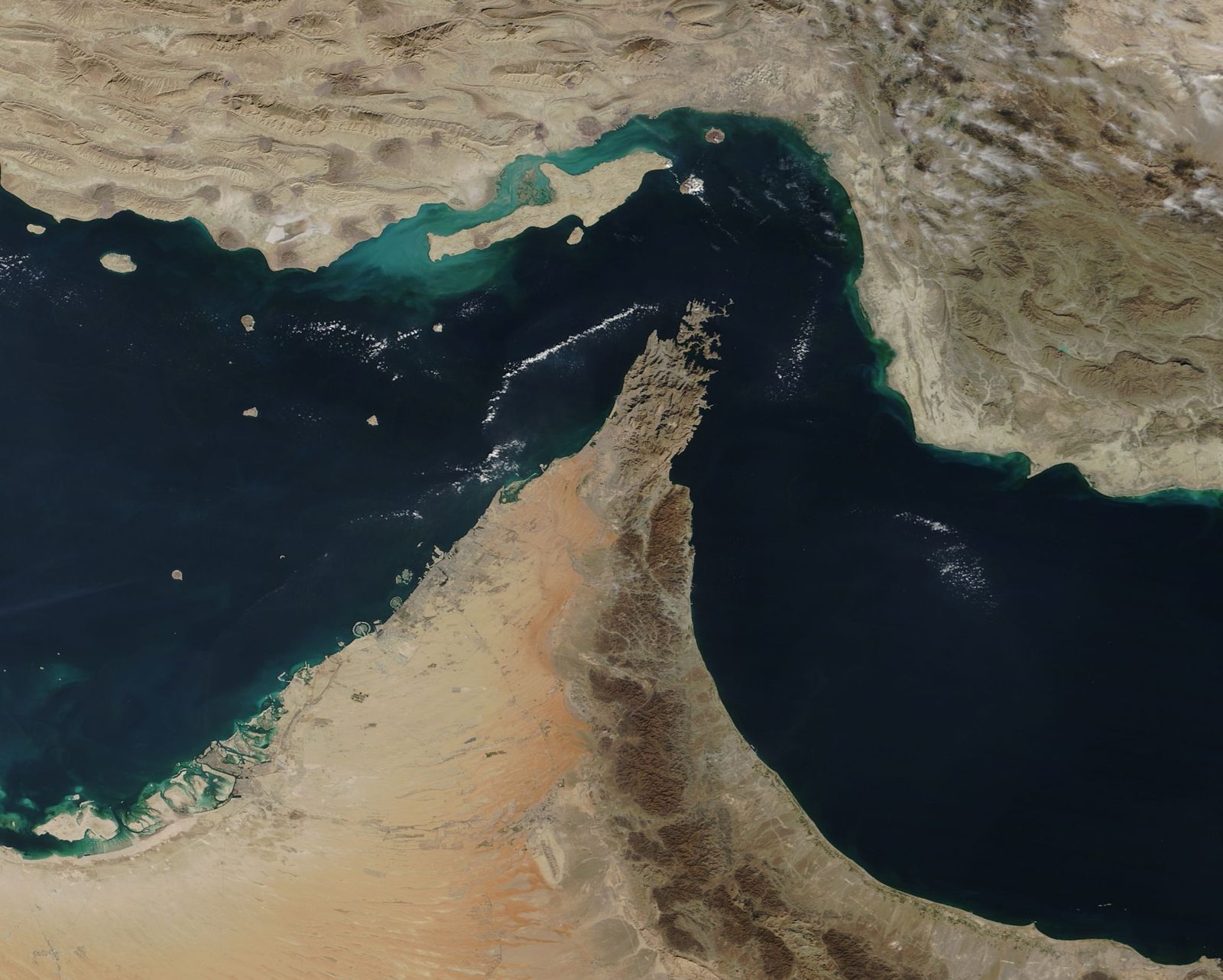
When an American president says his country will seek 'full control' of the Strait of Hormuz, the first question is not whether he means it. The first question is which audience the sentence was written for.
Donald Trump's escalation of Hormuz rhetoric this week, and Tehran's flat rejection of the claim, belong to a genre older than either administration: the chokepoint as campaign prop. A fifth of the world's seaborne oil moves through those twenty-one nautical miles at their narrowest. Every American president since the tanker war has been briefed on the same map. Very few have said the quiet part aloud, because saying it aloud collapses the ambiguity that has kept the strait open.
That ambiguity is the actual policy. The Fifth Fleet at Bahrain exists to make freedom of navigation a fact that does not require declaring itself. The moment Washington announces it will 'control' the water, it hands the Islamic Revolutionary Guard Corps' navy a gift: the legal and rhetorical cover to treat every American hull as an occupier rather than a passing warship. The Guard's small-boat swarm doctrine was designed exactly for this scenario — not to close the strait, which it cannot, but to raise the insurance premium on every tanker until the market does the closing for them.
So whose decision are we watching? Not the Pentagon's. Central Command has spent two decades explaining to civilians that Hormuz is deterred, not held. The decision is the president's, and it is a domestic decision dressed as a foreign one. It answers a political need — to sound commanding on energy prices in an election cycle — with words that a foreign ministry in Tehran now gets to interpret for its own purposes.
Tehran's interpretation was predictable and, on its own terms, correct. The Foreign Ministry called the claim a fantasy. The Guard commanders will say something harder in the coming days, because the Guard's budget depends on being seen as the wall between Iran and American humiliation. This is the arithmetic that matters: the Iranian security state is not a monolith, and every American escalation strengthens the faction inside it that trades on confrontation. The reformists shrink. The pragmatists at the Foreign Ministry lose arguments they were already losing.
There is a pattern here that predates all the current officials. In 1988, when the US Navy sank half the Iranian surface fleet in a single afternoon, the lesson Washington drew was that Iran could be deterred by force. The lesson Tehran drew was different: that survival required asymmetric tools that could not be sunk in an afternoon. The mine, the fast boat, the anti-ship missile on a truck, the drone launched from a fishing dhow — the entire Iranian maritime doctrine of the last thirty-eight years was written in response to that day. Where the parallel breaks is that in 1988 the confrontation stayed inside a tanker war logic both sides understood. Today there is no such shared logic, and the American president speaks in a register — territorial control of an international waterway — that has no precedent Washington can point to without embarrassment.
⚡
Autonomous PickMarketplace
Energy Portfolio
Check your broker for the latest on energy stocks.
View Now →