This story is currently available in Englisch only — a translation isn't ready yet.
Per capita water falls to 1,301 cubic meters, Ministry points to below 1,000 cubic meters in 2030
Turkey is below the water stress threshold at 1,301 cubic meters per capita; Rainmaker International Director Omar Ben Halim said they have opened an office in Ankara.
ℹ️ Browser-Stimme · KI-Studiostimme bald verfügbar
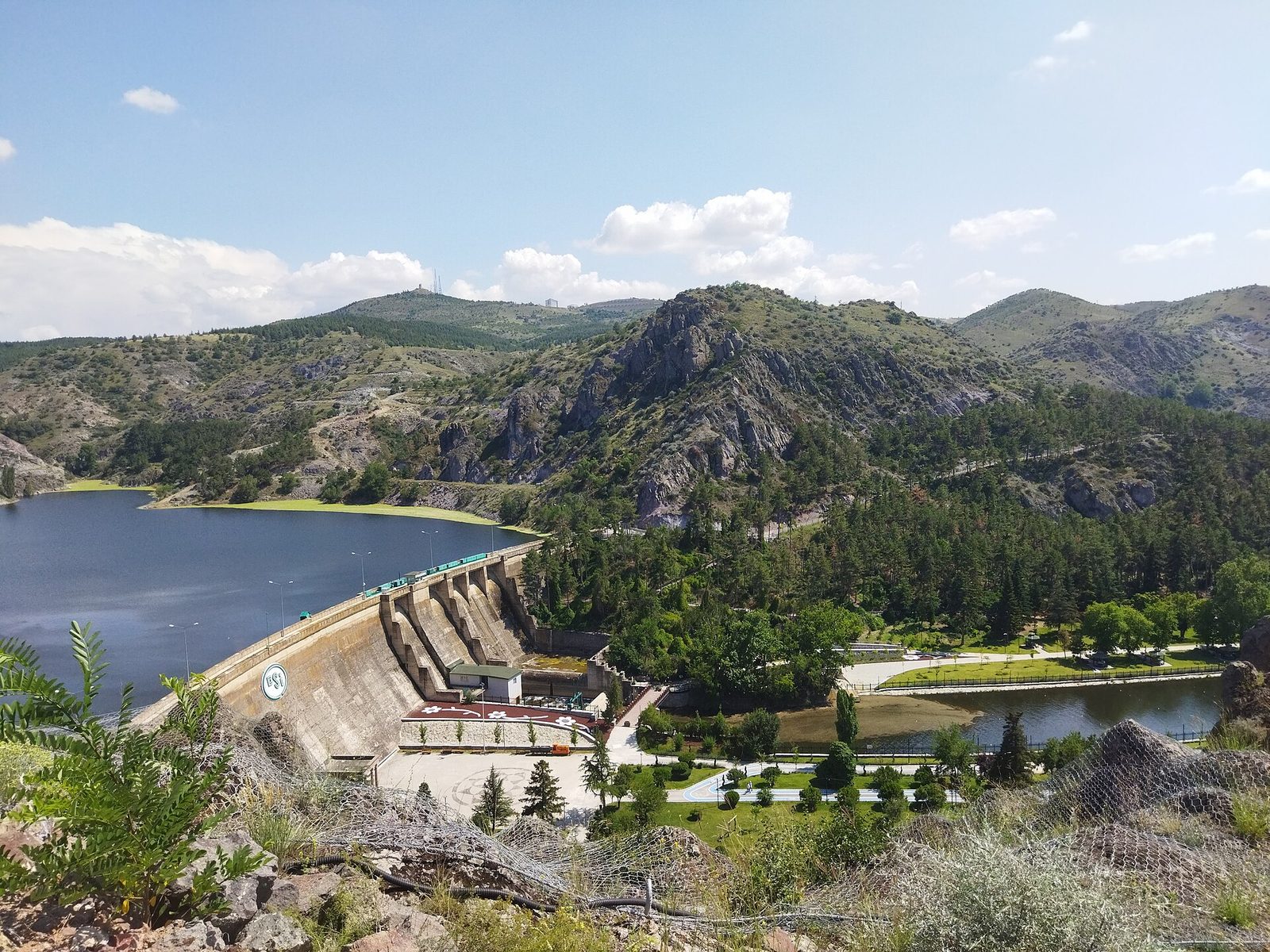
Annual available water per capita in Turkey has fallen to 1,301 cubic meters; the Ministry of Agriculture and Forestry reiterated its warning that, if no measures are taken, this figure could drop below 1,000 cubic meters in 2030. This picture, below the 1,700 cubic meters accepted as the water stress threshold, has brought cloud seeding — known in 1990, when Istanbul was experiencing serious water shortages, as "rain bombing" — back onto the agenda. According to Ekonomim's report, the method was also tried in Ankara and Izmir in subsequent years, and the technology used has changed over the 36 years since.
Cloud seeding does not create a new cloud in the sky; it intervenes in the precipitation-forming process of existing clouds with suitable characteristics. Silver iodide released into clouds by aircraft facilitates the conversion of water droplets that remain liquid at sub-zero temperatures inside the cloud into ice crystals. To measure the effect of the practice, precipitation values in the seeded area are compared with those in an area that was not seeded.
Rainmaker International Director Omar Ben Halim said the company uses drones it developed for cloud seeding, and that sensors on the drone collect more data about the cloud's contents. According to Ben Halim, not every precipitation event seen after seeding may be the result of the operation; therefore the physical effect is monitored by radar and the conversion of water in the cloud into ice and its beginning to fall as snow or rain is calculated within minutes. Ben Halim stated that the approach is based on the SNOWIE research conducted in the US in 2017.
The study by the Rainmaker research team, published in the journal Atmosphere on November 5, 2026, examined the company's 2025-2026 season operations in the US. As a result of radar measurements, 71 separate precipitation events determined to be linked to seeding were identified; the total water equivalent of the precipitation was calculated at approximately 531,000 cubic meters. Ben Halim said that most of the precipitation obtained accumulated as snow cover, and that how much of this turns into usable water needs to be studied separately in each basin.
Ben Halim noted that in Turkey the areas where precipitation can be obtained through cloud seeding largely overlap with regions experiencing water shortages, drawing attention to Konya and groundwater losses in the west. For the operation, relative humidity above 90 percent inside the cloud, a temperature below minus 5 degrees and wind below 90 kilometers per hour are required. The company recently opened an office in Ankara to support its contacts in Turkey.
Regarding environmental concerns, Ben Halim said, "We use about 20-50 grams of seeding material in one operation. With this amount, more than 10,000 cubic meters of water can be obtained." Noting that the materials used are permitted for use in the European Union, the US and Australia, Ben Halim argued that less than 1 percent of the water in the atmosphere is used and that precipitation in neighboring regions is not affected.
Sources — how we know this
- PrimaryEkonomim (Dünya)