This story is currently available in Englisch only — a translation isn't ready yet.
Lutnick Pushes to Weaken Chip Rules That Overlap With His Family Business
The commerce secretary is drafting export controls that would affect a Malaysian data center run by Bitdeer, a client of Cantor Fitzgerald, the firm he led until last year.
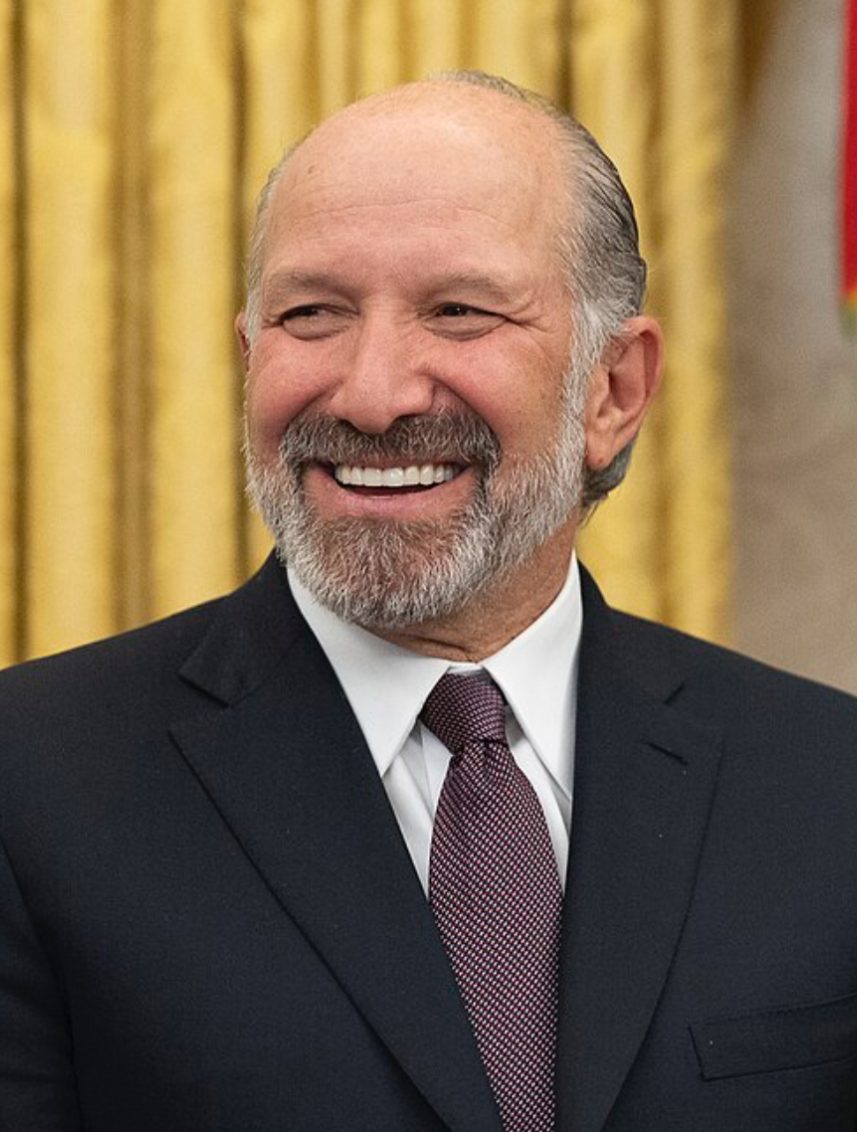
Commerce Secretary Howard Lutnick is advocating a less stringent version of export controls under consideration on sales of advanced artificial intelligence chips to data centers outside China, as his department drafts rules that would bear directly on a Malaysian facility operated by a client of Cantor Fitzgerald, the financial services firm he formerly led.
The data center, known as A201, is set to open next year on Malaysia's southern peninsula, packed with hundreds of millions of dollars in Nvidia's most advanced artificial intelligence servers. It plans to supply that computing power to a Chinese tech giant — an arrangement the company says is legal and profitable, and one that sidesteps U.S. rules banning sales of the most advanced A.I. chips directly to Chinese firms.
The operator is Bitdeer, a Singaporean firm. Cantor Fitzgerald served as a designated sales agent for an equity offering of up to $1 billion this year by Bitdeer, in addition to other financial ties to global data center businesses. The relationship began as early as 2021, when Cantor Fitzgerald helped Bitdeer arrange a stock offering of up to $250 million.
Lutnick steered Cantor Fitzgerald for decades before recusing himself when he joined the Trump administration last year. The Commerce Department says he has complied with all ethics agreements, and the firm is now run by his sons. There is no evidence that Cantor's investments influenced his deliberations.
The administration has been embroiled in an internal debate for much of the past two years over how far to go in limiting chip sales to data centers in Southeast Asia. China hawks see the data centers as a way for Beijing to do an end run around the chip sales ban; officials, most prominently Lutnick, are pushing against going too far in limiting the ability of U.S. companies like Nvidia to sell their products in Asia. In the administration, Lutnick has been seen as one of Nvidia's strongest champions.
The Commerce Department has proposed applying regulations to a handful of countries — Singapore, Malaysia, Thailand, Indonesia, Brazil, South Africa and Norway — while others in the administration have wanted global coverage.
The United States in late 2022 started banning exports of Nvidia's advanced chips directly to China, out of concern the chips could help Beijing crack American encryption and design new weapons. Chinese firms cannot buy the most advanced chips outright, but nothing stops them from renting them in data centers in Malaysia, Indonesia or Thailand. In its final weeks, the Biden administration issued global rules to restrict Chinese companies' ability to remotely access U.S. chips; President Trump revoked those rules on taking office, arguing they stifled American business and innovation. Trump officials said they would introduce a replacement but have struggled to reconcile competing views in the administration. Congress is considering a bipartisan bill to clamp down.
The issue has been thrust into the spotlight in recent weeks by the scandal over Nvidia chief executive Jensen Huang's affair with a woman the U.S. government deemed to be a Chinese intelligence asset. The woman, Alice Huang, had led Megaspeed, a firm that set up data centers in Southeast Asia to serve Chinese companies. The U.S. government is also investigating Megaspeed for illegally smuggling chips into China.
Sources — how we know this
- PrimaryThe New York Times — U.S.