This story is currently available in Englisch only — a translation isn't ready yet.
NATO Communications and Information Agency Director General Browne Describes the Alliance's Test in Izmir
At the opening at the Izmir Fair Center, Browne described the commitment to allocate 5 percent of GDP to defense by 2035 and 50 billion dollars in new procurement projects.
ℹ️ Browser-Stimme · KI-Studiostimme bald verfügbar
Browne, Director General of the NATO Communications and Information Agency (NCI Agency), defended the alliance's readiness for crises at the opening of the "NATO EDGE 2026" event, held at the Izmir Fair Center on November 17-19 with Türkiye as host. According to Anadolu Agency (AA), Browne said the military alliance has "one vision, one fight" and stated that the place where that fight takes place is the "front line" (edge).
Browne described the test facing the alliance in these words: "NATO has a simple test before it. Are we ready for war tonight?" he said, adding that this did not mean waiting for next year or for the next program to be implemented, but that it had to happen right now, because when a crisis breaks out it would be too late to act.
Browne recalled that the alliance's countries have committed to allocating 5 percent of their Gross Domestic Product (GDP) to defense and security by 2035. Saying that these commitments are "not a promise that will remain only on paper," Browne stated that allies are increasing their core defense investments, that leaders went further at the Ankara summit in July, and that NATO has added 50 billion dollars in new procurement projects. Browne called this structure "NATO 3.0": using the phrase "a stronger Europe within a stronger NATO," he spoke of a structure in which responsibility is shared among 32 allies and technology is at the center.
Stating that alliance leaders agreed on "building a transatlantic warfighting cloud and adopting advanced artificial intelligence models," Browne said that a secure cloud services contract had been signed and that a new dynamic marketplace had been established in the field of cybersecurity. Browne announced that NATO aims to generate 2.7 billion euros in business volume over the next two years in the markets for cloud technologies, artificial intelligence, cybersecurity, command and control systems, and space work.
Saying that the number of participants in the event was more than double that of previous ones, Browne said, "This is our largest organization to date." Stating that they wanted companies large and small from all 32 allied countries to take part, Browne called out to industry: "We don't want last year's product with a new label stuck on it." Browne said that soldiers sent on a mission would not ask which country built the system; the only question would be "Does it work?"
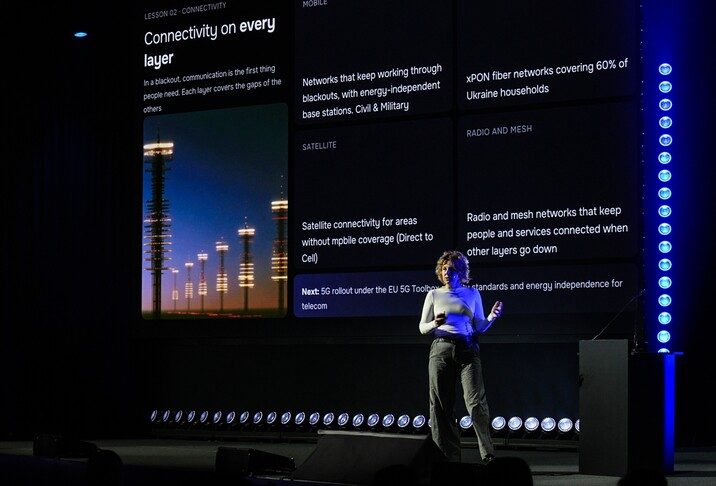
Ukraine's Minister of Digital Transformation Oksana Ferchuk also touched on Russia's attacks on digital infrastructure in September, saying that data centers, mobile operators and connectivity points were targeted. Ferchuk explained that, given that facilities on the ground can be destroyed, no single type of connectivity should be relied upon, which is why they are working with both civilian and military mobile networks and satellites. Stating that artificial intelligence was used in the attacks "to change the picture instantly," Ferchuk said the private sector must learn to protect large digital systems.
Sources — how we know this
- PrimaryAnadolu Ajansı (TR)