This story is currently available in Englisch only — a translation isn't ready yet.
OECD records tighter citizenship rules across its 38 members
The Paris-based organisation's 50th international migration outlook records stricter language, civic and self-sufficiency tests, with Germany, Sweden, France and Austria cited.
ℹ️ Browser-Stimme · KI-Studiostimme bald verfügbar
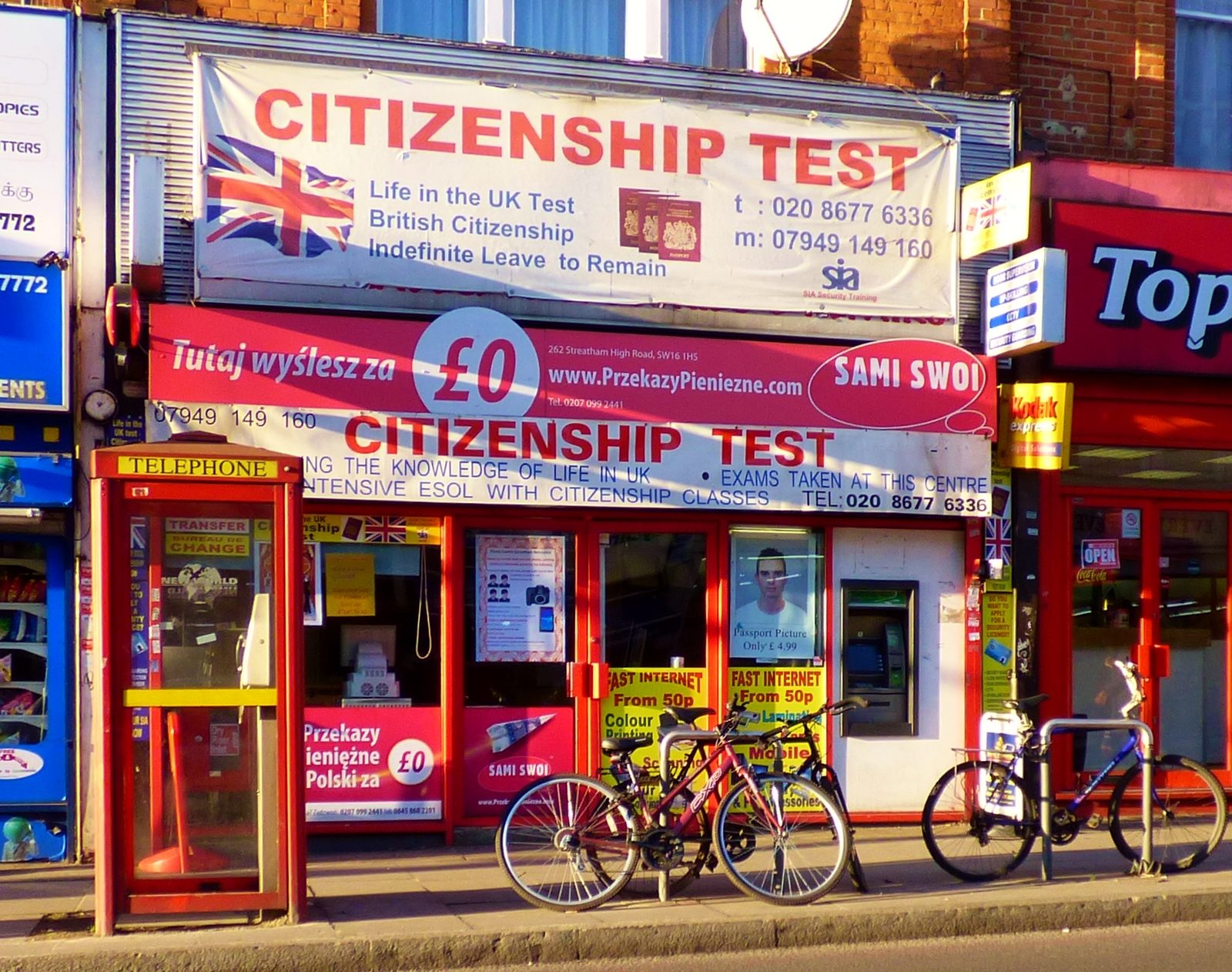
The OECD has recorded a shift toward stricter citizenship and integration requirements across its 38 member countries, in its 50th annual international migration outlook published this week.
The report describes integration policy as entering "a more constrained and politically contested phase". It attributes the change to "Tight public budgets, pressure on housing and public services and weaker political appetite" for broad-based integration investment, which it says has slowed reform and altered its character.
Citizenship reforms adopted in 2025-2026 in many member countries "point to more stringent conditions", the study finds, with strengthened requirements on "language proficiency, civic knowledge, fiscal contribution, residence duration and self-sufficiency". It cites the removal of the fast-track route to citizenship in Germany and higher requirements on the knowledge of the language and society in Sweden.
Mark Pearson, OECD Deputy Director of Employment, Labour and Social Affairs, said labour migration schemes "are becoming more selective", with integration policies increasingly focused on "the very rapid entry in the labour market, particularly in the Nordic countries".
Civic integration is also becoming "more prominent". The report cites the introduction of the civic exam for first applications for multi-year residence permits in France and the values and orientation courses introduced in Austria. Sweden is also considering the feasibility of an Integration Barometer, a survey that would test trust in institutions, democratic participation, social networks, language use, belonging and perceptions of discrimination.
Pearson described "a kind of north-south gradient" in policy effort, and said "the most striking policy change recently has been the Spanish experience" of regularising a large number of migrants to speed their integration.
The OECD estimates that over 3 million people acquired the nationality of a member country in 2025. The largest number was registered in the United States at 895,000, 9 percent more than in the previous year, followed by Germany at 309,000 and Spain at 300,000, both at record high levels. Canada ranked fourth with 294,000 new nationals, a 22 percent drop compared to 2024, and the United Kingdom was fifth at 235,000.
Across OECD countries 6.1 million new permanent immigrants were recorded in 2025, a decline by 1.6 compared to the previous year, though still 12 percent above 2019. The United States remained the leading destination with 1.2 million new permanent immigrants, followed by Germany, Spain, Canada and France. Family reunification was the main reason for migration, with 2.4 million new permits issued for this reason, 952,000 of them in the United States. Labour migration represented 20 per cent of the total, and humanitarian migration 10 percent.
Student mobility declined from 2.1 million to 1.6 million between 2024 and 2025, falling in the United States, Canada and Australia and remaining stable in the UK, while Austria, Germany and Italy attracted growing numbers of international students.
Sources — how we know this
2 independent sources corroborated this
- PrimaryThe Local Germany
- CorroboratingThe Local France