This story is currently available in Englisch only — a translation isn't ready yet.
Oleshky, 270 Prisoners, One Diesel Tanker: The Shape of a Deal Washington Will Not Call a Deal
Moscow sells fuel, Kyiv gets bodies back, a first lady opens a corridor. Three transactions on one Friday, one implicit price.

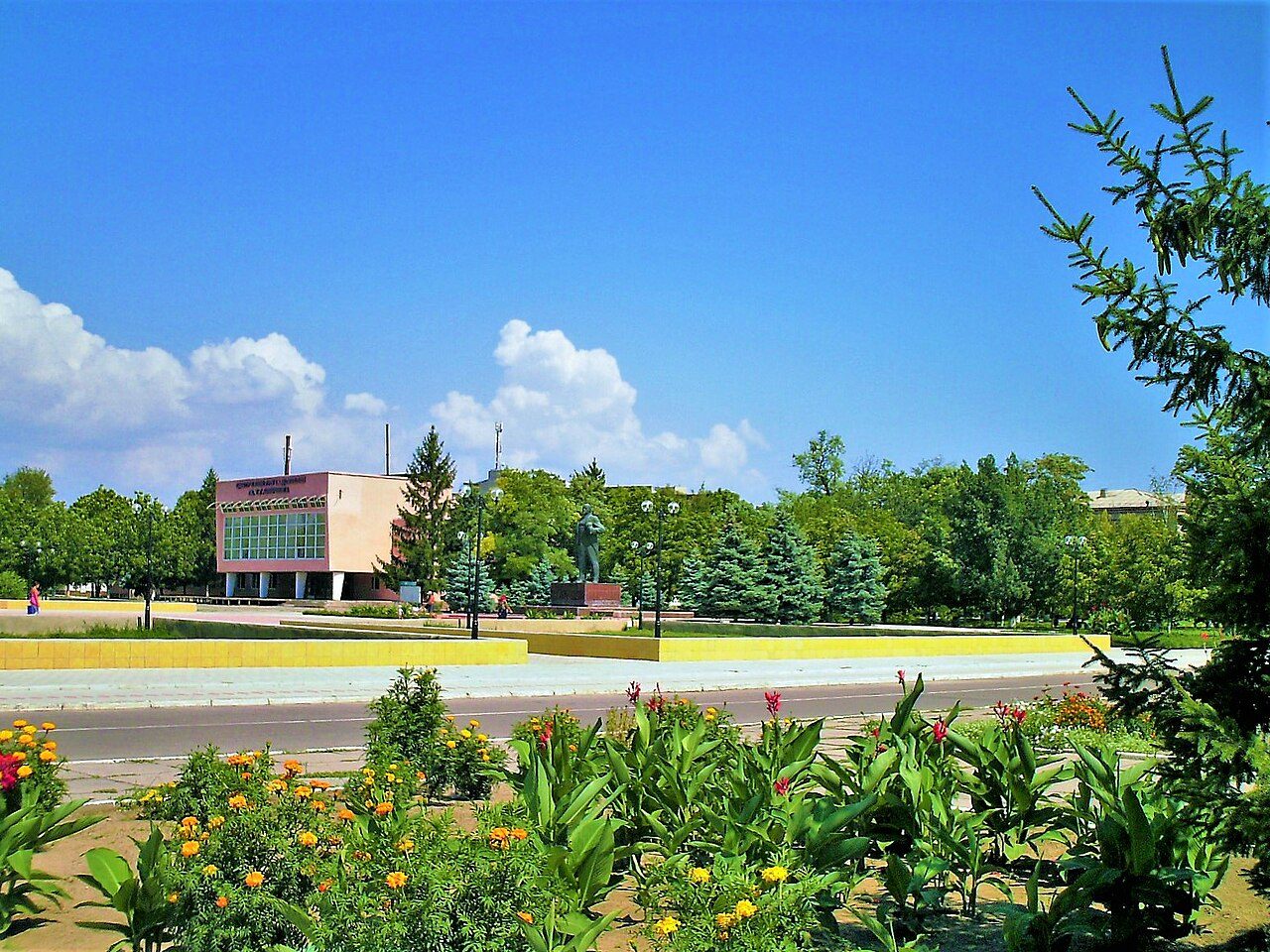
On Friday a tanker carrying 40,000 tons of Russian diesel left port for American buyers; 270 Ukrainian prisoners came home from Russia and 270 Russians went home from Ukraine; and the US first lady announced a localized ceasefire in Oleshky, an occupied town across the Dnipro from Kherson, so that an estimated 2,000 elderly residents and roughly 50 children can be visited, counted and, if they wish, moved. Three transactions, one calendar day, one implicit price list. The question is not whether Washington is negotiating with Moscow. It plainly is. The question is what the Trump administration is paying, in advance, to keep Vladimir Putin at the table — and whether the goods being handed over are the kind that can be taken back.
Start with the diesel, because the diesel is the part the Kremlin wants the world to see. Dmitry Peskov confirmed the first shipment is on its way to «intended recipients». Alexander Novak had trailed it two days earlier. The envelope Donald Trump described after his October call with Putin is large by any measure: 300,000 tons immediately, another 500,000 in November, a million «immediately thereafter», and three million more «within a short period». Whether those tonnages arrive on that schedule is a separate matter — Russian refinery throughput has been degraded by a year of Ukrainian long-range strikes, and promising diesel is cheaper than producing it. But the political fact is already banked. A sanctioned exporter has been handed a buyer of last resort, publicly, by the sanctioning power itself.
Moscow understands exactly what it has received. Konstantin Kosachev, vice speaker of the Federation Council, told the state agency this week that sanctions are «if not an eternal phenomenon, then at least an extremely long-term one», because unwinding them requires a congressional majority or EU unanimity that will not materialise. His prediction is subtler and more useful to the Kremlin than lifting: the regime will be eased over time, Kosachev suggested, because maintaining it at its current maximum level runs counter to the interests of those who created it. Translated out of senatorial Russian: we do not need the sanctions removed. We need carve-outs. A tanker here, a licence there, a quiet understanding that enforcement will slacken where it is inconvenient. The diesel deal is the template. Kosachev is telling his domestic audience not to celebrate a victory but to recognise a durable arrangement.
Now the humanitarian ledger. The 270-for-270 exchange is the third stage of a process brokered in May, meant to run to 2,000 on each side; most of those returning to Ukraine are defenders of Mariupol, with five men among them who had been counted dead in the Olenivka strike of July 2022. These are not symbolic numbers. Each is a family that had been living in a specific kind of grief for forty months. The Oleshky corridor is smaller in scale and larger in novelty: the first lady's office, not the State Department, is the named broker, and the mechanism — Russian and Ukrainian civilian leaders jointly visiting an occupied town, de-mining the approaches, offering residents a choice of destination — is the first time in this war such a thing has been attempted on territory Moscow controls. If it holds on 29 October, it is a template too.
My reading is that these three threads are not parallel. They are one rope. The humanitarian deliverables — prisoners, an evacuation corridor, the Hubbard release that Kyiv publicly thanked Washington and the UAE for — are what the Trump administration can show to a domestic audience and to Kyiv. The diesel is what Moscow extracts in return for continuing to produce them. Volodymyr Zelenskyy said as much when the deal was announced: easing restrictions on Russian diesel exports helps finance the war that produced the prisoners in the first place. He is not wrong, and the fact that he said it publicly suggests Kyiv was not consulted on the price.
The pattern this most resembles is not Cold War arms control, where both sides locked in verified parity. It is the carve-out economy of the late 1990s Iraq sanctions, where humanitarian exceptions grew into commercial channels and the enforcement architecture quietly rotted from the inside. Where that comparison frays: Iraq was contained; Russia is the party doing the containing of a neighbour.
What should a careful reader watch for next? Three indicators would tell us the trade is widening rather than one-off. First, whether the November tonnage Trump named actually ships, or whether the number quietly shrinks to what degraded Russian refineries can deliver. Second, whether the Oleshky model is extended to a second occupied town — Moscow has every incentive to offer one, because each corridor normalises the administration it runs on the territory. Third, whether the next prisoner tranche arrives on the current cadence or slips, which would signal that Moscow has started pricing each round separately.
If I am reading this wrong, it will show in one place: the sanctions architecture itself. If the Treasury's enforcement letters keep arriving at European banks with the same frequency as six months ago, the diesel channel is an exception, not a doorway. If those letters thin out through November, Kosachev was telling the truth to his own side, and the price Washington is paying is not a tanker. It is the regime.
Energy Portfolio
Check your broker for the latest on energy stocks.
View Now →