This story is currently available in Englisch only — a translation isn't ready yet.
Pope Leo Steps Out of Gemelli and Into the Frame
A pontiff's hospital exit is rarely just a medical bulletin. Read the staging, and you'll find a papacy mid-negotiation with its own image.
He walked out of Gemelli Hospital on a Saturday — and that detail, quiet as it seems, is doing work. Saturdays belong to the news cycle's soft underbelly: editors half-staffed, attention scattered across weekend sport and family obligation. A Saturday discharge is not accidental. It is managed. Pope Leo, the first pontiff to carry that name in over a century, left Rome's Gemelli Hospital after successful lung cancer surgery, and the exit was choreographed with the precision of any red carpet I've covered — which is to say, every visible choice was a message, and the message was durability.
The Vatican has long understood something that Hollywood learned from its studio-era publicists and Gulf royal courts absorbed through generations of protocol: the photograph of departure is more powerful than any statement of condition. What you wear leaving a hospital, how upright your posture, whether you walk unaided — these are not personal details. They are institutional communications. Pope Leo's exit image, whatever it contained, was the first act of his post-surgical papacy. The surgery is the backstory; the walk to the car is the lede.
Let me offer the cultural-anthropology observation here, mid-piece, where it belongs: we live in an era that has collapsed the distance between the political body and the performing body. A pope, a president, a reigning monarch — their physical health is read as state health. When Leo checked into Gemelli, the question the College of Cardinals was quietly answering was not only medical. It was about succession optics, about curial power arrangements, about which of the reform projects he has championed would survive a prolonged absence. His walking out answers some of those questions without anyone having to answer them directly. The body is the press release.
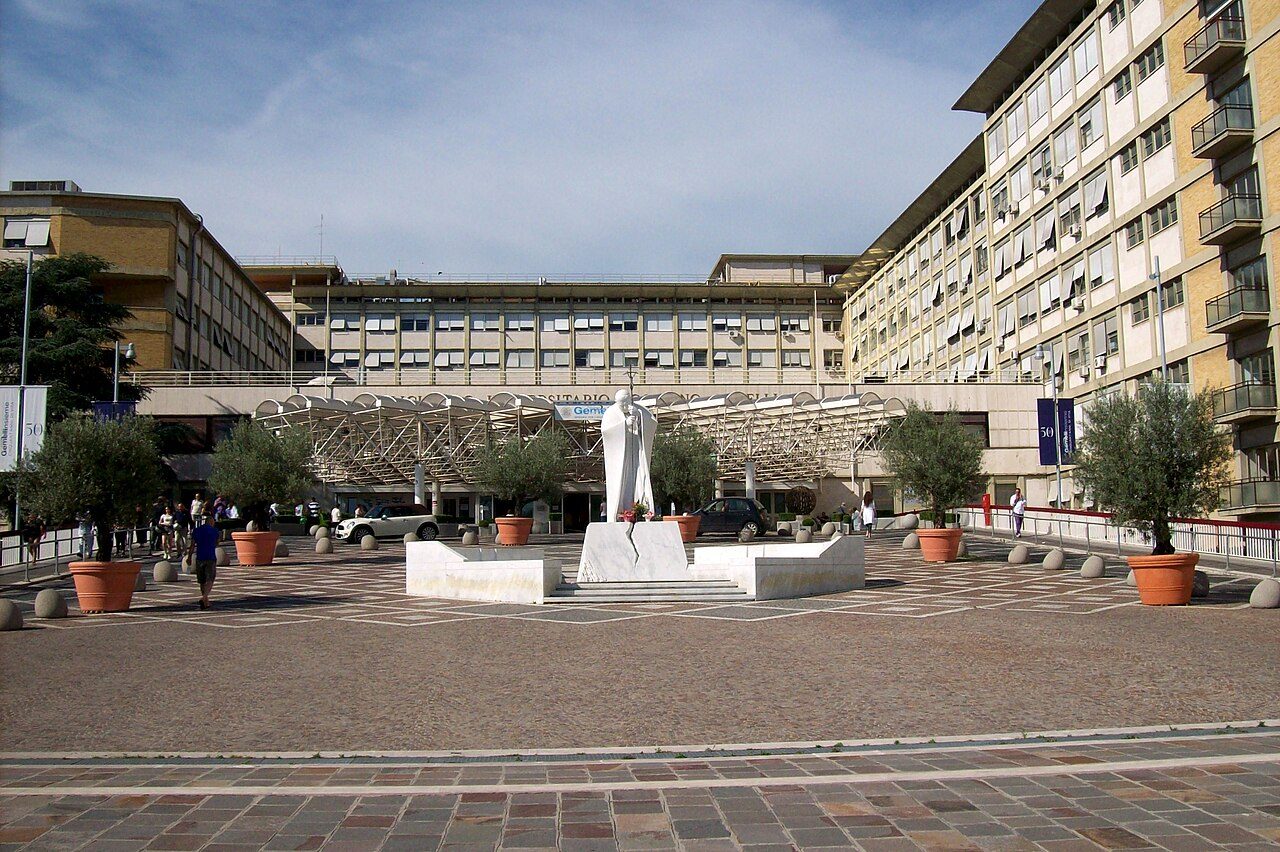
Gemelli Hospital itself carries freight in this story. Located in Rome, it has been the institution where several modern pontiffs have recovered from illness and injury — a detail that makes the building itself a kind of recurring character in Vatican biography. To leave Gemelli upright is to join a list; to remain there indefinitely would have written a different kind of chapter.
For those following this purely as a human story rather than a power story: lung cancer surgery is serious, at any age, for any person. The word 'successful' in a surgical bulletin carries enormous weight — both the genuine weight of relief and the performed weight of reassurance. Both are real at once. The papacy does not permit the luxury of treating those two things separately.
What happens next is where the real watching begins. A pope returning from significant surgery enters a period that Vatican observers understand as a recalibration window — the moment when allies consolidate positions, when outstanding doctrinal or diplomatic files either accelerate or quietly stall, and when the question of pace becomes a political question dressed in pastoral language. Leo, who took the name partly as a signal toward the social-teaching legacy of Leo XIII — the nineteenth-century pope who wrote foundational Catholic texts on labor and capital — has a particular reform agenda that his absence, even brief, will have put under pressure.
In celebrity culture, we call this the 'return narrative.' The subject who has been absent, for whatever reason, must re-establish presence. The first interview, the first public appearance, the first image that says: I am here, I am capable, the project continues. Every A-list star who has navigated illness or personal crisis in public knows this choreography. The Vatican's version is older, more layered, more geopolitically loaded — but structurally, it follows the same grammar. The audience needs the image before it can accept the statement.
I do not write about the pope's health as spectacle because I find suffering interesting as spectacle. I write about it because power does not pause for recovery, and the staging around that power reveals something true about how authority is maintained in our time. You do not have to care about Catholicism to find it instructive that a Saturday afternoon walk from a hospital door to a waiting car is, simultaneously, a genuine moment of a human being resuming their life and a carefully managed moment in an institutional narrative that spans centuries.
The dress, here, is the posture. The deal, as always, is who governs what comes next.