This story is currently available in Englisch only — a translation isn't ready yet.
Riyadh Closed Until October 17, Peg at 3.7500: Warning Now Names Aramco
Five airports hit ten times in one week, 20 dead; Ankara sending Mecca Agreement to parliament, riyal unmoved.

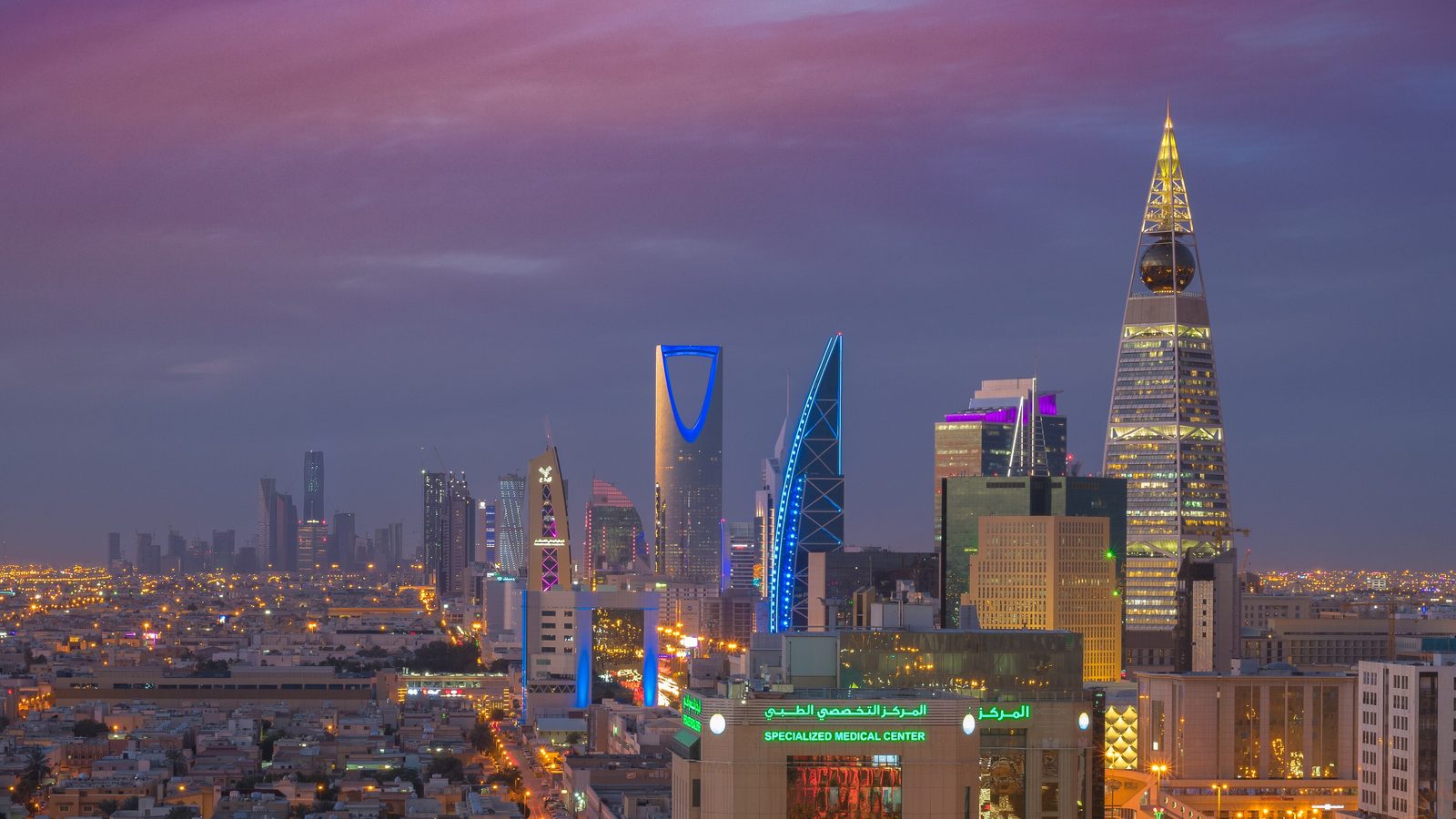
Two figures sit side by side on the table. The first: five Saudi airports, ten attacks within a week, 20 dead, hundreds wounded. King Khalid International hit five times, King Fahd in Dammam twice, Abha, Jizan, and Najran once each. The second: USD/SAR 3.7500 — SAMA's fixed rate, not a single digit shifted. Riyadh airport closed until October 17; Saudi Civil Aviation Authority extended the timeline pending a new announcement. Gulf Air cancelled Riyadh flights between October 12–17, Qatar Airways suspended Riyadh and Dammam, Etihad halted the Abu Dhabi–Riyadh route until Monday, October 19, Kuwait Airways and EgyptAir cut the same dates. Saudi embassies in Qatar, Bahrain, Oman, UAE, and Kuwait are organizing bus services — citizens returning to Riyadh by road.
The reason I chose this story today is this: the Houthi evacuation warning no longer sits in the passenger terminal. A Houthi spokesman named the Aramco headquarters in Dammam and an Aramco-linked refinery in Riyadh as 'legitimate targets' — along with King Khalid International. As I wrote on Sunday, the risk premium had settled in the terminal; Tuesday evening that same premium moved to the refinery gate. And the rate remains in the same place.
The mechanism needs translation, because anyone watching from outside gets surprised anew each day. The riyal is pegged to the dollar. The price is SAMA's reserve commitment, not the flow of news. Geopolitical premium is priced not in the rate but in other accounts: flight cancellations, insurance premiums, Aramco bond spreads, offshore forward points. Today the first channel — flight capacity — is triggered; seven major carriers have partially withdrawn from Saudi airspace. The second channel — war risk insurance on energy cargo leaving the Gulf — is the matter of the coming days.
The same evening there is the Ankara side. According to a statement from the Presidency, Erdogan called Crown Prince Mohammed bin Salman, condemned the Houthi attacks in "the strongest terms," and conveyed that Turkey would stand with Saudi Arabia. He spoke after Cabinet on Monday: the Mecca Joint Defense Agreement will be sent to parliament in the coming days for approval procedures, implementation will proceed "on the basis of national legislation as in NATO." Erdogan said one thing explicitly: there is no commitment to send troops to Yemen, no operational obligation. What he said was that the agreement will go to parliament and that Ankara stands with Riyadh. This is not approval for military intervention; it is the opening of the parliamentary calendar. The distinction is important — because after a defense agreement is submitted, a committee stage, General Assembly vote, and Official Gazette publication are required. The content is ready, the clock has not yet started.
Let me add the third screen: the IMF's October 2026 World Economic Outlook raised Saudi Arabia's 2027 growth from 5.5 percent to 7.9 percent — a 2.4 percentage point upward revision — but lowered 2026 from +1.7 percent to −3.3 percent. The Fund reads this year as "you've lost it, next year big recovery." The reason is written in the report: the Kingdom's diversified energy export routes are more resilient to regional shocks. The same day an Aramco executive said that over 90 percent of the materials needed for disruptions tied to global conflicts are from local sources. The sentence said on the day the evacuation warning came.
Three voices overlap: the warning points to the target, the company says it has drawn supply inward, the Fund writes 2027 upward. The peg does not hear. Because the peg is already built into an architecture outside these three voices; a riyal bound to the dollar carries the Fed's discipline inward.
How does one price a day? A Saudi citizen returning to Riyadh boards a bus Tuesday evening in Manama or Dubai — the flight is cancelled, the road is open. An Aramco employee in Riyadh enters a building named a target in the morning briefing. An Egyptian engineer with a flight from Dammam checks his return ticket to Cairo, waiting for EgyptAir's announcement. The trader at the peg desk does one thing: nothing. Because the SAMA screen does not move.
The second figure on the table, by the end of the day, still stands against the first. Five airports, ten attacks, 20 dead — a three-digit bill. 3.7500 — a four-digit fixed rate. The bill is always invoiced outside the peg; but it always comes from the Gulf.
**REGIONAL NOTES**
**Middle East** — Preparing a second official visit to Imrali: the Follow-up and Evaluation Board, chaired by Vice President Cevdet Yilmaz, has included Öcalan in the Disarmament and Strategic Coordination Sub-Commission; the meeting will be held on the island. The delegation includes representatives from Interior, MIT, National Police, and National Defense. The first visit was on December 24, 2023; this time the structure moves from "monitoring" to "coordination." The weapons deposition timeline is being tied to a state mechanism for the first time.
**Eurasia** — The French Navy stopped the DF Peak tanker, belonging to Russia's shadow fleet, 450 nautical miles south of Reunion. The vessel flew a Benin flag; French inspectors doubted the flag's authenticity. Macron confirmed allegations of a fake flag and illegal fuel transport; the tanker is under US, EU, UK, and Ukraine sanctions. DF Peak is the sixth shadow fleet tanker France has stopped in the past year — the Indian Ocean is now under as close scrutiny as the Baltic and the Channel.
**Europe** — The Paris Prosecutor's Office has launched an investigation into a cyberattack targeting linked refrigeration systems at supermarket chains across France on the night of October 11–12. The attackers increased the automatic defrost time from one hour to eight; in some stores temperatures exceeded 50 degrees Celsius, reaching 80 degrees at an Intermarché store in La Haye in Manche and melting equipment. The target was not data but the food supply chain. Losses estimated in the millions of euros; distribution for Intermarché's owner Les Mousquetaires was disrupted.
**LEDGER — DOLLAR/TL**
Dollar/TL at 49.38 — yesterday 49.38, day before 49.36. Over five business days in the 49.26–49.38 band, daily moves did not exceed a tenth of a percent; the Gulf risk premium is priced not in the rate but in other channels.