This story is currently available in Englisch only — a translation isn't ready yet.
S&P upgrades Kapitalbank's long-term rating to BB
The agency affirmed the short-term rating at B and projects capital adequacy rising to 11-13% in 2027-2028.
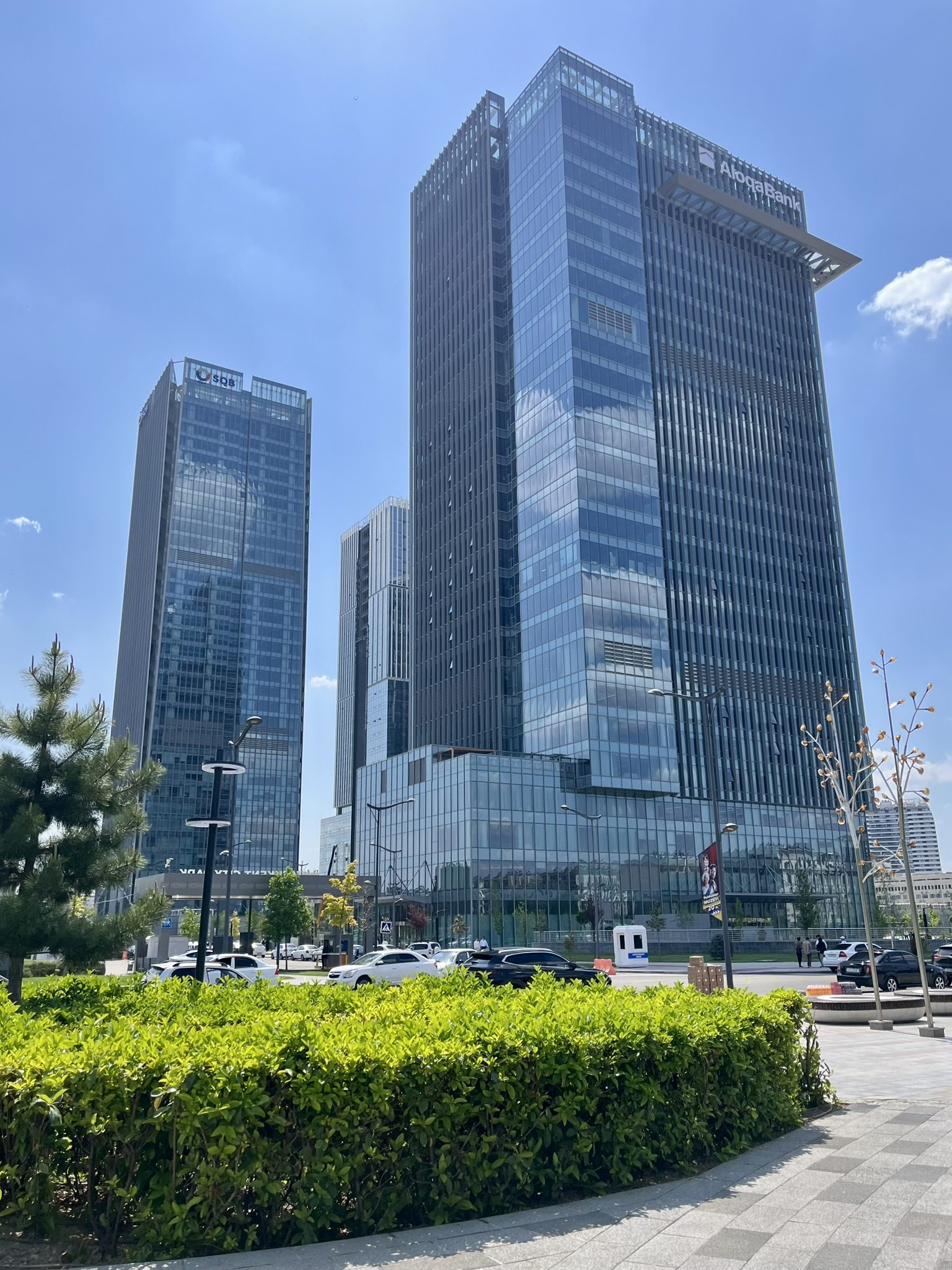
International rating agency S&P Global Ratings has upgraded the long-term credit rating of Uzbekistan's Kapitalbank from BB- to BB. The outlook is stable. The bank's short-term rating was affirmed at B.
Kapitalbank has been operating since 2001 and holds the largest share of Uzbekistan's retail deposit market, while ranking fourth by volume of retail lending. S&P separately noted the bank's brand recognition. Since 2022, Kapitalbank has been part of Uzum Group, which operates in fintech and e-commerce, and it handles most of the group's banking operations. As of September 30, 2026, the bank accounted for about 82% of the group's total loan portfolio. Net profit for the first nine months of 2026 amounted to $93 million.
The agency expects the risk-adjusted capital (RAC) ratio to rise to 11-13% in 2027-2028 from 10.8% as of September 30, 2026. According to S&P's assessment, slower lending growth - less than 10% a year - and full retention of earnings will support the improvement in capitalization.
Regulatory requirements tightened in 2023-2024 cap the share of certain types of lending: auto loans, cash and card consumer loans and overdrafts - at 25% of the bank's loan portfolio each. As of September 30, 2026, auto loans accounted for 48% of Kapitalbank's portfolio. Since 2025, the bank has been issuing loans predominantly for new cars and, according to S&P, they are not subject to the 25% limit that applies to used cars.
Over the next two years, Kapitalbank plans to increase corporate lending and lending to small and medium-sized businesses by more than 30%, gradually reducing the share of auto loans to the regulatory limit. S&P's forecast does not assume additional capital injections from shareholders, but is based on full retention of earnings.
The shift of the portfolio toward lower-margin corporate lending may put pressure on the net interest margin. S&P estimates that return on equity (ROE) may fall below 20% in 2026-2028; the average over the previous four years was about 40%. At the same time, the agency believes profitability will remain favorable relative to comparable banks.
Asset quality is forecast to remain broadly stable and better than the banking system average. The share of Stage 3 loans and other real estate on the IFRS balance sheet is expected to stay at around 5% over the next 24 months; as of September 30, 2026, the figure stood at 4.9% against a sector average of 7.5-8.5%. As of September 30, 2026, reserves covered 51% of Stage 3 loans.
S&P positively assessed the diversification of the portfolio through corporate lending and SME financing. Unlike state-owned banks, Kapitalbank does not take part in directed lending programs and carries out a detailed assessment of borrowers' financial standing.
The stable outlook reflects the expectation of high profitability and acceptable asset quality over the next 12 months. A downgrade is possible following a similar action on Uzbekistan's sovereign rating or a deterioration in the bank's own creditworthiness. The agency still considers an upgrade unlikely: it would require an improvement in Uzbekistan's sovereign rating and a stronger assessment of Uzum Group's creditworthiness.
Sources — how we know this
- PrimaryUzDaily
Start Trading
Turn this analysis into an opportunity via Binance or TradingView.
View Now →