This story is currently available in Englisch only — a translation isn't ready yet.
The November 4 Briefing: Washington Tells the Gulf to Brace, and Cairo Starts Dialling
A reported warning of fresh strikes on Iran the day after the US midterms has already moved the diplomatic furniture in Riyadh, Abu Dhabi and Cairo.
ℹ️ Browser-Stimme · KI-Studiostimme bald verfügbar

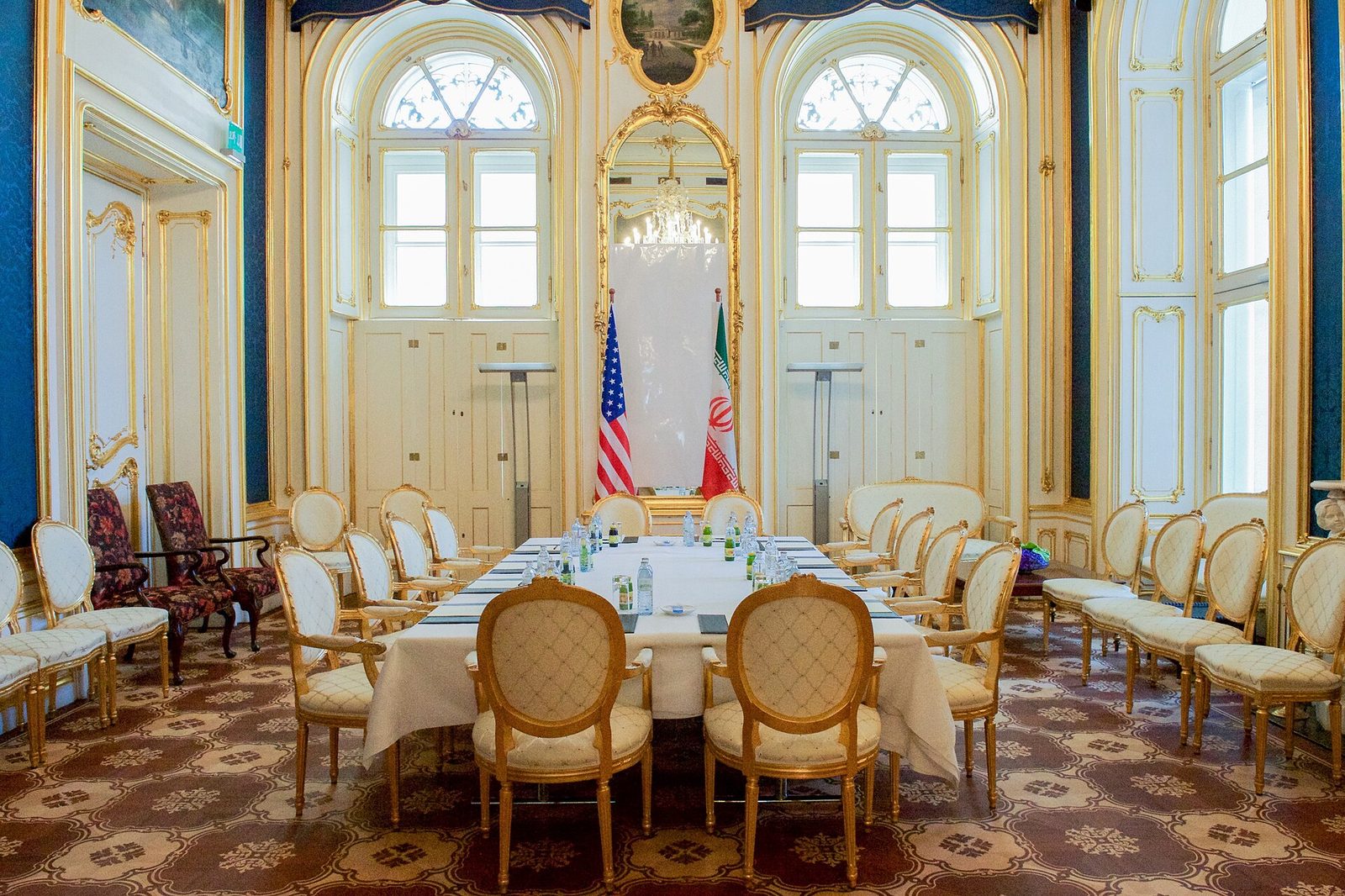
A US administration does not quietly brief Gulf capitals to prepare for «a short, intense round of strikes as soon as November 4» unless it has already decided that domestic politics will tolerate the aftermath. According to a US television network cited this week by a Russian wire, that is precisely the message Washington has passed to several Persian Gulf governments. Treat the leak with the usual care — it is a report of a briefing, not the briefing itself — but treat the diplomatic reaction as data, because the reaction has already begun.
The reaction has a name, and it is Badr Abdelatty. Egypt's foreign minister spent Tuesday on the phone to Prince Faisal bin Farhan in Riyadh and Sheikh Abdullah bin Zayed in Abu Dhabi, and the Egyptian foreign ministry did not pretend the calls were routine. Its own spokesperson described «growing signs of a possible escalation» and flagged the revival of the four-country ministerial track that pairs Cairo with Riyadh, Ankara and Islamabad. When a foreign ministry reaches for a four-capital mechanism on a Tuesday, it is not sending a signal to its own public. It is sending a signal to Washington that the regional cost of the next round has already been priced, and the price is uncomfortable.
Here is the arithmetic the Gulf capitals are doing. The February war against Iran was supposed to have been closed by the June memorandum of understanding. It wasn't: Washington resumed large-scale strikes overnight into July 8, citing Iranian violations around the Strait of Hormuz, before announcing a pivot to economic strangulation. That pivot lasted roughly four months. Now, if the leak is accurate, the military instrument is back on the table — timed, revealingly, to the day after the midterms. A regime that schedules its wars around its own ballot is a regime whose allies cannot plan beyond its ballot either. That is the quiet complaint audible in every Gulf chancery this week.
An unnamed regional official told the same report it «would come as no surprise» if some Gulf states refused the use of bases on their soil for the next round. Read that sentence twice. The hosts of American airpower are letting it be known, through deniable channels, that the hospitality has a ceiling. My reading is that this is not a bluff and not quite a veto — it is a bid to raise the political price of using the bases high enough that Washington thinks twice. The Gulf monarchies are not pacifists. They are actuaries. They have watched Iranian retaliation calibrate itself over three rounds now, and they do not fancy being the address on the envelope.
The Strait of Hormuz is already behaving as if the ceasefire has lapsed in practice if not on paper. Iran's own Revolutionary Guard has acknowledged that four tankers caught fire in the Strait after striking mines — the kind of incident that in any other decade would have been the lead story for a week, and that this week registers as background noise. Mines in Hormuz are a message priced in insurance premiums. Shipping underwriters do not wait for a presidential statement; they reprice on the first photograph.
The Iranian political signal is louder and aimed further north. The secretary of Iran's Supreme National Security Council used a social media post this week to tell European capitals, in terms that did not require translation, that «war and terror have a price» and that it was now Europe's turn to pay it. He pointedly recalled a line from the German chancellor describing Israeli operations as «the dirty work» done on Europe's behalf. The rhetorical move is obvious — Tehran is trying to detach European publics from any renewed American campaign by promising them a share of the bill. The move is also an admission. Iran is bracing for the November window too.
Note who is in the four-country mechanism Cairo revived. Not Doha, not Baghdad — but Cairo, Riyadh, Ankara and Islamabad. The group is two Sunni heavyweights, a NATO member with its own Iran file, and a nuclear state. That is a de-escalation caucus deliberately constructed to be too heavy for Washington to brush aside and too Sunni for Tehran to dismiss as hostile. It is also, read carefully, a confession that the Gulf Cooperation Council's own machinery is not trusted to carry the message. When Egypt convenes the room rather than Riyadh, the room is being convened against something.
The question the desk asked — do the Gulf states hold their nerve, or does Cairo's shuttle signal collapse — is, my reading, the wrong binary. The ceasefire architecture of June did not survive July; what is left is a sequence of informal understandings held together by the mutual fear of what comes next. Cairo's phone calls are not an attempt to save an architecture. They are an attempt to buy a fortnight. If the November 4 window passes without strikes, the diplomacy worked. If it does not, the diplomacy at least created a paper trail showing which capitals asked Washington to think again, and that paper trail will matter the morning after.
What would prove this reading wrong: a Gulf state publicly offering basing rights before November 4, or an Egyptian foreign ministry that goes quiet rather than louder in the coming days. Neither has happened yet. The silence from Riyadh is the loudest sound in the file.