This story is currently available in Englisch only — a translation isn't ready yet.
Warsh Says 'Hinge Point' as Fitch Worsens North America Outlook
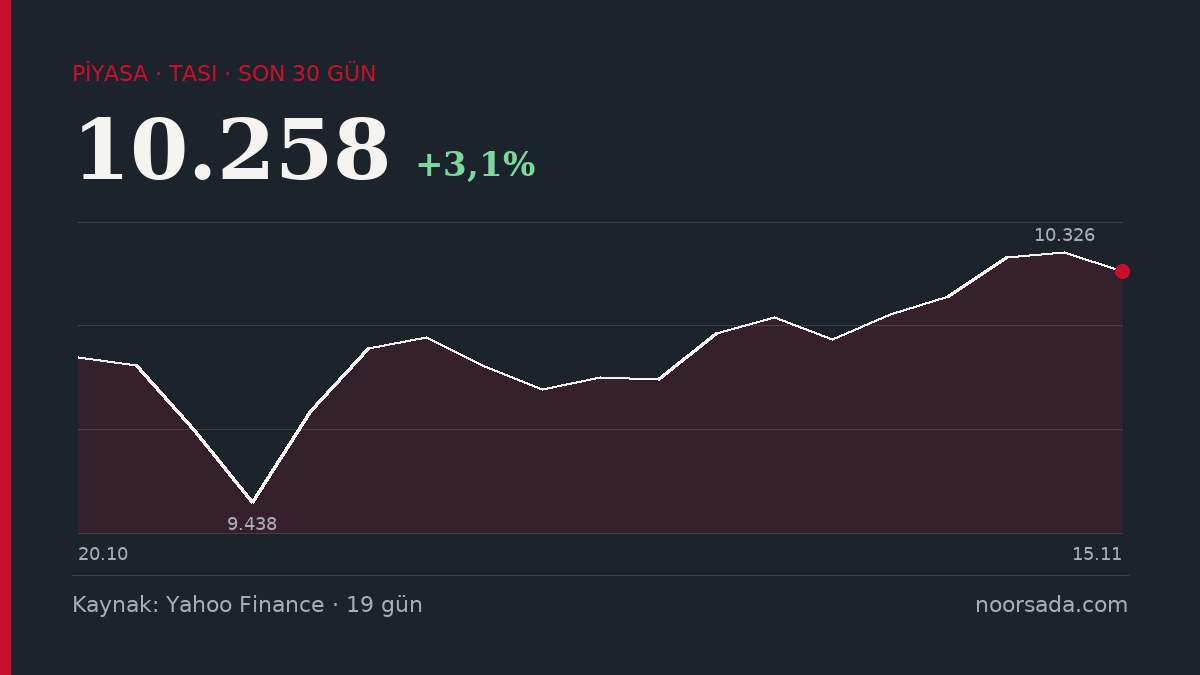
Riyal 3.7500, dirham 3.6725, TASI 10,258: the peg converts America's 7.6 percent deficit and the December meeting into the Gulf's rate path.
ℹ️ Browser-Stimme · KI-Studiostimme bald verfügbar
At the start of the month, in this column, I made a measurable promise about the equities side: entry into or exit from correction territory would coincide with a change of direction in weekly foreign flows. Today the referee's verdict arrived: no evidence. Neither of the two data series was within my reach. I neither kept the promise nor missed it; because I could not measure it, it fell flat. To quietly close out a promise that cannot be measured would be to spend this column's only capital.
Overnight two texts landed on the same desk. The first: Fitch designating North America's credit outlook as 'deteriorating'. According to the published statement, the rationale is the Democrats winning majorities in both chambers of Congress following the midterm elections in the US, and the fiscal risks created by divided government. The second: the sentence Fed Chair Kevin Warsh constructed in San Francisco: 'We are at a hinge point in the US economy.'
As of this morning the Saudi riyal is at 3.7500, the dirham at 3.6725, and TASI at 10,258 on the 15 November close. In other words, Gulf pricing has not yet digested these two texts. The rest of this piece is about why it will.
Fitch's move is not a rating downgrade but a directional signal — yet the numbers inside the signal are harsh: the US general government deficit is expected to remain at 7.6 percent of GDP, and the general government debt-to-GDP ratio is expected to rise to 121 percent. The agency says divided government raises the probability of a federal government shutdown and increases the risk of a standoff over the debt ceiling. For a peg regime, the translation of this is a single sentence: America's financing conditions are Riyadh's and Abu Dhabi's monetary policy. 3.7500 and 3.6725 are not the Gulf's choice; they are the Gulf branch of Washington's balance sheet.
Two sentences sit side by side in the same text. Fitch says that 'even as we expect economic growth to remain resilient, financing conditions continuing to run tight' will hurt some sectors such as housing. Growth is resilient, the outlook is deteriorating. This is not a contradiction; it is the price of the maturity. Short-term growth and long-term debt service draw in opposite directions on the same chart, and the Gulf, on the borrowing side, stands inside that chart.
Warsh's sentence is not a direction but a door: a hinge turns whichever way it is pushed. At the meeting of the Fed's artificial intelligence task force, the chair withheld his own views on white-collar employment and left the questions on the table. The line the market should read is elsewhere: according to one market analysis, AI investment heating up the technology sector is pushing the Fed to consider a rate hike in December. Under a peg regime, the December meeting is not a calendar item but an import line; what is being imported this morning is not a cut but the possibility of a hike.
The week's most expensive line also lands here: Anthropic will price its IPO on Wednesday and could raise up to 64 billion dollars at a 1.4 trillion dollar valuation. If an AI IPO and a Fed rate hike appear in the same paragraph, technology is no longer a growth story but an inflation argument.
The energy side is not calm in the weekly table: US distillate fuel stocks rose by 4,071 thousand barrels in the week of 6 November to 103,330 thousand barrels, a weekly change of 4.10 percent. In the same week crude production was 14,013 thousand barrels per day, an increase of only 10 thousand barrels, that is 0.07 percent. A 4.10 percent pile-up in product stocks while production stands still points to a week in which supply is not carrying the price.
The asymmetry is clear: as long as 3.7500 holds, anyone borrowing in the Gulf zeroes out currency risk and buys interest rate risk. Fitch's signal and Warsh's hinge are the two arms pushing up the price of that trade. Whoever locked in long-term funding before these two texts bought the fixed exchange rate's insurance cheaply; whoever waits for the December meeting will renew the same insurance at a higher price. The same 3.7500, two different balance sheets — and this morning both are looking at the same screen.