This story is currently available in Englisch only — a translation isn't ready yet.
Winter rains flood 70,000 Gaza tents and kill at least six, UNICEF says
OCHA says more than 200,000 people are affected as aid teams clear sewage at 60 sites, while the Board of Peace calls Israeli winter measures insufficient.
ℹ️ Browser-Stimme · KI-Studiostimme bald verfügbar
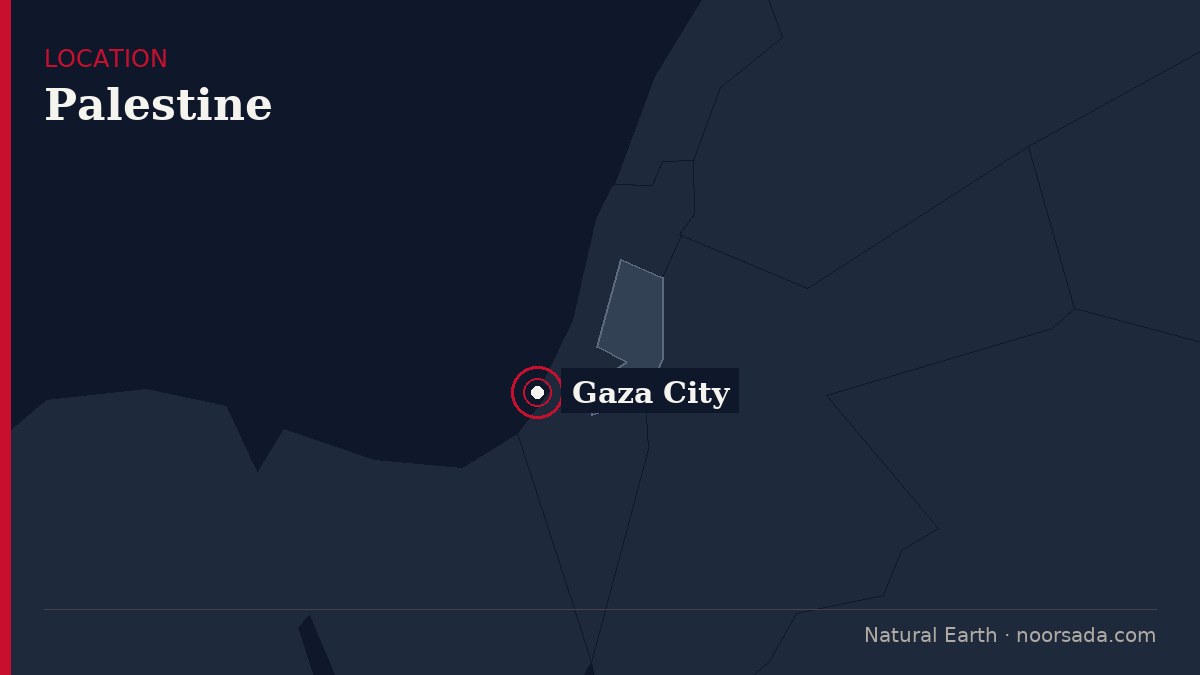
Torrential rain across the Gaza Strip has killed at least six people, including children, and flooded at least 70,000 tents, the UN children's agency UNICEF said, as temperatures fall this autumn.
Local authorities put the number of people affected at more than 200,000. Aid teams have begun clearing blocked sewage pipes and rainwater retention basins at 60 sites, work the UN emergency relief office OCHA says will benefit an estimated 30,000 families.
OCHA's humanitarian partners warn there is not enough space to move people out of flooded areas or war-damaged buildings into safe shelters. The office said Israeli authorities restrict Palestinian access to all areas behind the so-called Yellow Line, leaving most of the Strip's territory unreachable.
Rawan Al-Omari, 33, a mother of two living in a tent west of Jabalia in the north, said by telephone that the ground around her had turned into a mud desert. "Even leaving the tent has become difficult," she said. Radi Amin, 45, said his tent and everything left to him and his three children were soaked, and that their clothes only began to dry on Wednesday when the sun returned.
Israel controls roughly two thirds of the Gaza Strip, bounded by the Yellow Line. Hamas, which Germany, the European Union and the United States classify as a terrorist organisation, still governs much of the remaining coastal area where most of the roughly two million residents live.
Gaza's health ministry says more than 74,600 people have been killed since the Hamas attacks of 7 October 2023. A study by the Max Planck Institute for Demographic Research and the Centre for Demographic Studies puts violent deaths above 100,000.
A joint assessment by the World Bank, the United Nations and the European Union in April 2026 estimated that $71.4 billion (64.2 billion euro) is needed for reconstruction and economic recovery over the next ten years. Little has moved: talks on Hamas disarmament and an Israeli withdrawal are stuck, and Israel struck Nasser Hospital in Khan Younis on Thursday, saying it targeted alleged Hamas members.
The Board of Peace set up under the US-mediated October 2025 ceasefire said on 9 November that Israeli measures ahead of winter were insufficient. "We call on the leadership of the current Israeli government to immediately approve and enable the entry of all necessary aid and winter-protection materials," it said on X. COGAT, the Israeli body coordinating government activity in the Palestinian territories, said the same day that twelve suction vehicles for sewage disposal had entered Gaza for the International Committee of the Red Cross.
Nathan Brown, a professor of political science and international relations at George Washington University, said the rains show how far the plan has stalled. He attributed the Board of Peace's failure to advance reconstruction to Israeli objections that Hamas must disarm fully first.
Sources — how we know this
- PrimaryDeutsche Welle (DE)