This story is currently available in Englisch only — a translation isn't ready yet.
The tenge turns 33: from the first banknotes to digital infrastructure
The currency, put into circulation on 15 November 1993, has come from the first national banknotes to modern security features.
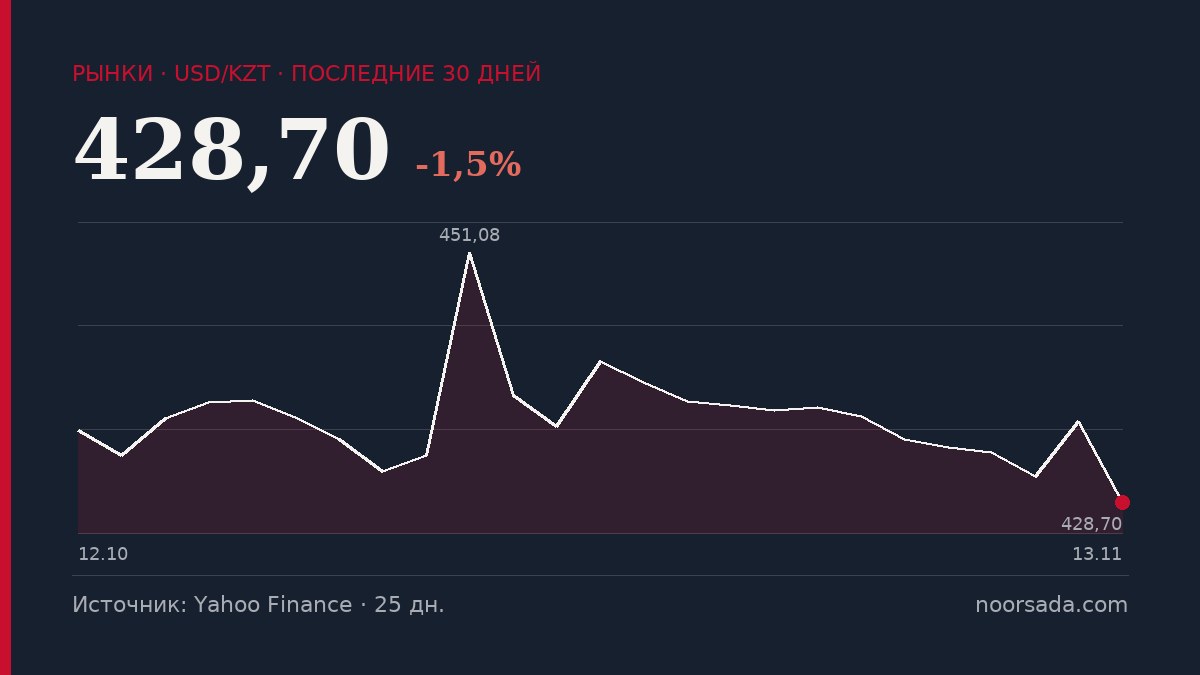
Kazakhstan is marking the 33rd anniversary of its national currency, the tenge. The currency was put into circulation on 15 November 1993 and has since travelled from the first national banknotes to modern security features and digital payment infrastructure.
The introduction of the tenge was preceded by institutional changes in 1993. On 13 April the National Bank of the Kazakh SSR became the National Bank of Kazakhstan, and the following day the government adopted a law on banking activity that cemented the independence of the central bank and its accountability to the Supreme Council and the president.
The name of the currency was chosen on the basis of historical research into the region's monetary traditions: on the proposal of academician Sauyk Takazanov, the designers took the word "tenge" — an old Kazakh term for money. The design of the first banknotes was developed by Timur Suleimenov, Mendybay Alin, Agimsaly Duzelkhanov, Dosbol Kasymov and Khairulla Gabzhalilov. Initially there also existed a smaller monetary unit, the tiyn, but inflation gradually eroded its value and it went out of circulation.
Since 1993 five main series of banknotes have been issued: "Portraits", "Al-Farabi", "Baiterek", "Қазақ елі" and "Saka Style". The first banknotes carried portraits of figures from science, art, culture and education, and on the reverse — landscapes of Burabay, the Ile-Alatau mountains and Lake Balkhash, as well as mosques and mausoleums. In 2006 a series with the Baiterek monument entered circulation, and in 2011 one with the "Қазақ елі" monument.
In 1994 Kazakhstan began preparing to create its own banknote production: a turnkey contract was signed in early 1994, and design and construction proceeded simultaneously because of the tight deadlines. The National Bank's banknote factory opened in 1995 and produced more than 83 million banknotes that year; in 1996 output exceeded 104 million, approaching its design capacity.
In addition to ordinary banknotes, commemorative ones are issued — including 1,000 tenge for the 2010 OSCE chairmanship, for the chairmanship of the Organization of the Islamic Conference, for the Kul Tigin monument, for the 80th anniversary of Victory in the Second World War and for the 2011 Asian Winter Games.
Security remains a priority: the banknotes have a characteristic texture and sound of paper, watermarks and security threads, hidden images, colour-changing ink and tactile printing. The 10,000 tenge banknote of the "Saka Style" series received the Best New Banknote 2024 award at the High-Security Printing competition.
Sources — how we know this
- PrimaryThe Astana Times
Start Trading
Turn this analysis into an opportunity via Binance or TradingView.
View Now →