This story is currently available in Englisch only — a translation isn't ready yet.
Uzbekistan aims to become one of the world's leading centers of the textile industry
A ban on cotton fiber exports and a record harvest of 5 million tonnes: the number of textile enterprises has grown from 1,000 to more than 10,000
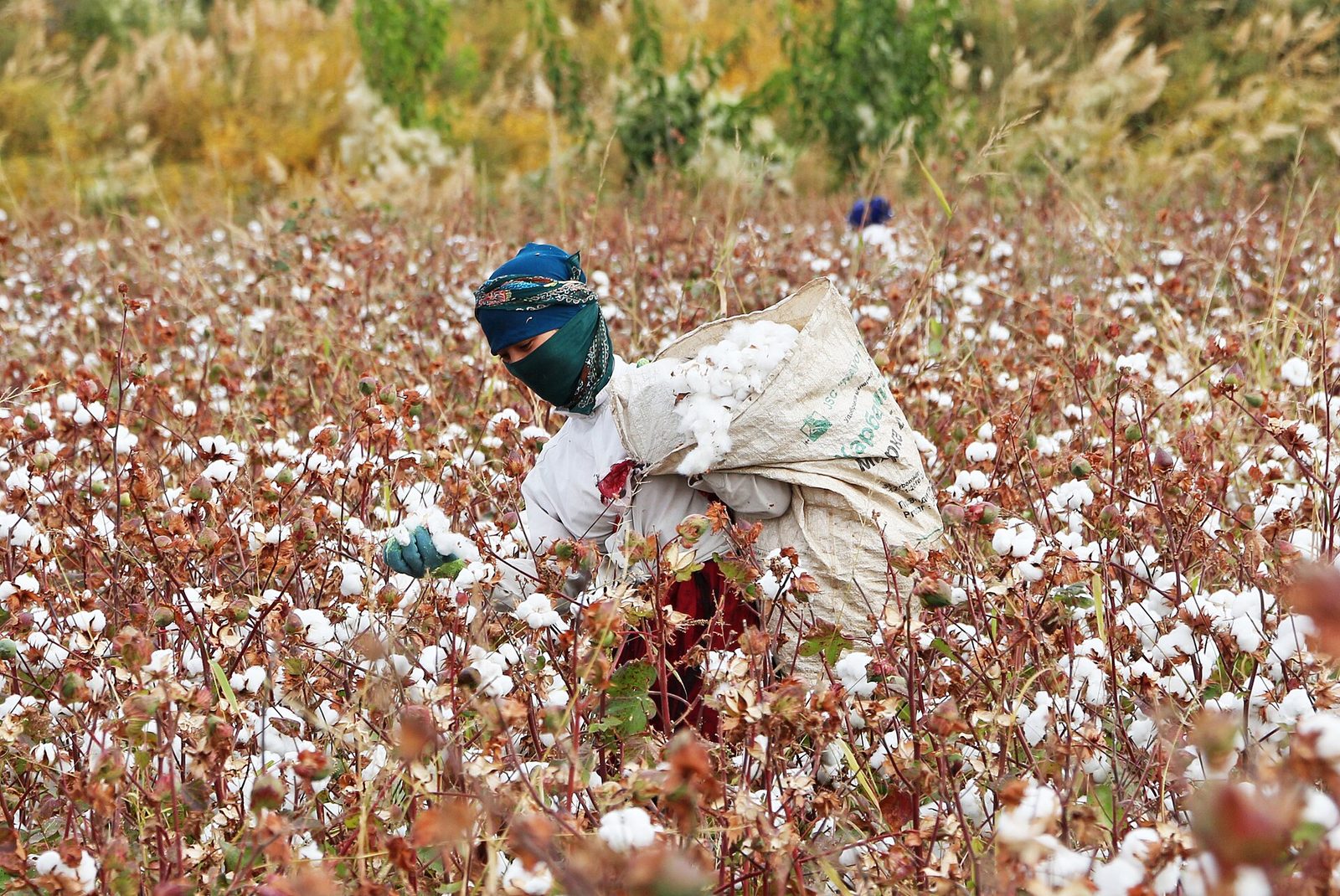
Uzbekistan is shifting its cotton sector from raw material exports to domestic processing: since 2020 a full ban on the export of cotton fiber has been in force in the country, and the number of textile enterprises has grown from about 1,000 in 2016 to more than 10,000 as of September 1, 2026. This was reported by the National Information Agency of Uzbekistan (UzA).
The 2026 cotton harvest amounted to 5 million tonnes — a record figure for the period of the country's independence. In 2025, 3 million 986 thousand tonnes were harvested, in 2024 — 3 million 181 thousand, in 2023 — 3 million 710 thousand, in 2016 — 2 million 959 thousand tonnes. Yields rose from 4,550 kilograms per hectare in 2025 to 5,620 kilograms in 2026. The growth was aided by the introduction of new sowing methods and high-yield seed varieties, science-based farming practices, expanded mechanization, the exchange of experience between farmers and financial support for producers.
Uzbekistan is among the world's leading cotton producers, growing an average of 3 million tonnes of the crop each year. The policy envisages processing domestically about 1–1.1 million tonnes of cotton fiber obtained from the harvested crop.
The textile industry provides jobs to more than 650,000 people. The value of output rose from about 2 billion dollars in 2016 to more than 10 billion in 2025, while exports rose from 899 million to about 2.6 billion dollars. In 2025 the country supplied 700 types of such products to more than 50 countries worldwide. In 2026 it intends to increase production to 12 billion dollars and exports to 3.3 billion; by 2030 exports are expected to be brought to 7 billion dollars.
Cotton fairs have been replaced by international exhibitions in Tashkent — CAITME (the Central Asian International Exhibition of Equipment and Technologies for the Textile, Garment and Knitting Industry) and TextileExpo.
Uzbek economist Rustam Umarov, in a comment to Anadolu, noted that the lifting of the international boycott of Uzbek cotton in 2022 opened new opportunities for the sector, and the GSP Plus status granted by the European Union could strengthen the country's position in the European market. In his assessment, entry into the markets of the US, Europe and Asia will allow Uzbekistan to increase its export potential.