AgendaVerified
This story is currently available in Αγγλικά only — a translation isn't ready yet.
A Romanian Band in Sokhumi: The Small Concert That Embarrasses Two Foreign Ministries
Bucharest's "firm disagreement" with Morandi's Abkhazia gig is a lesson in how sanctions regimes fray at the edges — through nightclubs, not summits.
Ταχύτητα:
ℹ️ Ανάγνωση από τον περιηγητή · στούντιο φωνή AI έρχεται σύντομα
NV
Natasha Volkov
· 4 min read
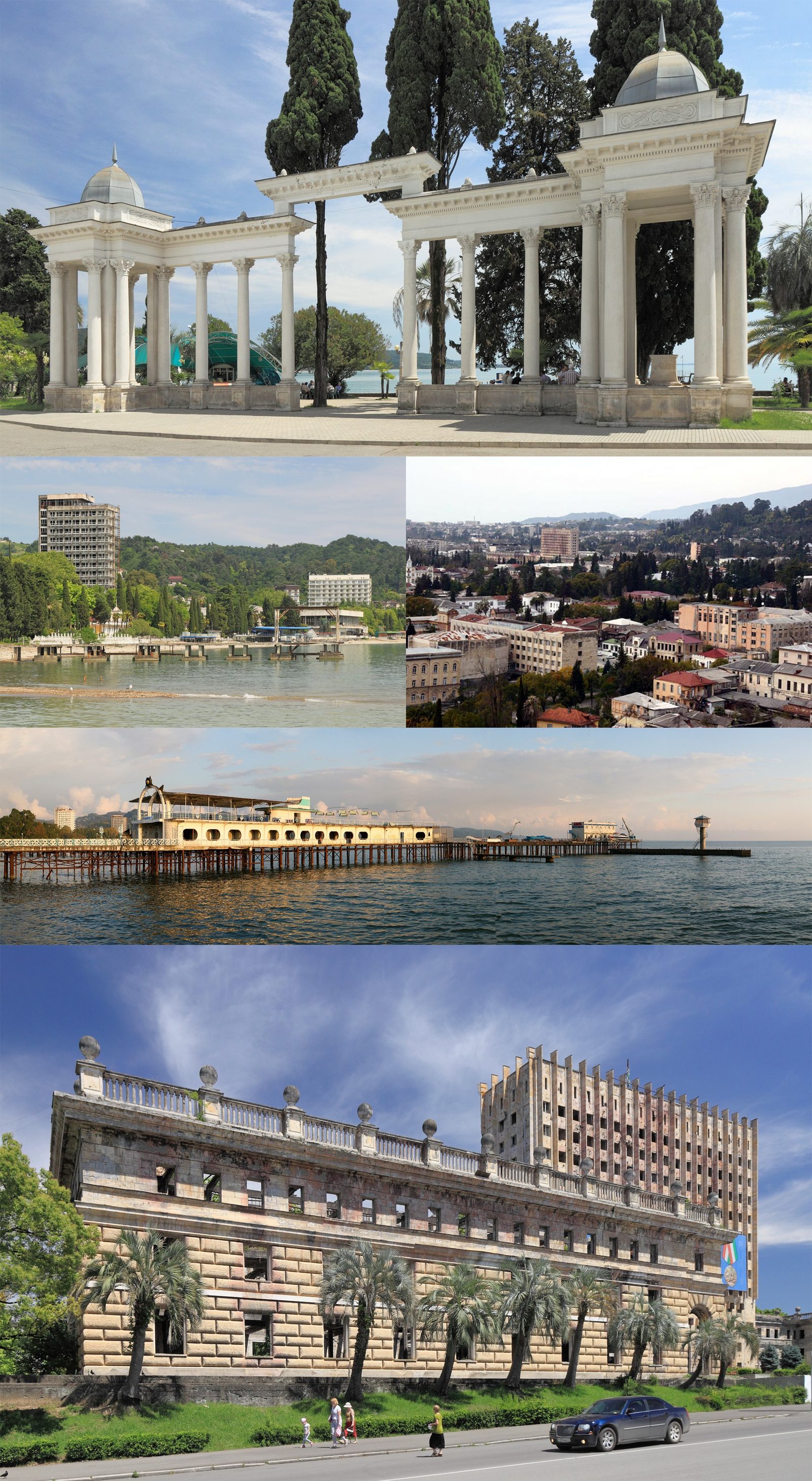
The most revealing document in European diplomacy this week is a booking contract for a pop concert. Morandi, a Romanian band with a catalogue better known to wedding DJs than to chancelleries, is scheduled to perform in Sokhumi on August 7. Romania's Foreign Ministry has expressed "firm disagreement". The concert, at time of writing, is going ahead anyway.
This looks trivial. It is not trivial. It is the exact texture at which a non-recognition policy either holds or begins to leak.
Start with the decision-maker, because the Foreign Ministry in Bucharest is only one of three. The second is the band's management, which did the arithmetic and concluded that a fee in Sokhumi was worth more than a rebuke in Bucharest. The third, and the one nobody in Brussels wants to name aloud, is the de facto authority in the occupied territory, whose entire cultural calendar is a soft-power exercise underwritten from Moscow. Every foreign act that plays Sokhumi is a small brick in the wall that says: this place exists, come and dance in it.
Romania has recognised Georgia's territorial integrity for as long as Romania has had a post-Soviet foreign policy worth the name. The problem is that recognition is a statement, and a statement costs nothing. Enforcement — the machinery that would make a Romanian citizen think twice before flying into an airspace their own government considers illegally administered — is what costs. Bucharest does not have that machinery, and it is not alone. No European foreign ministry has built a serious legal instrument to stop its own pop stars from playing separatist capitals. The sanctions architecture was designed for banks and dual-use goods. It was not designed for keyboardists.
Tbilisi understands this perfectly and has for years. Its response to acts performing in Sokhumi or Tskhinvali has been a public register — a list, essentially, of persona non grata musicians. The list works on some artists and fails on others, and the ones on whom it fails are precisely the ones for whom the Georgian market is too small to matter. Morandi is not a household name in Tbilisi. That is not a coincidence; that is the business model. The concert economy of unrecognised territories runs on acts whose downside from Georgian blacklisting is negligible and whose fee from Sokhumi is not.
The pattern here reaches back further than the current government in either capital. Every frozen conflict in the post-Soviet space has developed the same secondary economy: entertainers, minor athletes, second-tier academics, all of whom cross the line of control because the line of control is, to them, an abstraction, and the cheque is not. Northern Cyprus ran this playbook for decades. Transnistria still runs it. The Donbas territories ran it aggressively between 2014 and 2022, until a full war made the calculation harder. Abkhazia has been running it quietly the entire time, with the added advantage that its patron in Moscow can pick up any shortfall.
What makes this week's episode worth a column, rather than a wire brief, is the timing. Bucharest's protest arrives in the same news cycle as a Hungarian journalist being escorted out of Georgia by migration authorities, and a fine — small, symbolic, but a fine — levied on a pro-government broadcaster for breaching impartiality rules. Three stories, three different vectors, one shared subject: who gets to decide what happens inside Georgia's borders and inside the territories Georgia claims. The Romanian concert is the outward-facing version of the question. The Hungarian journalist and the broadcaster fine are the inward-facing ones. A government that cannot stop a Romanian synth-pop act from playing Sokhumi will compensate by demonstrating control over the perimeters it can still police — the migration desk, the media regulator.