This story is currently available in Αγγλικά only — a translation isn't ready yet.
When a Qatari LNG tanker takes a hit in the Hormuz, the ripple reaches every football club in the Gulf — and every kid saving up for a replica shirt.
ℹ️ Ανάγνωση από τον περιηγητή · στούντιο φωνή AI έρχεται σύντομα

Khalid was eleven years old when he started keeping a notebook.
Not for school. For wages. He copied transfer fees from his phone into a spiral-bound pad — not because he understood them, but because the numbers felt like proof that the thing he loved was real, that it existed in the same world as grocery bills and his father's commute. He keeps the notebook still, at twenty-three, somewhere in a flat in Doha with a window that faces west. On a clear evening, he tells you, you can almost smell the Gulf.
Last week, a tanker carrying Qatari liquefied natural gas was struck while transiting the Strait of Hormuz. Khalid heard about it not on the news but in a football group chat, from a friend who works port logistics, who sent a voice note in the middle of the night. The note said: "Brother, you know what this means for the clubs."
Khalid knew. He closed the chat and opened the notebook.
---
Let's stay at street level for a moment, because that is where this story actually lives.
A replica shirt in Riyadh costs somewhere between 180 and 250 Saudi riyals, depending on whether it carries the sponsor logo of a state energy company or an international bank. For a family of four in a middle-income district — not wealthy, not struggling, just present — that shirt represents a calculation. The father earns. The mother budgets. The child waits. When the club signs a new forward and changes the third kit in January, the calculation starts again.
This is the household unit of Gulf football economics. It sounds small. It is not small. Multiply it across the paying attendance figures of Al-Hilal, Al-Nassr, Al-Ahli, and Al-Ittihad — clubs whose stadium numbers have grown measurably since the high-profile signings of recent years — and you begin to see the base of the pyramid. Ticket revenue. Merchandise. The concession stand. The parking. The small businesses that cluster around matchday like pilot fish around a shark.
These households — Khalid's household, the family in Riyadh — are the bottom rung. They are the people for whom football finance is not abstract. It is the shirt. It is the ticket. It is whether Dad says yes or not on a Friday morning.
---
Climb one rung.
Doha in the summer of 2026 has been running on two parallel frequencies. On one frequency: the football calendar, the preparation for the coming season, the careful positioning of Qatar's clubs within a regional landscape that has become dramatically more competitive since Saudi investment accelerated. On the other frequency: the geopolitics of energy, which in this part of the world is never, ever separable from the economics of everything else.
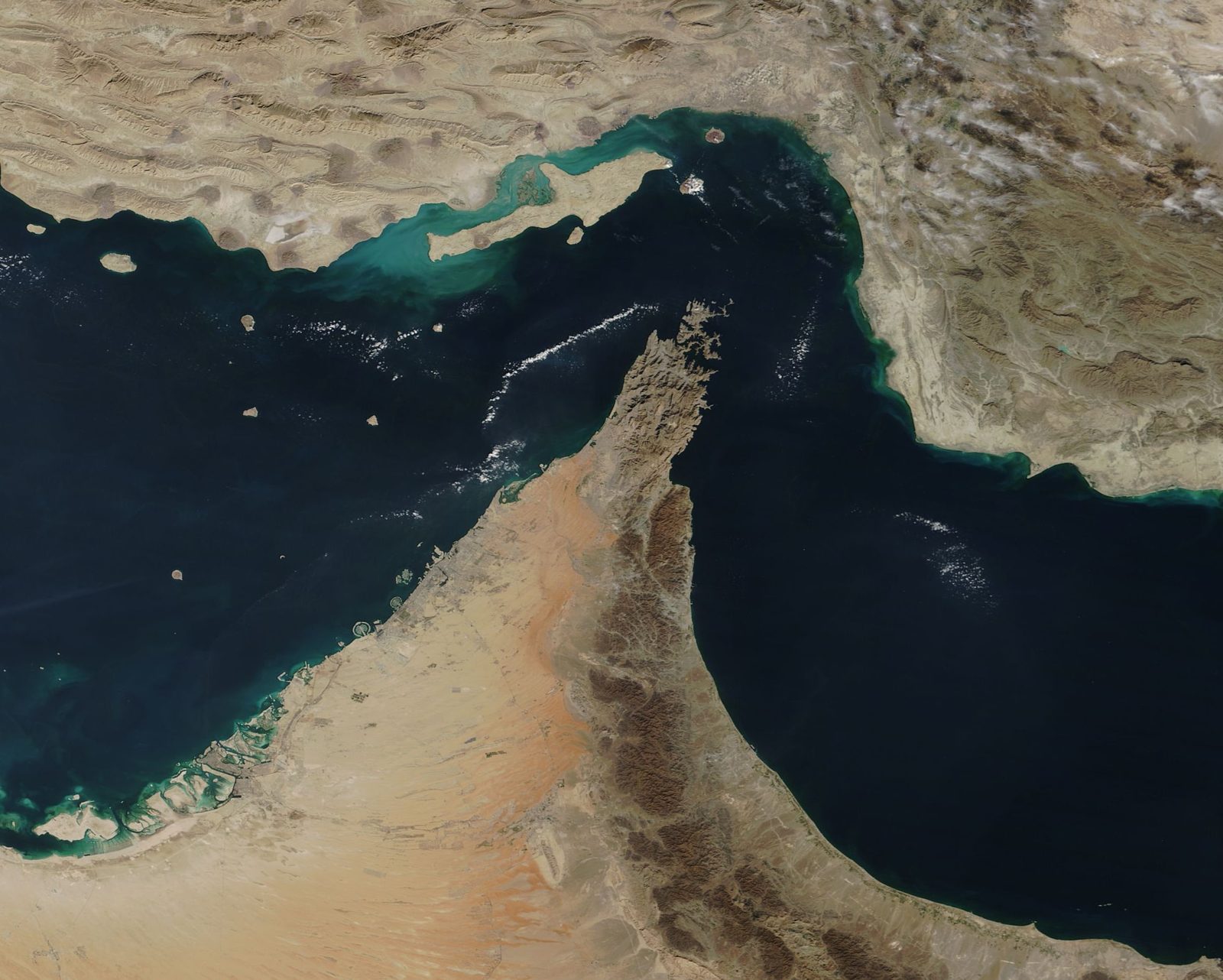
The strike on the LNG tanker in the Strait of Hormuz — reported by Bloomberg and confirmed through regional channels — arrived during a period already taut with Iran-related tension. The Strait is not merely a shipping lane. For Qatar, it is the corridor through which a significant portion of the country's energy wealth travels to the world. Disrupt that corridor, and you do not simply disrupt a commodity price. You disrupt the sovereign income that funds the sovereign wealth fund that funds the football infrastructure that pays the wages that fills the stadiums that sells the shirts.
Khalid's friend in port logistics understood this in his bones before any analyst published a word. That is what a voice note at 2 a.m. actually is: the city's nervous system firing.
---
Climb another rung. We are at the national level now, but let's not stay abstract for long.
Gulf football — the project of it, the ambition encoded in every marquee signing since the early 2020s — has always depended on a specific political economy. Sovereign funds are not magic. They are pools of accumulated energy revenue, managed by states, directed in part toward soft power, of which sport is a primary instrument. The investment in top-level players, in coaching structures, in stadium upgrades, in broadcast rights negotiations: all of it flows downstream from upstream.
When the upstream is threatened — physically, in the Strait, or politically, through the cascading tensions that recent reports describe as worsening between Gulf states and Iran — the downstream does not immediately dry up. These funds are large. The buffers are real. But the calculus shifts. Finance ministers have conversations. Priorities are quietly re-examined. A transfer that looked straightforward in June looks different in August when the energy corridor is under active threat.
This is not speculation about any specific club's transfer window. The live data does not support specific claims about individual clubs or players, and so I will not make them. What the data does support — through the tanker story, through the regional tension reporting, through the Iran-Hormuz coverage — is a structural observation: Gulf football clubs exist inside a geopolitical weather system that the clubs in Madrid and Manchester simply do not.
A club in England can afford to treat its finances as a football problem. A club in Riyadh or Doha cannot. The pitch and the Strait are connected. The wage bill and the LNG price are in the same sentence, whether or not anyone writes it that way.
---
Top rung. The system.
There is a version of the Gulf football story that gets told as either triumph or cautionary tale, and both versions irritate me, because both flatten what is actually interesting. The interesting thing is the interdependence. The interesting thing is that a sport which markets itself as a universal language — the language of the 87th-minute goal, the language of the boy with the notebook — is in this region threaded through with energy economics, diplomatic history, and a geography that has been contested for longer than football has existed.
The Strait of Hormuz is twenty-one miles wide at its narrowest point. Every time a tanker passes through it, it carries not just liquefied gas but the economic substrate of an entire sporting project: the wages, the facilities, the academies, the broadcast deals, the replica shirts, the eleven-year-old with the spiral notebook who is still, at twenty-three, writing things down because the numbers feel like proof.
That is the system. It is not a conspiracy. It is geography meeting ambition meeting money meeting the oldest human desire, which is to watch something beautiful happen in real time and feel it mean something.
---
Come back down.
A system built on energy corridors threads through every club budget, every stadium project, every signing announced on a summer afternoon — and lands, finally, on a single household in Doha, where a young man with a notebook is doing the same calculation his father once did, listening to the Gulf through a west-facing window, wondering whether this season, finally, the shirt will be worth the price.
Khalid has not closed the notebook yet. But for the first time in a while, he told his friend in port logistics, he is not sure what to write next — and I find myself wondering whether that uncertainty is the most honest thing anyone in Gulf football has said all summer.
A disruption to Qatar's LNG shipping through the Strait of Hormuz ripples through the entire Gulf football system — from sovereign wealth funds that bankroll elite signings down to families in middle-income neighborhoods deciding whether they can afford a replica shirt. Energy geopolitics and football economics are inseparable in this region in ways that European clubs never face.
If you're a Gulf football fan or household budgeting for matchday expenses, regional energy tensions directly affect club spending and merchandise prices in ways most other fans never experience. The article maps how a tanker strike abroad translates into real financial choices for families and clubs, making the invisible connection between global energy corridors and local stadium economics explicit.