Brent at $105 and a President Threatening to 'Blow Up' Anyone Near Iran's Uranium
Trump's warning about Tehran's buried stockpile isn't diplomacy. It's the soundtrack to a $105 barrel — and the market is listening.

Brent crude closed Monday's Asian session at $105.71 a barrel, up 1.50 percent. That is the number that matters this morning. Every other headline in my notebook bends around it.
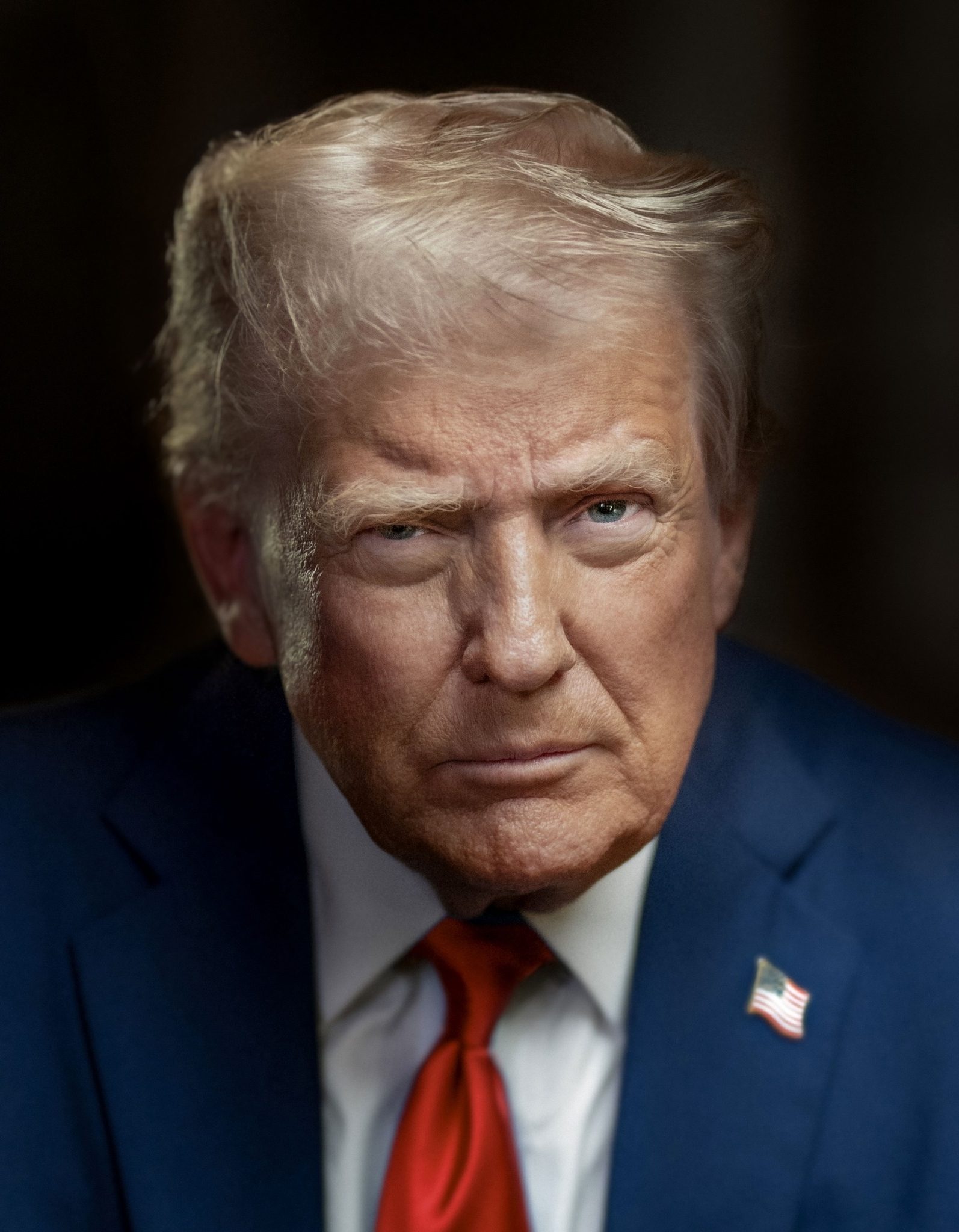
The trigger, if we are being honest, sits in Washington. President Donald Trump told reporters the United States is monitoring Iran's buried enriched uranium and would, in his words, "blow up" anyone attempting to approach it. The quote is vintage Trump — half mob boss, half real-estate broker — and the oil market read it precisely as intended.
I have covered enough wars to know the difference between a threat designed to deter and a threat designed to prepare a public. This one smells like the second.
Let us be clear about what "buried uranium" implies. It implies that whatever military action the United States and Israel undertook against Iran's nuclear facilities did not finish the job. It implies that Tehran retained a stockpile, moved it, hid it, and is — in the Trump administration's framing — guarding it. And it implies Washington is publicly reserving the right to strike again.
That is not a ceasefire posture. That is an intermission.
"The market is pricing in a president who has decided the Iranian file is unfinished business — and it is buying barrels accordingly."
For the Gulf, the implications are immediate and unpleasant. Every dollar Brent climbs above $100 is a dollar of fiscal cushion for Riyadh and Abu Dhabi, yes — but it is also a dollar of insurance premium against tankers in the Strait of Hormuz, against Houthi drones in the Red Sea, against an Iranian regime with little left to lose and a uranium stockpile somewhere underground.
The GCC capitals I speak to are not celebrating $105 oil. They are calculating how much of it represents demand and how much represents fear. The honest answer this week is: mostly fear.
Moscow, of course, is the silent beneficiary. Russian budget planners built this year's fiscal arithmetic around a far more conservative crude assumption. Every week Brent holds above triple digits, the sanctions architecture the West spent four years constructing leaks a little more. There is a reason the Kremlin has been conspicuously quiet on Iran lately. When your adversary is busy threatening to bomb someone else's uranium, you do not interrupt.
Europe, predictably, is the loser. European refiners are the ones swallowing the premium. European voters are the ones who will see it at the pump by June. And European foreign ministries — already exhausted by Ukraine, by Gaza, by their own internal political fractures — have neither the leverage nor the appetite to restrain a White House that views diplomacy as a weakness to be exploited in others.
Meanwhile, the diplomatic theatre continues elsewhere, almost as if to provide contrast. Kazakhstan and France launched a new academic foundation in Astana this week. Egypt and Belarus are quietly exploring commodity exchange cooperation. The Astana Times is publishing thoughtful essays on how nomadic societies preserved peace after war.
I read these stories with something between admiration and melancholy. They are reminders that statecraft can still be patient, technical, unglamorous. They are also reminders that none of it survives contact with a single presidential sentence about buried uranium.
The question I cannot stop turning over is this: what does Tehran do now? The Islamic Republic has spent the better part of a year absorbing humiliations — military, economic, reputational. Its proxies are degraded. Its currency is a rumour. Its leadership is older and more isolated than at any point since 1979. And now the American president is on television promising to incinerate anyone who approaches what may be the regime's last strategic card.
There are two possible Iranian responses, and they are not mutually exclusive. The first is to accelerate — to dare Washington to follow through, on the theory that a regime with nothing to lose is harder to coerce than one with options. The second is to disperse — to make the uranium harder to find, harder to strike, harder to threaten. Both responses push oil higher. Both make the region less stable. Neither produces a diplomatic off-ramp.
The BAFTAs gave Best Current Affairs this weekend to a documentary the BBC dropped about Israel's attacks on Gaza's health system. I mention this because it is the kind of recognition that arrives years too late to matter to the people inside the footage. I suspect that in 2029 or 2030, someone will win an award for a documentary about what happened next in Iran. The footage is being shot right now. We are simply choosing not to look at it.
So here is the question for the week ahead: at what price does Brent stop being a commodity and start being a confession?