Brent at $109.81: Tehran's Hormuz Squeeze Is Working, and Trump Knows It
The Strait is not closed. It does not need to be. The price already tells you who has leverage — and it isn't the man issuing the ultimatums.

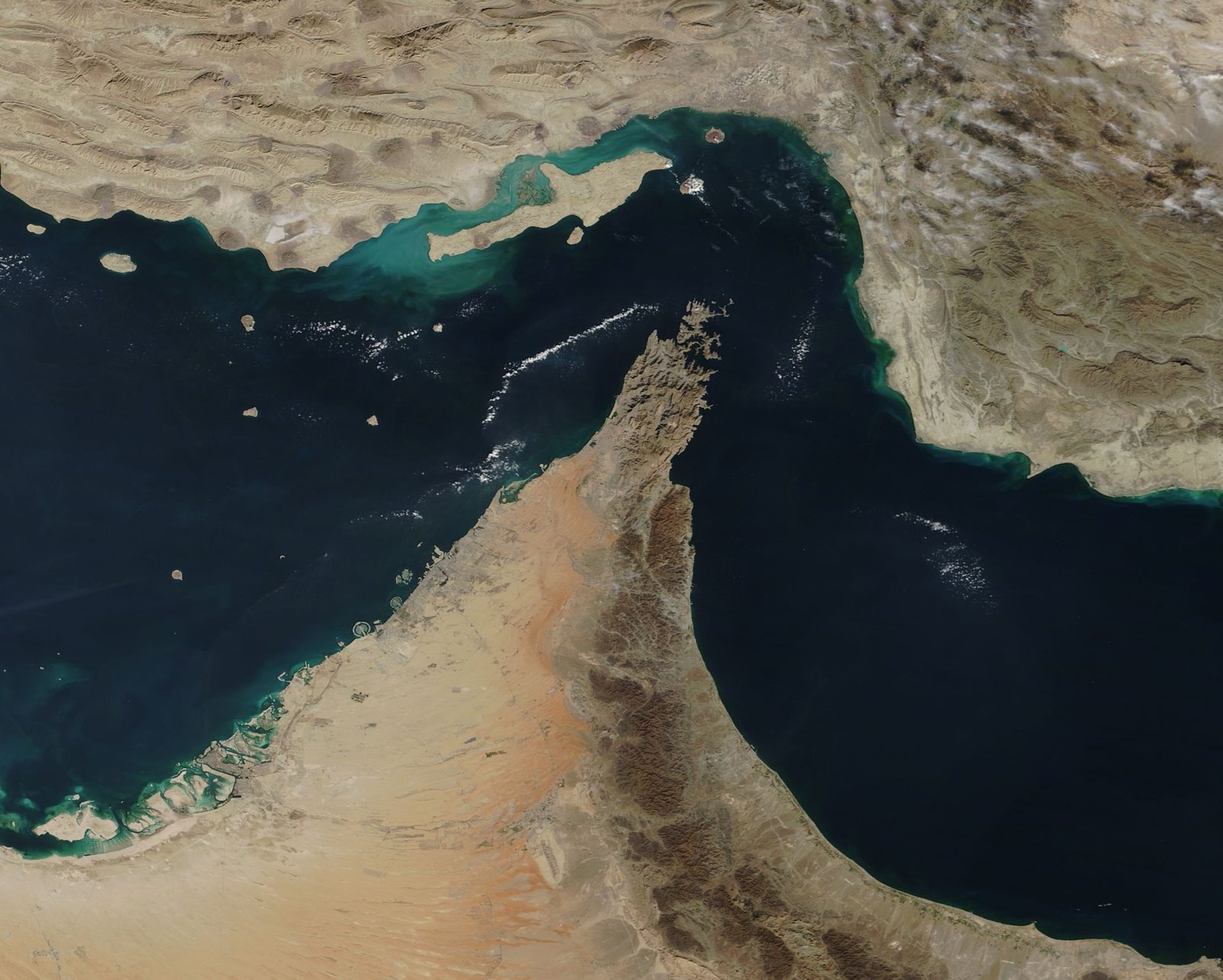
Brent crude sits at $109.81 a barrel this morning, up another 0.67 percent overnight. That is the only number you need to understand the geometry of power in the Gulf this week.
Iranian President Masoud Pezeshkian said on Monday that Tehran would "not surrender to its enemies" while keeping the diplomatic door cracked open. He is doing both things deliberately. The open hand and the tightened grip on the Strait of Hormuz are the same gesture.
Meanwhile, Foad Izadi observed in Al Jazeera that Donald Trump's repeated threats of renewed full-scale war are a sign of weakness, not strength. I would go further. They are the tantrum of a man who has discovered that his shopping list of demands does not match his wallet of leverage.
Let us be honest about what an oil price north of $109 means. It means every threat of "maximum pressure" rebounds onto the threatener. It means American drivers, European industry, and Asian importers are pre-paying the bill for a confrontation that has not even arrived.
"You cannot strangle a country that has its hands around the world's windpipe — you can only negotiate with it, or bleed alongside it."
This is the trap Washington built for itself. Years of sanctions architecture assumed Iran could be isolated from the global energy system. Instead, Iran was woven more tightly into the shadow market — Chinese refiners, ghost tankers, ruble-and-yuan settlement rails carved out by the Russians after 2022. The plumbing is already rerouted.
So when Trump issues another ultimatum, the bond desks in London and the trading floors in Singapore do not panic. They simply price in the premium. That premium, today, is $109.81. Tomorrow it could be higher.
Watch the second-order effects. Tehran does not need to mine the Strait. It needs only to make insurance underwriters nervous. Lloyd's war-risk surcharges on Gulf transits have been climbing for months, according to widely reported industry assessments. Each surcharge is a quiet Iranian victory paid for by everyone else.
The Gulf monarchies understand this perfectly. Notice who is not joining the American chorus this spring. Riyadh is talking to Tehran. Abu Dhabi is hedging. Doha is mediating, as it always does, with the smug patience of a country that learned long ago that neutrality is a revenue stream.
Meanwhile, in my own neighborhood, the picture rearranges itself accordingly. The Astana Times reports that Central Asia and China are deepening coordination on regional security and cybercrime — read that as Beijing quietly extending its writ westward while Washington shouts eastward. Kazakhstan's foreign trade turnover hit $32.9 billion, the same paper notes, and the direction of those flows tells you everything about who the post-American Eurasia is being built around.
In the South Caucasus, Tbilisi and Baku have just signed fresh agreements on gas, electricity, and a protocol to resume railway service. Every pipeline diversification deal that bypasses both Russian and Iranian chokepoints is, in effect, a hedge against the very crisis Trump's ultimatums are pricing in. Aliyev is not a fool. He reads Brent too.
The sharpest detail of the week, however, comes from occupied Tskhinvali, where Russian forces illegally detained two Georgian citizens before releasing them on May 18, and from Sukhumi, where the de facto leader of Abkhazia, Badra Gunba, declared the region's international recognition and UN membership "inevitable." Inevitable. The word is doing extraordinary work. It is the vocabulary of a Russia that, despite its battlefield exhaustion, still believes the global order is bending its way because Washington is too distracted shouting at Tehran to notice Moscow nibbling at Tbilisi.
This is the coherent picture: a multipolar squeeze. Iran tightens Hormuz. Russia tightens Abkhazia and South Ossetia. China tightens the institutional rails of Central Asian security. Each actor calibrates to American distraction, and American distraction is now structural, not episodic.
The oil price is the confession. Markets do not believe Trump can deliver on his threats without catastrophic cost to his own electorate. Markets do not believe Iran will fold. Markets are pricing a long, expensive standoff in which the loudest voice in the room has the weakest hand.
I spent a decade watching American officials explain to me, in air-conditioned briefing rooms from Baghdad to Tbilisi, that leverage was a function of military reach. They were wrong then and they are wrong now. Leverage is a function of who can absorb the pain longest. Iran has spent forty-seven years training for pain. Washington has spent forty-seven years outsourcing it.
So what happens next? Either Trump finds an off-ramp dressed up as a triumph — a deal he can call historic while conceding the substance — or Brent keeps climbing, and the political cost lands on his own party before it lands on Tehran's.
Which ultimatum, I wonder, will he quietly forget first?