Hormuz Theatre, Caspian Dividend: The Quiet Geography Rewriting Eurasia's Oil Map
Brent at $104.95 isn't a spike — it's a sentence. And Central Asia is busy translating it into infrastructure.

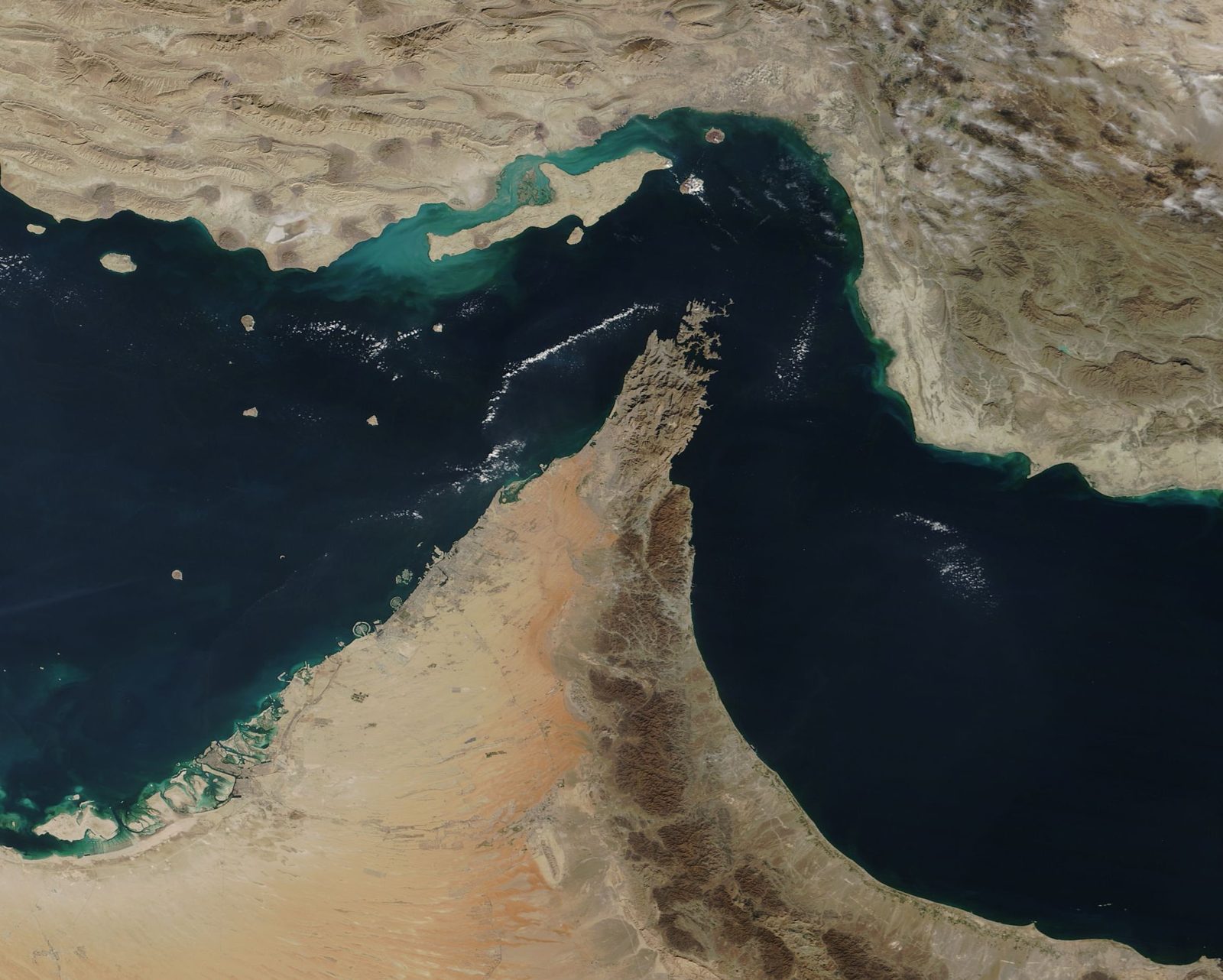
Brent crude sits at $104.95 a barrel this morning, up 0.61 percent on the day. That number, modest as the move looks, is the only honest headline in the room.
It tells you the market no longer believes the Strait of Hormuz is a routine waterway. It tells you traders have priced in the possibility that the Islamic Republic still has cards, and the appetite, to play them.
Washington has, according to reporting out of Cairo this week, rejected Tehran's latest counter-proposal. Iran wants sanctions relief and a recognised role in policing the Strait. The American answer was no.
This is not diplomacy breaking down. This is diplomacy revealing what it always was: a negotiation over who collects the toll at the world's most expensive doorway.
Meanwhile, a tanker called the M/T Eureka has been hijacked off Somalia with eight Egyptian sailors aboard. Cairo says it is monitoring closely, which is the language foreign ministries use when they have no leverage and no navy in the neighbourhood.
Piracy off the Horn was supposed to be a closed chapter. It is reopening because the international patrols that once smothered it have been redirected — to the Red Sea, to the Gulf, to wherever the next chokepoint is bleeding.
This is the world Brent at $104.95 is describing. Not a crisis. A condition.
And here is where the story turns north, away from the warm-water dramas and into the steppe. This week that Central Asia's role as a transit hedge is growing precisely because Hormuz is becoming unreliable.
That is not boosterism from a state-aligned outlet. That is the most important sentence published in the post-Soviet space this month.
For twenty years, the conversation about Caspian and Central Asian energy corridors was a slideshow at investor conferences. Trans-Caspian pipelines, the Middle Corridor, Aktau-to-Baku barge traffic — all of it perpetually five years away from mattering.
It matters now. It matters because every basis point of risk priced into Hormuz is a subsidy paid, eventually, to whoever can move a barrel or a container around it.
Kazakhstan understands this with the clarity of a country that has spent three decades being a landlocked exporter. Astana announced this week a push to expand its strategic partnership with Brazil, targeting one billion dollars in bilateral trade.
One billion is not a large number in global commerce. It is, however, a signal. Kazakhstan is diversifying its diplomatic portfolio at exactly the moment its geographic portfolio is becoming more valuable.
"The pipelines no one wanted to fund in 2015 are the pipelines no one can build fast enough in 2026."
The Gulf states see this too. Quietly, methodically, capital from Abu Dhabi and Riyadh has been moving into Central Asian logistics, agribusiness, and now energy infrastructure. The GCC has decided it would rather own a piece of the hedge than be the thing being hedged against.
Russia, for its own complicated reasons, is no longer in a position to veto this. Moscow needs the Middle Corridor to function because its own export options have narrowed to a handful of buyers who negotiate from a position of insulting strength.
China, predictably, is the silent senior partner in all of it. The Belt and Road map, mocked for years as a vanity project, is being vindicated by every tanker that doesn't sail through Hormuz.
And then there is the small, telling story out of California. A former mayor of a wealthy Los Angeles suburb has admitted, US authorities say, to acting as an agent of China, promoting pro-Beijing propaganda at the request of Chinese officials.
It is a local story. It is also a reminder that the contest for narrative runs in parallel with the contest for routes. Beijing is not only buying ports and rail terminals. It is buying microphones.
What does all this mean for the readers of this column, sitting in Doha, Almaty, Tbilisi, Cairo?
It means the era in which energy security was something other people worried about is closing. It means that being a transit country is no longer a consolation prize for not having a coastline — it is, increasingly, the prize itself.
It means that Brent at $104.95 is not a number to glance at and forget. It is the market telling you which maps to study.
The Patriarch of the Georgian Orthodox Church was elected this week. Ukraine's foreign minister will meet his Georgian counterpart in Moldova soon. A flotilla activist returned to Brazil. The small civilisational dramas continue.
But the big one — the one that will define the next decade for everyone from the Caucasus to the Gulf — is being written in shipping insurance premiums and pipeline feasibility studies.
So here is the question I am leaving my notebook open on tonight: when the next Hormuz incident comes, and it will come, which government in our region will have spent the intervening months building, and which will have spent them talking?