AgendaVerified
The Tanker Map Has Become the Treaty: Brent at $101 and the Ceasefire Nobody Trusts
A suspected oil slick off Kharg, an IRGC warning to Washington, and a barrel that won't fall — the Gulf is bargaining in crude, not communiqués.
Speed:
ℹ️ Browser-based reading · AI studio voice coming soon
NV
Natasha Volkov
· 4 min read
Brent closed Friday at $101.29 a barrel, down 1.20 percent on the day. That is the only number in this column you can take to the bank. Every other figure being thrown around capitals this weekend — barrels lost, ships rerouted, premiums priced in — is guesswork dressed as analysis.
But the price itself tells you everything. A barrel that refuses to settle below the triple digits while a ceasefire is officially holding is a barrel that does not believe the ceasefire.
I have watched this movie before. In Beirut in one decade, in Tbilisi in another. The communiqué is signed, the cameras leave, and the market quietly keeps pricing the war.
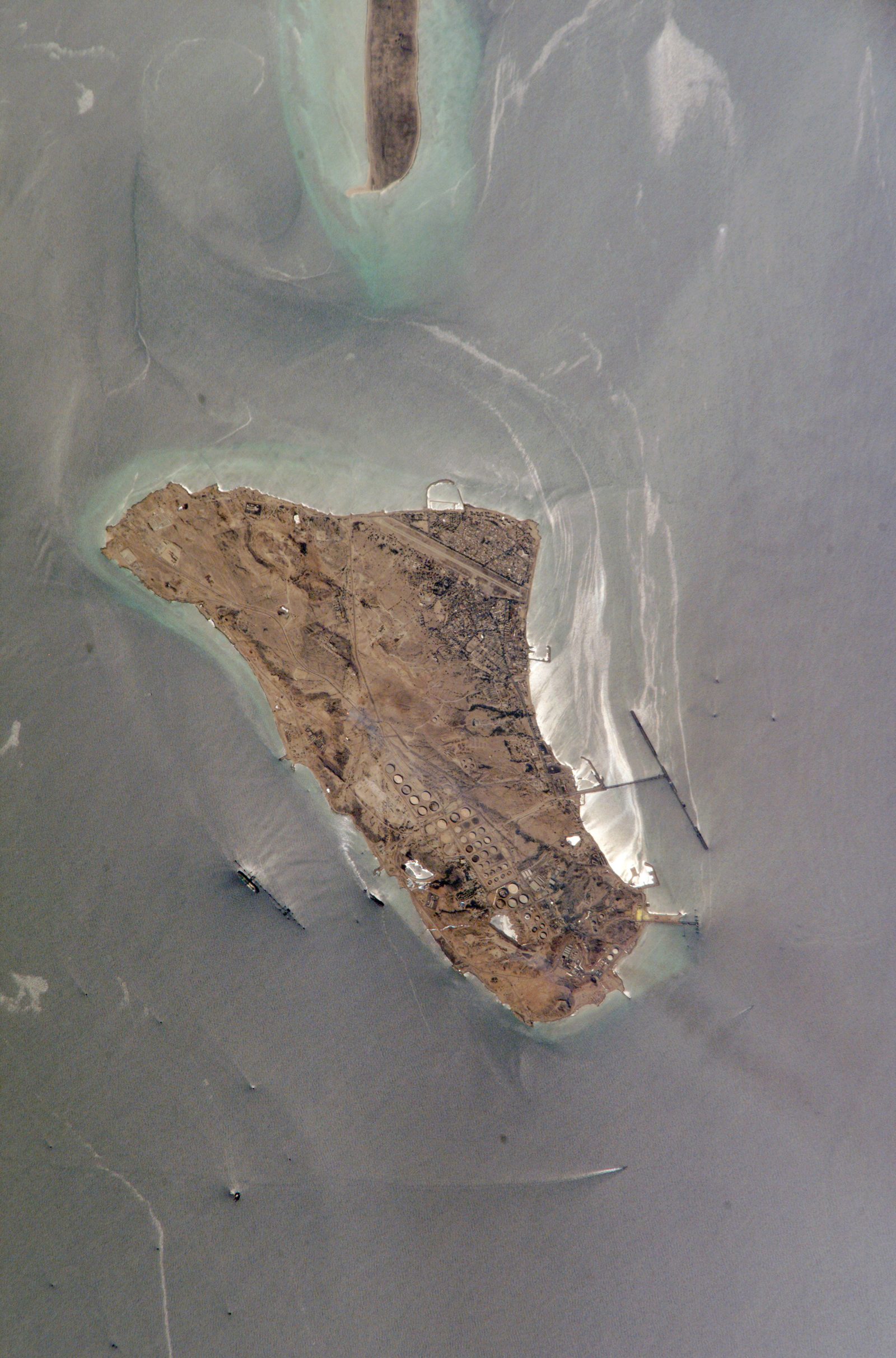
Consider what landed in our inboxes this week. Satellite images show a suspected oil slick spanning dozens of square kilometres near Iran's Kharg Island — the terminal through which the bulk of Iranian crude historically reaches the world. Nobody has claimed it. Nobody has explained it. In the Gulf, that silence is itself a message.
Meanwhile the IRGC has warned Washington against any strikes on tankers, and Israel killed 24 people in Lebanon on the same day the US-Iran ceasefire was being described, with a straight face, as holding. This is what diplomats now mean by stability: nobody is shooting at the thing that matters most, which is the hull of a ship.
> A ceasefire that requires a satellite to verify an oil slick is not a ceasefire — it is a managed ambiguity, and ambiguity has a price, and that price is one hundred and one dollars.
Let us be honest about who benefits from managed ambiguity. Tehran benefits, because a Kharg under suspicion is a Kharg that commands a fear premium even when it is pumping. Washington benefits, because a contained Iran that still bleeds revenue is the cheapest sanctions regime ever designed — the market does the enforcement for free. Riyadh and Abu Dhabi benefit, quietly, because every dollar of risk priced into Iranian crude is a dollar of margin on theirs.
The loser, as always, is everyone who has to fill a tank or heat a home outside the producing club.
Now look at the periphery, because the periphery is where the real story is told. NATO has just dispatched its newly appointed Special Representative for the Caucasus and Central Asia, Kevin Hamilton, to Tbilisi. Read that title slowly. The Caucasus and Central Asia. One portfolio. One man. The alliance has finally admitted in its org chart what the pipelines have known for twenty years: the energy corridor from the Caspian to the Black Sea is a single strategic object, and it sits directly behind the Iranian question.
Kazakhstan, for its part, ranked 58th in the 2026 Global Firepower Index — a number the this week without much commentary, and which deserves more. Astana is also launching a Lumières Foundation with Paris, the same Paris that this week reaffirmed its strategic partnership with Cairo. Egypt-France trade reached $2.96 billion in 2025, up a whisker from the year before.
These look like unrelated stories. They are not. They are the architecture of a hedging order. Every middle power on the rim of this crisis — Astana, Cairo, Tbilisi, Paris in its imperial nostalgia — is buying optionality. None of them want to be caught on the wrong side of whatever the Gulf decides to be next month.