War, Tankers, and Towers: The Iran Conflict Is Repricing Gulf Real Estate
From Riyadh's stalled megaprojects to Dubai's safe-haven surge, the regional war is redrawing the Gulf property map in real time.

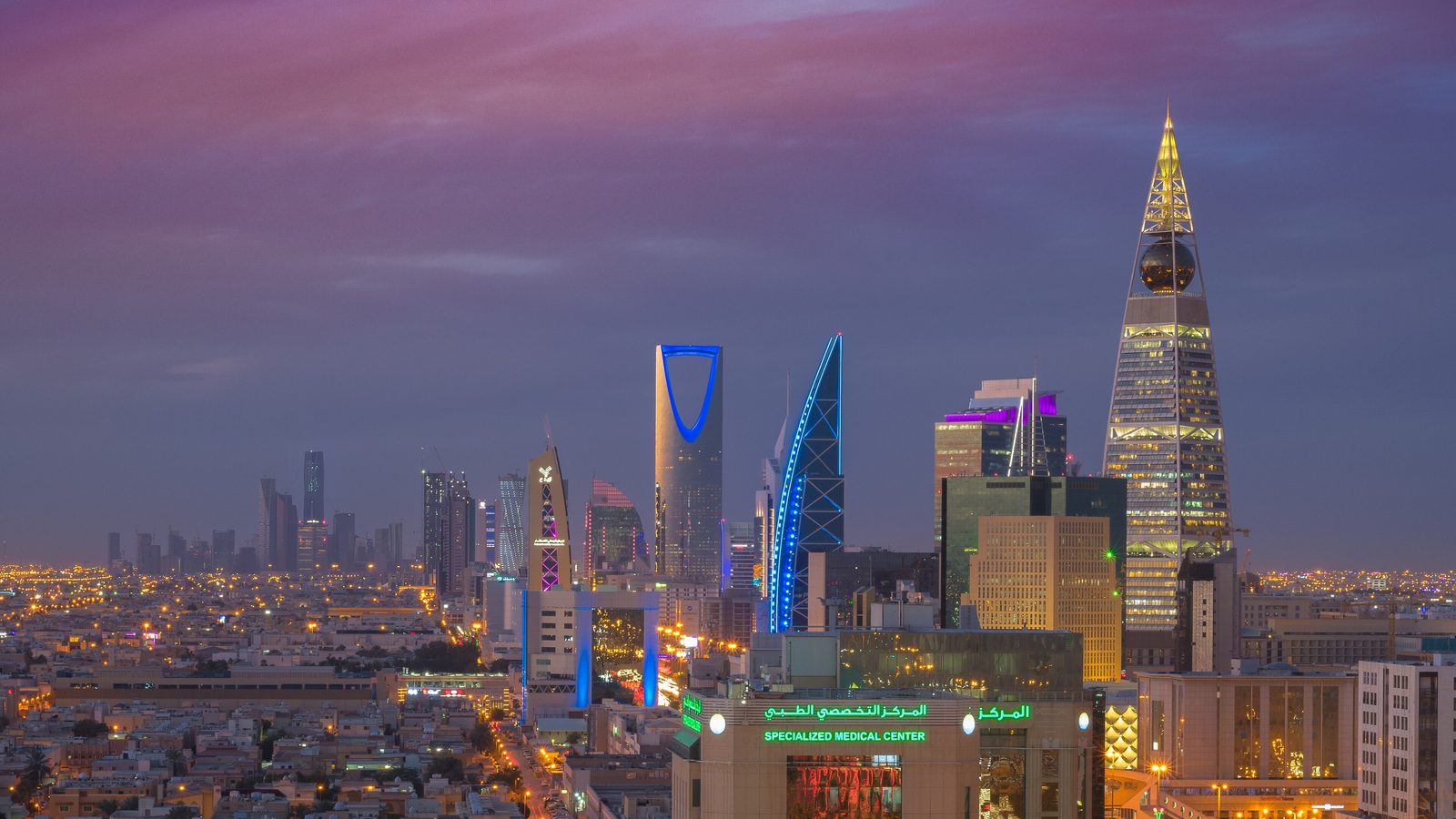
Let me start with the number that every Gulf developer has quietly pinned to their wall this week: 11,020. That is the Tadawul All-Share Index as of yesterday afternoon, down a fraction on the day but, more importantly, trading in a climate that would have been unthinkable twelve months ago — a climate shaped by an active regional war.
My father poured concrete into Abu Dhabi's first skyline during a time of different tensions. He always said the same thing: capital moves faster than armies. Right now, capital is moving — and the Gulf property markets are where it is landing, or fleeing, depending on which side of the Strait of Hormuz you are looking from.
The most consequential development in my beat this week is not a single transaction or a ministerial decree. It is the collision of two forces: the Iran conflict disrupting the physical and financial arteries of the Gulf, and the UAE emerging — with considerable diplomatic dexterity — as the region's indispensable neutral ground.
Reported across multiple credible outlets this week, Benjamin Netanyahu made a secret visit to the UAE at the height of the Iran war, reportedly hailing what he called a 'historic breakthrough.' I will not over-read a single diplomatic meeting. But in property terms, this matters enormously. The UAE's ability to maintain back-channel relationships with all parties in a live conflict is precisely the kind of sovereign stability premium that lifts commercial real estate valuations and accelerates foreign capital inflows.
Dubai and Abu Dhabi have historically benefited from regional instability — not by celebrating it, but by being the place where nervous money parks itself. Industry estimates already pointed to elevated safe-haven demand for UAE freehold property before this conflict escalated. Now that dynamic is structurally reinforced.
Across the water in Saudi Arabia, the picture is more complicated. DW and others are reporting this week that the Iran war has materially disrupted the trajectory of Vision 2030's urban ambitions. I have been writing about NEOM and the broader Saudi megaproject pipeline for years. The honest assessment is this: projects of that scale — linear cities, entertainment districts, giga-developments — require a predictable investment horizon. War, even a regional one with complex proxy layers, compresses that horizon brutally.
Reuters is reporting that Saudi Arabia launched covert attacks on Iran as the regional conflict widened. Whatever the military calculus, every such escalation adds a risk premium to Saudi-denominated real estate assets that developers and sovereign wealth funds will need to price in. The Tadawul's current level reflects a market that is not panicking, but it is also not celebrating.
Then there is the energy corridor story, which is directly relevant to Gulf property fundamentals. Qatar is asking LNG vessels at its key export hub to go dark — a safety protocol in response to the conflict, according to Bloomberg and OilPrice.com. A second Qatari LNG tanker has successfully crossed Hormuz to Pakistan, Reuters reports, demonstrating that the strait remains navigable. But 'remains navigable under pressure' is a very different investment environment from 'unambiguously open.' Petrochemical and industrial real estate corridors along the Gulf coast are being repriced accordingly, according to industry participants I follow closely.
The AED-dollar peg at 3.6725 holds firm — it always does, by design — and that monetary anchor is part of what makes UAE property uniquely bankable in a turbulent region. Investors who lived through 2008 or 2015 know that the peg is not just a currency mechanism. It is a psychological anchor. When everything else is in motion, the peg signals that Abu Dhabi's sovereign hand is steady.
What does this mean practically for someone looking at Gulf property right now?
First, the UAE flight-to-quality narrative is not hype — it is being validated by geopolitical events in real time. Luxury residential in prime Dubai locations and Abu Dhabi's Saadiyat corridor will likely attract capital that would previously have diversified into Riyadh's emerging residential market.
Second, Saudi Arabia's Vision 2030 assets are not dead — they are delayed and repriced. For long-horizon investors with high risk tolerance, that may actually represent an entry point when the conflict eventually de-escalates. Infrastructure-grade assets rarely disappear; they just change hands at different prices.
Third, the LNG corridor disruption creates genuine uncertainty for industrial and logistics real estate along the Gulf coast. Ras Laffan, Jubail, Sohar — these industrial cities are deeply linked to energy export flows. Watch those markets carefully over the next two quarters.
I keep coming back to a truth my father understood intuitively, building towers in a desert city that didn't yet know it would become a global hub: the buildings that get finished during the hard years are the ones that define a city's next chapter.
The hard years are here. The question is who is still pouring concrete.