This story is currently available in anglais only — a translation isn't ready yet.
Chad Receives Migrants from Niger as Mahamid Deportation Deadline Ends on 31 December
Chad's Minister of Social Affairs Zara Mohamed Issa inspected the reception site in Daboua, and the Governor of Diffa informed representatives of the community of the departure deadline on 8 November
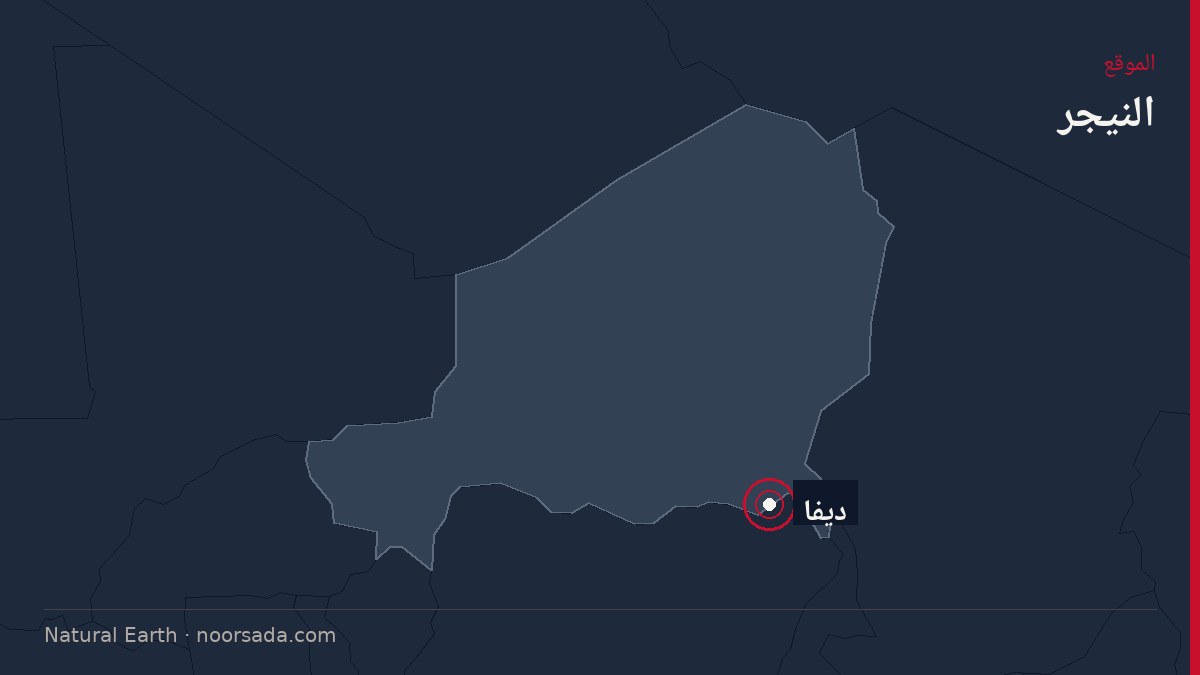
Chad has received migrants who arrived from Niger in the town of Daboua in the border Lake Region, and has begun setting up tents to accommodate the arrivals, according to the Chadian News Agency, at a time when the Nigerien authorities have given thousands of Mahamid Arabs residing in the Diffa Region in the country's southeast until 31 December to leave.
Chad's Minister of Social Work and Humanitarian Affairs Zara Mohamed Issa visited the reception site in Daboua, where she inspected the water points and discussed ways to treat them so that they become fit for drinking, and directed that food aid be strengthened and shelter supplies distributed.
The Chadian News Agency described the arrivals as migrants who came from Niger, without announcing their number or specifying whether they were from the Mahamid. Local reports on 12 November said the town had for days been receiving arrivals, most of them nomadic herders, including women and children, living in difficult conditions, that a government delegation had inspected them the previous day, and that one of their representatives expected more families to arrive.
In Diffa, the region's governor, Mahamadou Ibrahim Bagadoma, informed representatives of the Mahamid of the deadline during a meeting on 8 November, according to a local official. On 14 November, a local official in the town of Chetimari renewed confirmation that the deadline is binding, according to the Nigerien News Agency.
The deportation measures date back to April, when the Interior Ministry directed the authorities of Diffa and Zinder to count members of the community and withdraw Nigerien identity cards and passports from them. In July, Mahamid representatives, during a meeting in Nguigmi, refused to hand over the documents and demanded a meeting with officials in Niamey, after the authorities had seized about two thousand head of their camels and then returned them to them.
The governor of Diffa said in August that weapons seizures and information gathered by the authorities since 2023 had raised suspicions that individuals from the Mahamid were involved in supplying terrorist groups active in the Lake Chad basin, and that the accusations concern specific individuals. In October, the authorities ordered the closure of schools and wells that they said had come to be used exclusively by the Mahamid, and the suspension of the issuance of civil status documents to members of the community.
The Union of Arabs of Eastern Niger, in a statement carried by the media on 13 November, denied that any members of the community had left for Chad, and demanded that the Nigerien authorities cancel the deportation measures, stressing that the Mahamid have lived in the region for decades and consider themselves Nigerien citizens.
On 6 November, the African Commission on Human and Peoples' Rights addressed an urgent appeal to Niger's President Abdourahamane Tiani regarding reports of restrictions on the Mahamid's access to water, education, health care and identity documents, noting that Article 12 of the African Charter on Human and Peoples' Rights prohibits the mass expulsion of foreigners on national, racial, ethnic or religious grounds.
Groups of the Mahamid settled in southeastern Niger in the 1970s after waves of drought in eastern Chad, and generations of the community were born in Niger. As the end of the deadline approaches, the status of holders of Nigerien documents remains disputed, and no agreement has been announced between Niamey and N'Djamena regarding the reception of those covered by the deportation.
Sources — how we know this
- PrimarySky News Arabia