This story is currently available in anglais only — a translation isn't ready yet.
Revolutionary Guards say they sent six drones at US radar in Bahrain
Bahrain's army reported that the drones were destroyed before reaching their target; the Gulf Cooperation Council described the attack as "a blatant challenge to regional peace efforts."
ℹ️ Lecture par le navigateur · voix studio IA bientôt
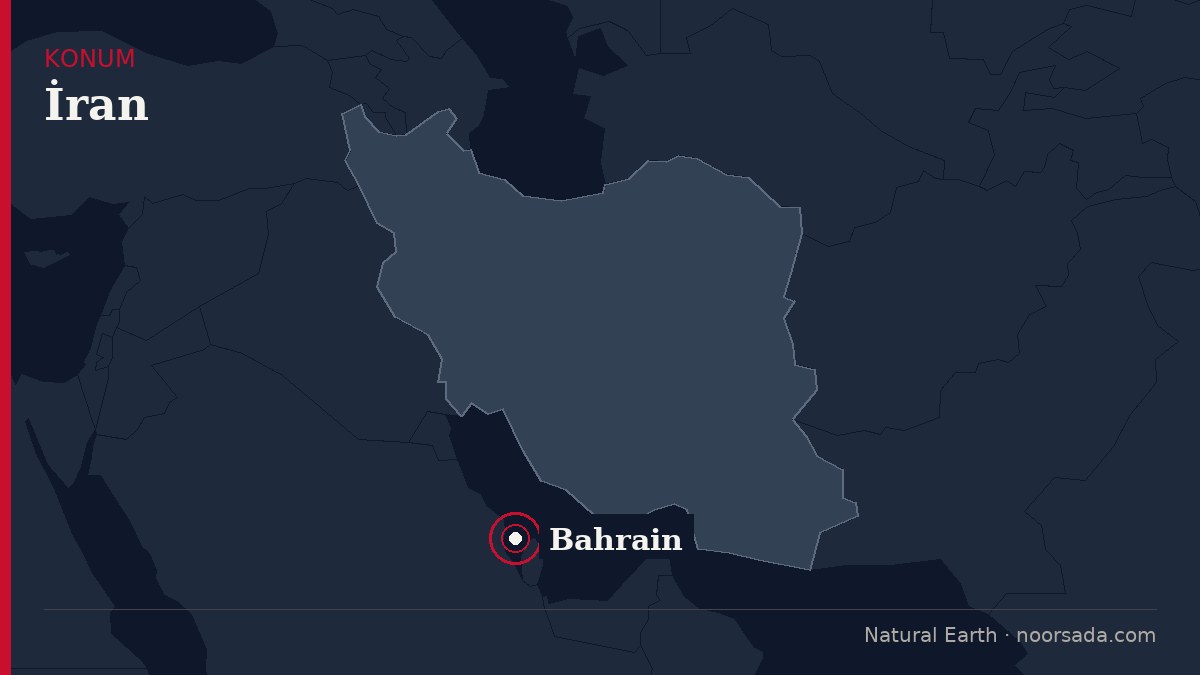
The Revolutionary Guards announced early Sunday that it had sent six drones at a US air defense radar located at the Riffa air base in Bahrain, claiming the attack was "accurate and successful." Bahrain's army, for its part, reported that the drones were destroyed before reaching their targets. An emergency alert sounded in the country for the first time in months; the warning, issued before 05:00 in the morning, called on the public to find a "safe place."
Gulf Cooperation Council Secretary-General Jasim al-Budaiwi described the attack as "a blatant challenge to regional peace efforts" and characterized Iran's "insistence on repeating its attacks" as a "direct threat" to the region. Qatar, one of the main mediators in the talks between the US and Iran, announced that the attacks were "a dangerous escalation" and could "undermine political and diplomatic efforts" aimed at restoring stability in the Middle East.
According to a report by The National, Iran has claimed responsibility for a second attack on Bahrain within a week. The Revolutionary Guards had also claimed on Friday that it struck a US early warning radar in Bahrain, while US Central Command (CENTCOM) announced that it had intercepted two drones launched by Iran.
Diplomatic efforts to end the war, which began with US and Israeli strikes in February, have not yet produced results. Iranian Foreign Minister Abbas Araghchi will travel to Muscat on Tuesday to meet with his Omani counterpart. The first US-Iran understanding reached in June opened a 60-day negotiating window to resolve the dispute, and the period expired without an agreement being reached. US President Donald Trump unsettled the markets last week by saying there was no need for a deal with Iran. Fears that the US and Israel would launch a major new attack on Iran after their own autumn elections have not yet materialized.
Iranian Parliament Speaker Mohammad Bagher Ghalibaf said in remarks to the semi-official Fars agency that the path to ending the conflict was open if the US accepted Iran's "reasonable conditions." Ghalibaf, a senior negotiator in the talks, stated that Tehran would not remain in a state of "neither war nor peace," warning that if Washington resumed the attacks, its armed forces would "determine the geography of the war."
Gulf stock markets closed lower on Sunday following the attacks; Saudi Arabia's benchmark index fell 0.7 percent and Qatar's index declined 1.8 percent. Maritime traffic passing through the Strait of Hormuz remains largely restricted. Iran had launched thousands of drones and missiles at US allies in the region, including the UAE, Bahrain, Saudi Arabia, Qatar and Kuwait, in the first phase of the war. These unprecedented attacks pushed Gulf countries toward closer military cooperation; Gulf Cooperation Council defense ministers approved the establishment of a new joint command center in Kuwait last week.
The Revolutionary Guards' naval forces claimed on Sunday that an oil tanker that struck naval mines in the Strait of Hormuz had sunk and that a second was damaged. According to the statement, the tankers experienced a "large explosion" after turning off their tracking systems. There is no independent verification of these claims, which have become more frequent in recent weeks as Iran has increased its threats against maritime shipping.
Developments in the war in Yemen heightened regional concerns on Sunday. The Saudi-led coalition in Yemen announced that two drones launched by the Houthis were destroyed by Saudi air defenses over the Mecca region. Forces loyal to Yemen's internationally recognized government announced that they had withdrawn from an area overlooking the Bab al-Mandab Strait. This withdrawal by the Southern Armed Forces could increase Houthi control over the maritime route used as an alternative for oil exports while the Strait of Hormuz is closed. The forces stated that the "redeployment" was carried out because of the "priority of securing the capital, Aden, and neighboring provinces" in the civil war. According to the statement, the withdrawal will also support efforts to break the siege of Taiz, which has caused major humanitarian concerns.
Sources — how we know this
- PrimaryThe National (UAE)