This story is currently available in anglais only — a translation isn't ready yet.
EU and UK meet in Brussels with youth mobility still the sticking point
Šefčovič wants a single package on farm trade, carbon market linkage and youth mobility; the annual cap and student fees remain open.
ℹ️ Lecture par le navigateur · voix studio IA bientôt
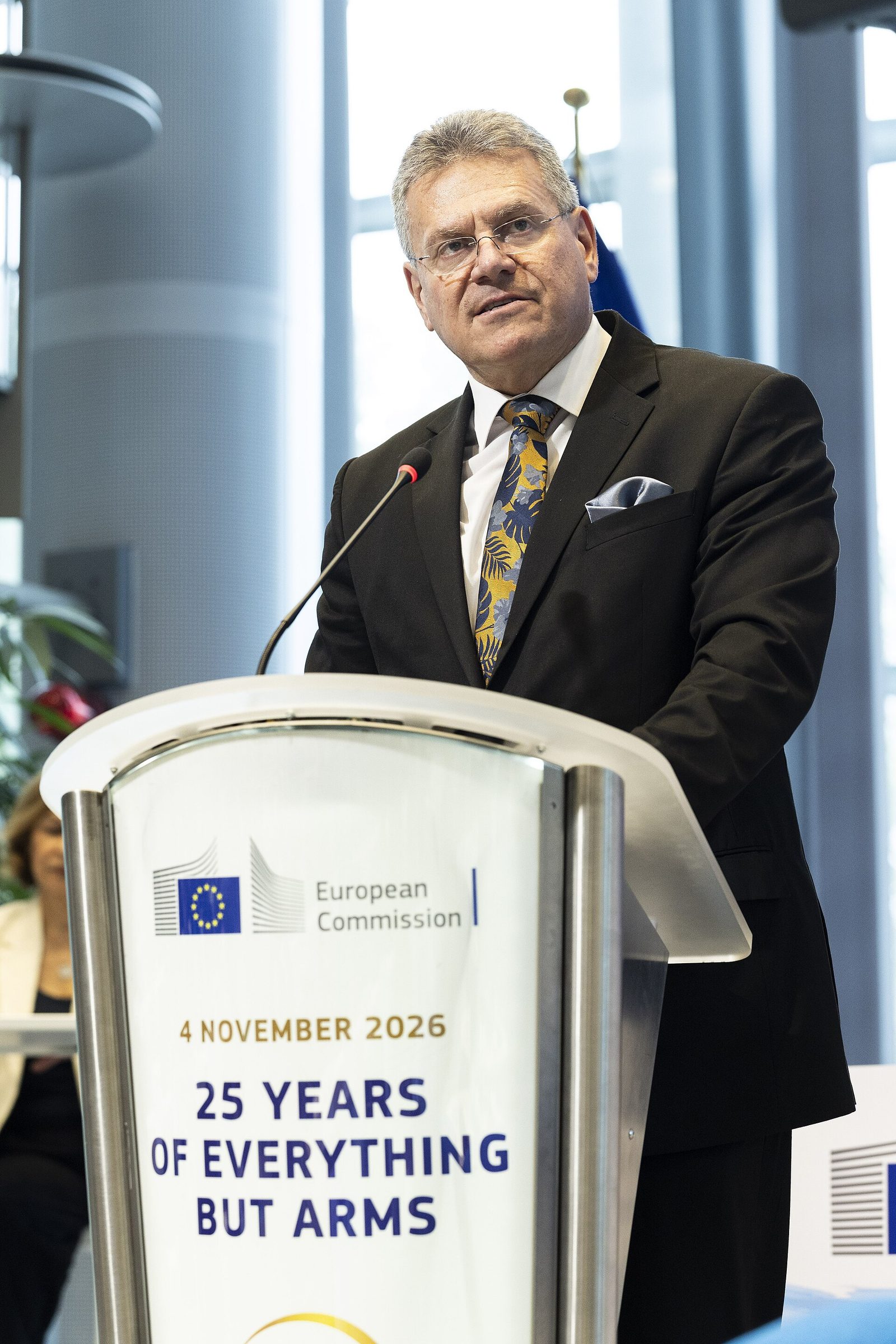
EU and UK leaders meet in Brussels on November 20 for their second post-Brexit summit, with a youth mobility scheme still the hardest item in a package the European Commission wants agreed in one go.
The summit was planned for July but was delayed. It now takes place under UK Prime Minister Keir Starmer, who has opened a national debate on the future relationship with the EU, including rejoining and restoring free movement of people.
European Trade Commissioner Maroš Šefčovič told the European Parliament last week that the EU aims to "complete negotiations… as a package" on trade in agricultural products, linkage of the EU and UK carbon markets and a youth experience scheme. Talks also continue on UK participation in the EU electricity market.
Ian Bond, deputy director of the Centre for European Reform, said the agenda is "quite modest" and carries forward negotiations launched at the May 2025 summit. He said both the UK and the EU will try to portray the summit as a success, but the reality is there is "still quite a lot of arguing to be done."
The sanitary and phytosanitary agreement is "probably the easiest" to reach, Bond said, because the UK would adopt the EU's rulebook for food and agricultural products. Both sides want energy trading, with North Sea offshore wind able to serve both markets. In exchange for electricity market access, the EU is demanding a "quite sizable financial contribution" to its cohesion fund.
The youth experience scheme would let people aged 18 to 30 live, work and travel across the Channel without sponsorship for up to three years. Thomas Byrne, Minister for Europe of Ireland, whose country holds the rotating EU Council presidency, told MEPs it is "at the heart of our aim to rebuild bridges" between young people across the UK and the EU. "It is a key priority," he said.
Disagreement persists on the annual cap the UK wants on the number of young Europeans who could benefit. The EU is also demanding that EU students pay home fees, currently £9,790, and be exempted from the NHS surcharge; since the end of free movement they pay international fees and visa and health charges. Reports said the UK offered a "discount" member states still consider insufficient.
London wants young Britons to be able to move from one member state to another, as during EU membership; EU countries say a work permit should cover only one state. Bond said work visas are not a European Commission competence.
Media reports suggest the youth scheme agreement might be delayed by six months to secure a positive outcome. Leaders will also discuss whether the UK is included in the "Made in Europe" provisions the EU is drafting for public procurement, electric cars, aluminium, steel and clean technologies, and are expected to adopt conclusions on support for Ukraine and defence cooperation.
Sources — how we know this
2 independent sources corroborated this
- PrimaryThe Local Germany
- CorroboratingThe Local France