This story is currently available in anglais only — a translation isn't ready yet.
Fed Chair Warsh Outlines Three Growth Scenarios for Artificial Intelligence
Speaking at a productivity and employment conference in San Francisco, Warsh said artificial intelligence could boost growth, but that automation could drive unemployment higher.
ℹ️ Lecture par le navigateur · voix studio IA bientôt
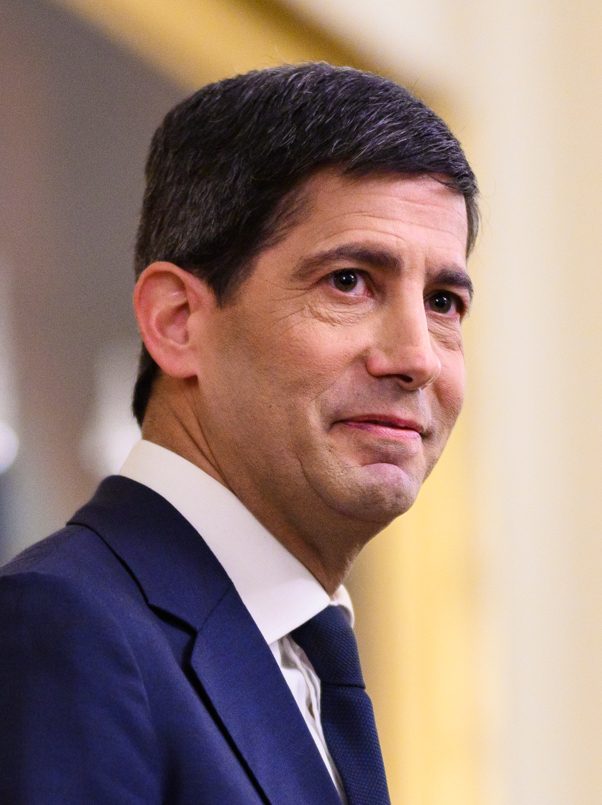
US Federal Reserve (Fed) Chair Kevin Warsh assessed the impact of artificial intelligence on the economy through three scenarios at the opening of the Productivity and Employment Task Force Conference organized by the Fed Board of Governors and the San Francisco Fed in San Francisco. In the speech, as reported by Anadolu Agency, Warsh used the term "superintelligence" for artificial intelligence and said the technology is creating an entirely new force over economic life and society.
Warsh recounted that a few years ago, people's instant access to top-level information on almost any subject had seemed a remote possibility, and that advances in artificial intelligence had made it possible. Noting that the marginal cost of satisfying curiosity is falling rapidly and may even approach zero, Warsh said financial markets are also trying to understand the consequences of this development.
Citing endogenous growth theory, the Fed Chair stressed that ideas are one of the fundamental sources of prosperity and noted that a doubling of ideas can raise economic output by more than twofold. He nevertheless drew attention to the fact that producing groundbreaking ideas is becoming increasingly difficult in the US: although research activity has increased more than 20-fold since the 1930s, research productivity has declined by a larger margin. Saying that although productivity growth has been strong in recent quarters it has not yet entered a lasting upward trend, Warsh stated that the growing difficulty of generating ideas and the slowdown in population growth have brought "secular stagnation" debates back onto the agenda.
In the first scenario Warsh presented, artificial intelligence raises productivity and the gains are broadly shared between labor and capital owners; real GDP grows steadily above its long-term average and the US remains near full employment. In the second scenario, growth again rises above average, but the elimination of some jobs by technology and frictions in the labor market can push the unemployment rate above levels consistent with full employment. In the third scenario, artificial intelligence fails to meet expectations despite significant capital investment and stock market gains; expected returns reverse, equity valuations fall, the economy slows and unemployment rises more markedly. Warsh said that in this scenario the economy recovers over time, but the productivity gains do not materialize.
Stating that Fed staff have begun evaluating these possibilities and that the scenarios are not forecasts or predictions, Warsh stressed that machines cannot replace human judgment, morality, dignity or responsibility, and that decision-makers must be humans. He said artificial intelligence empowers everyone, including malicious actors, and that they are therefore monitoring critical infrastructure and security vulnerabilities. "Our job is to be prepared for whatever is next," Warsh said, noting that the Fed's role is to be neither supportive nor opposed.
Sources — how we know this
4 independent sources corroborated this
- PrimaryAnadolu Ajansı — Ekonomi
- CorroboratingEkonomim (Dünya)
- CorroboratingBloomberg HT
- CorroboratingHabertürk