This story is currently available in anglais only — a translation isn't ready yet.
Fitch Assigns Namangan Region BB- Rating With Stable Outlook
The agency assessed the region's standalone credit profile at bb- and pointed to a weak risk profile and a rigid budget structure
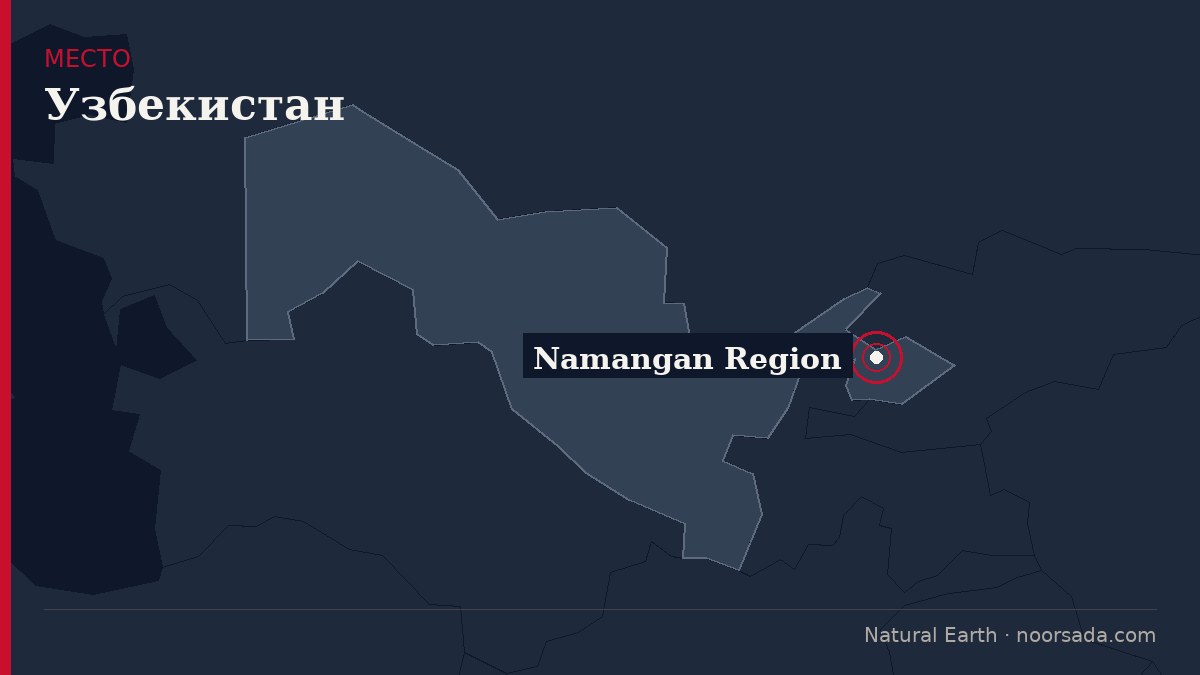
The international rating agency Fitch Ratings has assigned Uzbekistan's Namangan Region long-term issuer default ratings of BB- in foreign and local currency with stable outlooks. The ratings were announced on November 16; short-term ratings in both currencies were set at B, and the region's standalone credit profile was assessed at bb-.
According to the agency, the ratings reflect a combination of a weak risk profile and a financial profile in the lower part of the 'aa' category; Fitch also took into account the metrics of comparable regions. The region's revenue structure is sensitive to fiscal reforms: the central authorities retain control over the distribution of tax revenues between budget levels. In 2025, transfers provided 48% of the region's operating revenue, taxes 47%, and the remainder came from fees and payments. The share of taxes has risen from 35% in 2021, while the share of transfers has fallen from 59%.
The agency considers the region's ability to increase its own revenues during an economic downturn to be limited: tax rates are set by the central government, which also determines the distribution of revenues. Expenditures are also inflexible — more than 90% of spending in 2021-2025 went to mandatory items. In 2025, salaries and other employee payments accounted for about 46% of operating expenditure. Capital spending averaged 8% of total expenditure over 2021-2025, while inflation averaged 10% a year over that period.
The region's direct debt at the end of 2025 stood at 13 billion soum and consisted of interbudgetary borrowings; the country's legislation still prohibits market borrowing by regions. In addition, the region is responsible for repaying part of the central government's borrowings from international financial institutions raised for projects on its territory: at the end of 2025 this amounted to 445 billion soum, and Fitch expects the figure to roughly double as funds are drawn down under existing agreements. The agency assesses the overall debt burden as moderate relative to the size of the budget. The region's cash at the end of 2025 was 255 billion soum, a significant part of which is earmarked for specific expenditures.
For 2026-2030, Fitch forecasts a maximum debt coverage ratio of 7.9x, a median actual debt service coverage ratio of 3.4x, and a budget debt burden below 50%. Average annual growth in operating revenue is expected at 8.1%, with expenditure growth at 9.9%, an average negative net capital balance of 879 billion soum a year, and an average cost of debt of 15.2%. A downgrade is possible if the standalone profile deteriorates below bb-, for example if the debt coverage ratio rises above 9x; an upgrade is possible if the profile improves and the indicator declines sustainably to around 7x.
Namangan Region is Uzbekistan's fifth most populous region: 3.2 million residents, about 8% of the country's population. GRP per capita is roughly 55% of the national average; the economy relies on small and medium-sized businesses, agriculture, trade and services, while the industrial base, according to Fitch's assessment, remains limited.
Sources — how we know this
- PrimaryUzDaily
Start Trading
Turn this analysis into an opportunity via Binance or TradingView.
View Now →