This story is currently available in anglais only — a translation isn't ready yet.
Israeli officers call the presence in Syria a "meaningless occupation"
According to Haaretz's Sunday report, officers serving beyond the Golan said the military presence in Syria has no justification and called for a political understanding with Damascus.
ℹ️ Lecture par le navigateur · voix studio IA bientôt
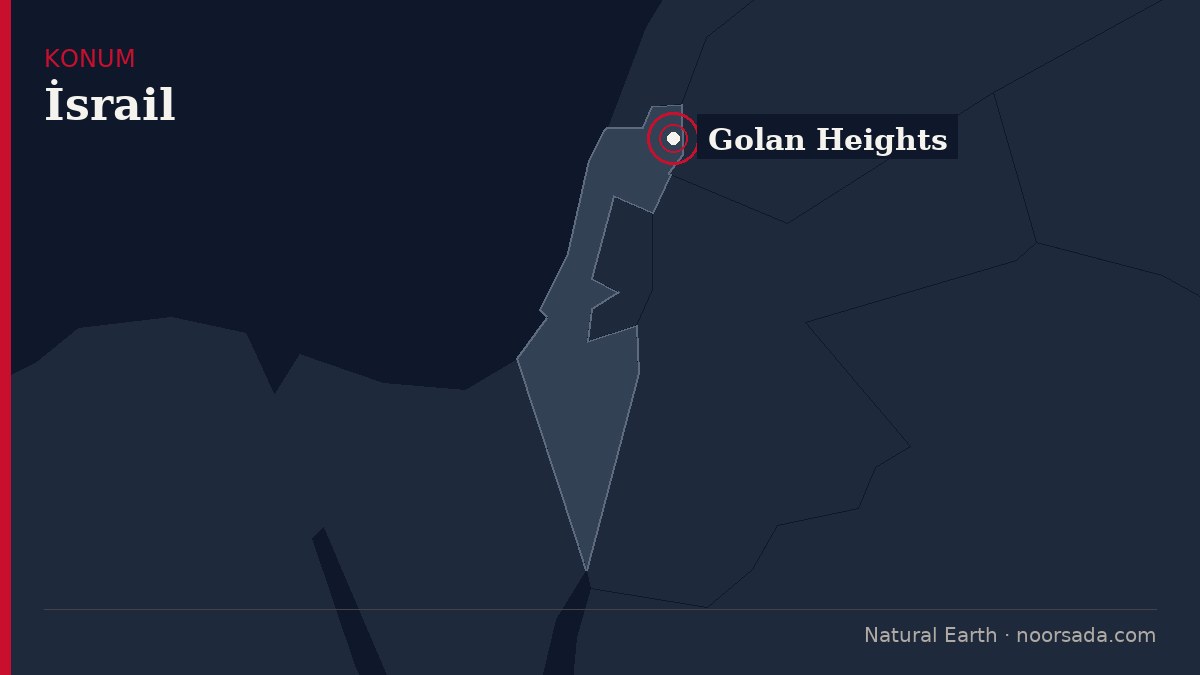
Officers serving on the Syrian front in the Israeli army described the military presence beyond the Golan Heights as "a meaningless occupation" and demanded clear decisions from political decision-makers to end the situation. The complaints were reported in an article published Sunday in Haaretz under Yaniv Kubovich's byline, based on remarks made behind closed doors by regular unit commanders and reservists who had served in the area.
Since the overthrow of Bashar al-Assad's regime in December 2024, the Israeli army has advanced beyond the border at the Golan Heights, taking control of the buffer zone and the villages behind it. On the political level, this expansion is presented as a measure aimed at defending the northern settlements. Those returning from the area tell the opposite story: the army keeps a large and costly force in an area where almost no activity exists, and fabricates preventive activity in order to justify its presence.
A commander who served in the area recently, identified as "H", said: "The dominant feeling was that everyone was caught up in some kind of deception. Because we are there, we have to invent a story that the situation is dangerous." "You see nothing, there is nothing; that makes the whole thing completely meaningless," H added.
Another soldier, "C", who spoke to Haaretz, said his unit was constantly told that "white pickup trucks" (the symbol of the October 7, 2023 attack) could arrive at any moment, but that nothing happened throughout his tour of duty. The army keeps hundreds of thousands of reservists along the border in the area for long periods; these soldiers see themselves as "an unnecessary burden" and "a waste of resources".
The report notes that the army has carried its customary methods in the West Bank into southern Syria: villages are entered almost every day, houses are searched at night, people are taken from families and interrogated, and suspects are sometimes taken to Israel. A reserve officer, "Y", who served in the area last year, said: "This activity, just like in the West Bank, rests on raids, interrogation, detention and full freedom of movement for the troops."
The army has hung warning signs in Arabic on the roads: "Traveling in a convoy of more than three vehicles may put your life at risk because of the Israeli army's response." Syrian shepherds' access to pastures and water sources is also being restricted.
Haaretz wrote that the army is divided over Ahmed al-Sharaa, the leader of the new administration in Damascus: while the Northern Command approaches al-Sharaa with suspicion and sees the current calm as a tactical pause, the intelligence branch assesses that his interest in stability and in the lifting of sanctions could allow for gradual security understandings. The interception by Syrian security forces of weapons smuggling from Iran to Lebanon, including shipments that included Grad rockets, has gone largely unanswered in Israel.
The report also included a warning from some figures in the security establishment that, if the friction continues, resistance organizations could emerge among the local population, which has so far not taken action against Israel.
Sources — how we know this
- PrimaryAsharq Al-Awsat