This story is currently available in anglais only — a translation isn't ready yet.
Letter to You, After the Summit That Decided Nothing
On Brussels, the streets of Paris and Tunis, and the moral grammar of a continent that keeps postponing itself.
Dear friend,
You asked me at dinner last month — do you remember, the small place behind the market where the waiter kept bringing bread we hadn't ordered — whether Europe still had, as you put it, the vocabulary for the people it cannot agree to share. I didn't answer well that night. I said something about committees and gave you back the question in a different coat. Forgive me. Let me try again now, because the past forty-eight hours have given me a kind of answer, and I would rather send it to you by letter than wait until we meet again.
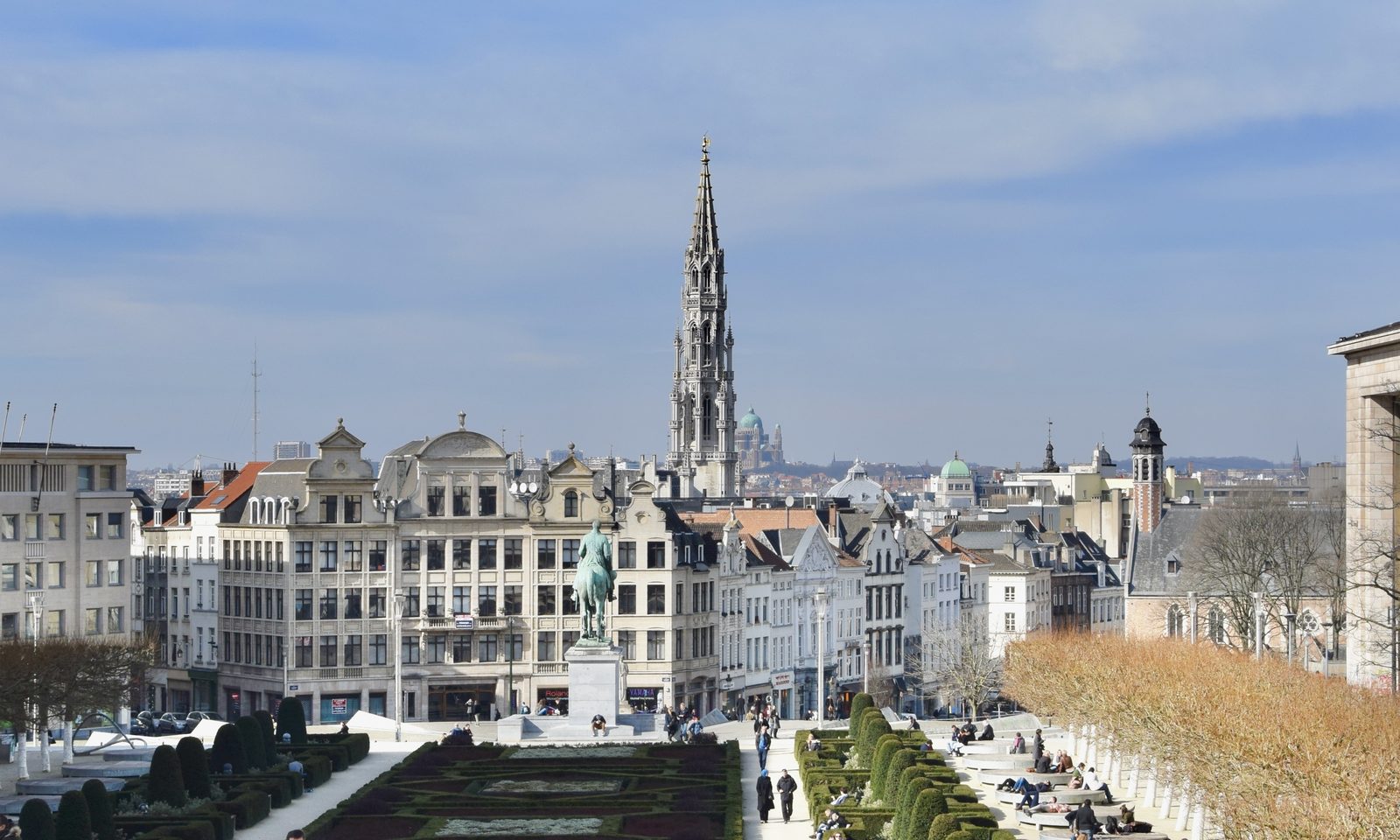
Brussels, Thursday and Friday. Two days of a European Council that was supposed to decide at least three things: how to keep paying for Ukraine's defence, how to shape a long-term budget approaching two trillion euros, and what to do about migration. By Friday evening, according to the reporting I trust, nothing of substance had been put down in ink. The president of the Council said leaders had agreed, immediately, that the additional needs of financing Ukraine in 2027 must be addressed, and asked the Commission to come up with a concrete proposal. You hear it, don't you — the grammar of deferral. Agreed immediately. Asked. Later.
Zelenskyy was in the room. He told the journalists afterwards that the war will cost one hundred and fifty-five billion euros next year and that he needs at least seventy billion more from European partners. He added, and this is the sentence I want you to hold with me, that without a plan Europe could face twenty million Ukrainians arriving at its borders. I don't repeat the number to frighten you. I repeat it because of what happened to it inside the room. It was received, I'm told, with warm embraces and kind words. The Swedish prime minister came out and said, about the frozen Russian assets that have been debated for nearly a year, that nothing has changed. The money is not lost, he said, but nothing has happened. Macron, who leaves office next spring, warned that he would soon no longer have the mandate to sign anything, and then said he still thought a deal was possible by the end of the year. Possible. That word did a lot of work this week.
I should tell you, before I go further, that two weeks ago I wrote a column about two men arguing on the Panjshir road about Afghan emeralds and the Aegean customs hall. I made a promise at the end of that piece — no, I didn't; I checked the ledger this morning and I made no promise at all, which is itself a small confession. I had been letting the promises lapse into vagueness. Today I will try to be more precise with you.
Because while the leaders were deferring in Brussels, the streets were not. On Saturday morning in Paris, before the authorised march had even begun from the Place de la République, clashes had already broken out. By midday more than a hundred people had been arrested in the capital. A police station was vandalised in Marseille. The headquarters of a right-wing television channel was targeted. Students, farmers, members of the Yellow Jackets — the interior minister used the phrase 'a fairly large turnout', which is the kind of understatement a minister reaches for when he does not yet know what the evening will look like. The students began it last month with school blockades, asking for more teachers and better conditions. It has become, in their own phrase, a convergence of struggles.
In Rome at the same hour, the largest Italian trade union federation and more than a hundred lay and Catholic associations were marching under the banner of what they call the Via Maestra — the main road, the constitutional road. Lavoro, pace, ambiente, welfare, Costituzione. Work, peace, environment, welfare, Constitution. The corteo moved toward Piazza del Popolo. A politician from the broad left told reporters at the start of the march that this was the place to be, that a country which cannot cope, crossed by protests that signal a growing malaise, needs to change direction, and that a government which increases military spending but cannot answer those crushed by inflation is on the wrong road.
And in Tunis, on Habib Bourguiba Avenue, the trade union federation UGTT led what the agencies are calling the largest protest against President Kais Saied in years. More than three thousand people, according to the wire, though the number could not be independently verified. Lawyers, doctors, journalists, the unemployed. Hundreds of police. Placards reading 'No democracy without freedoms' and 'No dignity with poverty'. I mention Tunis in the same breath as Paris and Rome deliberately, because the Mediterranean is one basin and the grievances rhyme across it, even when the regimes do not.
So here is what I want to say to you, friend, in answer to your question about moral grammar.
The thing I notice — and it took me the week to see it — is that the vocabulary of European solidarity has not disappeared. It is simply no longer being spoken by the people elected to speak it. It is being spoken by the student at the blockade, by the retired electrician in a yellow vest, by the Roman trade unionist shouting about the Constitution, by the Tunisian lawyer carrying a placard about dignity. The grammar is in the street. In the chambers, what remains is scheduling.
This is not a small inversion. For most of my working life the arrangement was the opposite: the chambers held the language of principle, however imperfectly, and the street held the language of grievance. Now the chambers hold the language of postponement — 'we agreed immediately', 'the Commission is asked', 'by the end of the year' — and the street has had to pick up the older words. Dignity. Welfare. Peace. Constitution. These are not slogans invented last week. They are the vocabulary the founding texts of this Union were written in, and they are being chanted outside, in the rain, by people the Council did not invite.
You will ask me, because you always do, whether this is a hopeful observation or a bleak one. I don't know yet. A grammar that survives only in the street is a grammar under pressure. It can harden into something uglier — the French interior ministry is already counting arrests, the Tunisian police are already closing roads, and we both know what happens when a vocabulary of dignity meets a vocabulary of order without any translator in between. But a grammar entirely lost would not produce three hundred thousand bodies in Paris on a Saturday morning, nor three thousand on Habib Bourguiba Avenue, nor the long patient corteo toward Piazza del Popolo. Something is still being said. The question is whether anyone with a pen in Brussels is willing to write it down.
I think of Zelenskyy's twenty million. I think of the leaders agreeing immediately and then going to lunch. I think of the student at the Place de la République who was arrested before the march she had organised was legally allowed to begin. I think of the placard — No dignity with poverty — and of how old that sentence is, and how new.
And I think of what you said that night at dinner, after I failed to answer you. You said: maybe the problem is that we keep asking whether Europe will act, when the real question is whether Europe is still the name of the thing that would act. I didn't know what to do with that then. I'm not sure I do now. But I notice that the people in the street this weekend are not, mostly, carrying European flags. They are carrying national ones, and union ones, and handmade cardboard. The flag was not the point. The grammar was.
I'll stop here, because the letter is already long and the kettle has gone cold twice. Write back when you can. Tell me what the view looks like from your window this week. And tell me, if you have an answer and I don't — when a continent's leaders agree immediately and then do nothing, and its citizens disagree about everything and then march together, which of the two is the Europe we were taught to belong to, and which is the one we are becoming?
Yours, as ever, E.