This story is currently available in anglais only — a translation isn't ready yet.
NIH told HIV researcher to cut cash payments from funded study
A Chicago HIV researcher was told to drop unconditional cash payments from a federally funded trial, as NIH renegotiations rose 21-fold, Grant Witness data shows.
ℹ️ Lecture par le navigateur · voix studio IA bientôt
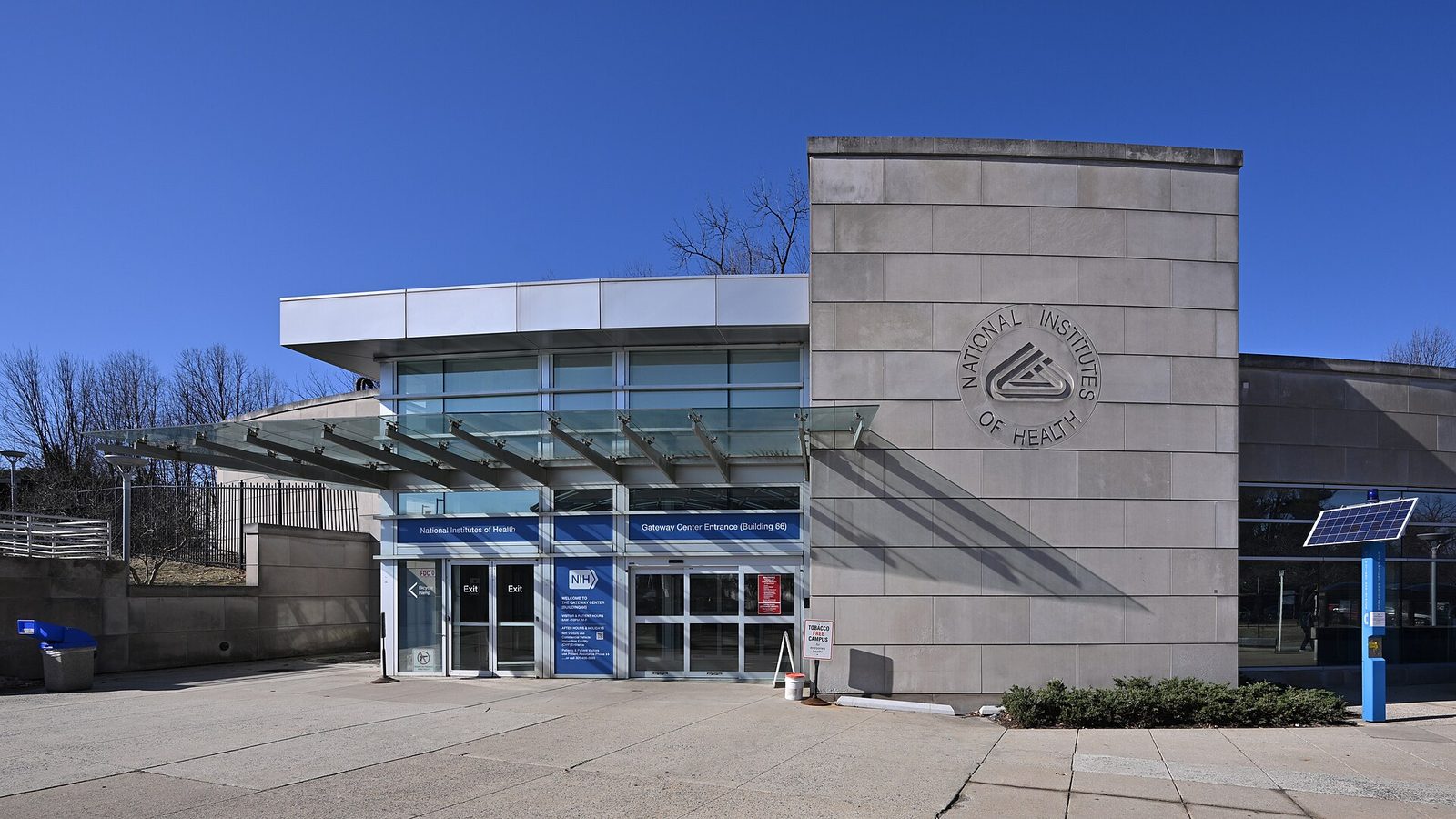
Dr Jade Pagkas-Bather received her first grant from the National Institutes of Health in June 2021 to run a randomized control trial testing whether monthly $500 cash payments helped poor, HIV-positive young people in Chicago stick with treatment. Within a year, agency program officers were asking her to strip the cash out of it.
The requests came verbally, usually on video calls. First, program officers asked her to remove the term 'gender identities' from the proposal, and a clause stating that Black and Latinx people experience more poverty than others. They also raised concern about the acronym for basic income grants, Big. She made the changes, received funding and enrolled dozens of study participants.
Then came the larger ask: remove the entire idea of giving out cash. She recounted being told: "You can't use unconditional cash transfer" and that she needed to remove any reference to this having an impact on policy.
"Her story is not unique," said Shalini Agarwal, special counsel at Project Democracy, who is representing Pagkas-Bather in a suit seeking class-action status, and alleging the government is violating the first amendment.
Grant Witness, an independent group that tracks canceled government grants, found that renegotiations surged in the first two years of the Trump administration. In 2023, only 154 of more than 40,000 grants up for renewal changed their titles, abstracts or public health statements: 0.4% of all grants. In 2025, 8.6% of all grants changed year-to-year, or more than 3,401 of the more than 39,000 grant continuations awarded by NIH. In 2026, 8.5% of all continuing grants changed, or 3,006 of the agency's nearly 35,500 grants. In the 2027 fiscal year, which just started, 64 grants have been renewed and three have already seen changes.
HIV grants are almost twice as likely to have been changed. In 2025, of the 1,795 HIV-related continuing grants, 305 were changed, or 17%. In 2026, 335 of 1,609 grant continuations were changed, or 20.8%.
Among the examples: a study initially titled "The Black Zones", which was to focus on African American neighborhoods, had all mentions of "African Americans" removed; an HIV grant that would study a specific viral subtype had text changed from including "men and women" to "a wide range of people".
The NIH said "more than 5,000 new and continuation grants" have been re-negotiated "to ensure the agency funds the most meritorious science", and that the agency addresses urgent health needs and sustains a robust biomedical research workforce. A spokesperson said: "All renegotiated grants are assessed by human experts" and that renegotiation is a normal process that NIH has used for years on grants for various reasons.
Jeremy Berg, a former director of the National Institute of General Medical Sciences, said: "The censorship that's happening now is, I think, pretty much unprecedented."
Sources — how we know this
- PrimaryThe Guardian — US news