This story is currently available in anglais only — a translation isn't ready yet.
October's Reel Problem: Egypt's Greatest War Awaits Its Greatest Film
Fifty-three years on, the October 1973 War remains one of cinema's most conspicuous absences — and the reasons why tell us everything about who controls national myth.

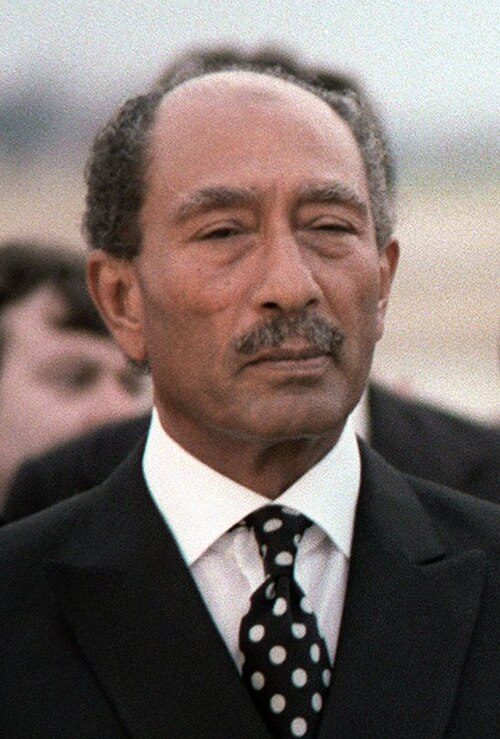
There is a peculiar embarrassment at the heart of Egypt's cultural calendar this week. The country has marked the 51st anniversary of the October War — a military crossing that genuinely reshaped the geopolitical map of the Middle East — and once again, it has done so without a film worthy of the event. Ceremonies, retrospectives, solemn television addresses: yes. The definitive cinematic account of that October morning in 1973, when Egyptian forces crossed the Suez Canal and shattered the myth of Israeli military invincibility? Still pending.
This is not a small gap in a library. It is an architectural void.
The October War is, by any measure of dramatic material, extraordinary. Meticulous deception operations. A crossing rehearsed in secrecy for months. The moment the water cannons dissolved the sand fortifications of the Bar-Lev Line, which Israeli military planners had declared impenetrable. The subsequent political reversals, the Kilometer 101 negotiations, the Sinai I and II agreements that eventually led to a peace treaty — all of it contains the texture that serious cinema devours. And yet Egyptian film, which gave the Arab world some of its most ambitious historical epics in the Nasser era, has largely offered the anniversary television dramas and commemorative productions that satisfy the calendar without satisfying the imagination.
Here is the cultural-anthropology observation worth carrying past the entertainment pages: a nation's inability to make its own definitive war film is almost never about budget or talent. It is about consensus. Cinema at that scale requires agreement — between the state that funds it, the military that must grant access and approval, the artists who must be permitted to show not only the triumph but the cost, and an audience that must be trusted to hold complexity without the narrative collapsing into either propaganda or desecration. When that agreement is missing, the anniversary arrives and departs and the shelf stays empty.
Egypt is not alone in this. The French spent decades circling around a film that could hold both the glory and the shame of their Second World War experience. The Americans, for all of Hollywood's appetite for the genre, produced their most honest Vietnam films only once enough time and distance had accumulated. Great national traumas — and great national victories — seem to need a generation of metabolizing before the story can be told with both pride and precision.
The irony is that Egyptian cinema has the craft. The industry built on the films of Youssef Chahine — the Alexandria-born director whose body of work remains the high-water mark of Arabic-language cinema — demonstrated decades ago that the region could produce morally serious, aesthetically ambitious work. The talent pipeline has not dried up. What seems to remain elusive is the institutional confidence to say: we will make this film, we will let the filmmakers inside the complexity of it, and we will trust that a story told honestly honors the soldiers more than a story told safely.
The dress, in this case, is the anniversary pageantry — the flags, the documentaries, the presidential addresses that arrive with the reliability of tides each October. The deal underneath it is a negotiation between state identity and artistic freedom that has not yet found its terms.
There is a 1963 echo here worth naming. That was the year Luchino Visconti released The Leopard, a film about the Risorgimento — Italy's own national founding mythology — that dared to show the aristocracy's ambivalence about the very revolution it nominally supported. The Italian state did not commission that version. A private producer did, with a director willing to complicate the myth. The result was a masterpiece that made the historical moment more vivid, not less honorable, precisely because it contained doubt alongside valor.
Someone in Egypt — a producer, a director, a streamer with regional ambitions — might find that instructive.
For now, the 51st anniversary passes as the 50th did: with the war honored and the film unwritten. The soldiers who crossed that canal on October 6, 1973, deserve a screen account that holds the full weight of what they did and what it cost. Egyptian cinema has produced directors capable of delivering it. The question has never been talent. It has always been permission — which is to say, it has always been about who owns the story and how much of it they are prepared to share.