This story is currently available in anglais only — a translation isn't ready yet.
Rosneft Puts Gunners on the Payroll: 249,000 Rubles a Month to Guard a Refinery
When a state oil company advertises for anti-aircraft crews, the defence line has moved from the border to the crude distillation unit.

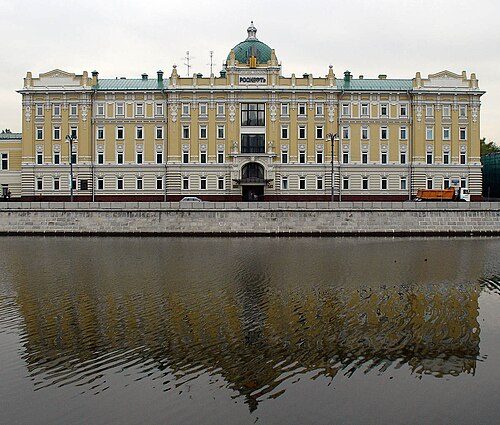
Rosneft has posted vacancies for anti-aircraft gun crews and infantry fighting vehicle operators at the Kuibyshev refinery in Samara, at an advertised 249,000 rubles a month — roughly $2,938 — inclusive of base pay, regional bonuses and reservist supplements. The listings, reported by a Russian exile outlet before being pulled from the recruitment site, named the refinery address directly. That is not a security posture any upstream company puts in writing lightly. It is an admission.
The cause is drones. Kuibyshev sits on the Volga and has been hit repeatedly since 2022. The relevant number from the Russian business lobby itself: corporate anti-drone spending in the first half of 2026 ran above 441 million rubles, about $5.3 million — more than six times the prior-year half. That is still a small sum against the asset base. The signal matters more than the sum. Private security contracts are being replaced, in effect, by in-house militias at strategic sites, backed by an August decree that lets the state put facilities under temporary administration if their owners fail to defend or repair them fast enough. Putin has said the decree is not about nationalisation. The operators reading it are drawing their own conclusions.
Now the physical ledger. Russian refining throughput has been the single most-disrupted segment of the global downstream this year, and the fact that Rosneft is budgeting for gunners rather than only for bricks tells you repair cycles are not keeping up with strike cadence. A refinery under repeated attack does not simply lose the days it is down; it loses the confidence of its crude suppliers, its product off-takers and its insurers. Crude that would have been processed into gasoline and diesel for the domestic market and for seaborne export is instead backed up at the wellhead or redirected to tankers at discounts. That is the mechanism by which an attack on a Volga refinery lands on a Rotterdam gasoline crack. Not instantly, not cleanly, but it lands.
The geopolitical frame — a phone call between Putin and Trump this week in which fuel supplies were reportedly discussed, and a public line that near-term Ukraine talks are not on the table — does not change the molecule count. It changes the probability distribution around it. Any serious buyer looking at Russian product flows into the fourth quarter has to price the refinery availability risk, not the diplomatic calendar.
Against this, Brent spot sat at $125.44 a barrel on 6 October, per the US statistical agency's daily series. US crude output ran at 13.979 million barrels a day for the week to 2 October, and Cushing held 24.745 million barrels. Those are the counterweights: American wellhead supply is near its structural ceiling and the hub tank farm is not empty, but it is not comfortable either. A price above $120 with Cushing in the mid-20s million is a market that has already absorbed one supply scare and is being asked whether to absorb another. The Russian refinery story is the second scare.
The Caspian basin is the quieter half of the same ledger. Kazakhstan's current account swung to a $2.4 billion surplus in the first half of 2026, 1.6% of GDP, after a $13.1 billion deficit for all of 2025 — a reversal driven by export receipts, which in that economy means barrels and the pipeline capacity to move them. President Tokayev's warning this week that the Caspian's surface area has shrunk by more than 16,000 square kilometres since 2000 is not an environmental aside. Shallower water complicates the loading of the shuttle tankers that feed the pipeline system onward from Aktau. Infrastructure is destiny; a receding shoreline rewrites a loading manual.
The route to watch in words: crude from Tengiz and Kashagan moves west via pipeline to the Black Sea; from Aktau, smaller volumes cross the Caspian to Baku and onward to the Mediterranean via the BTC line. Each alternative to Russian transit depends on physical water depth, tanker availability and insurance appetite. Each gets more valuable the more a Samara refinery needs its own anti-aircraft crew.
What can physically move next quarter: Kazakh barrels bound west, provided the Caspian loading points stay workable, and American crude bound for the Atlantic basin at a pace near the current 13.979 million daily. What cannot move faster, no matter who signs what: Russian refined product out of plants that are now hiring their own gunners.
Energy Portfolio
Check your broker for the latest on energy stocks.
View Now →