This story is currently available in anglais only — a translation isn't ready yet.
Shenzhen, Nov. 19: three presidents in a room, and the war that won't be in it
Washington has told Europe where the Ukraine track lives — and it is not where the cameras will be next Thursday. The gap between those two rooms is the story.
ℹ️ Lecture par le navigateur · voix studio IA bientôt
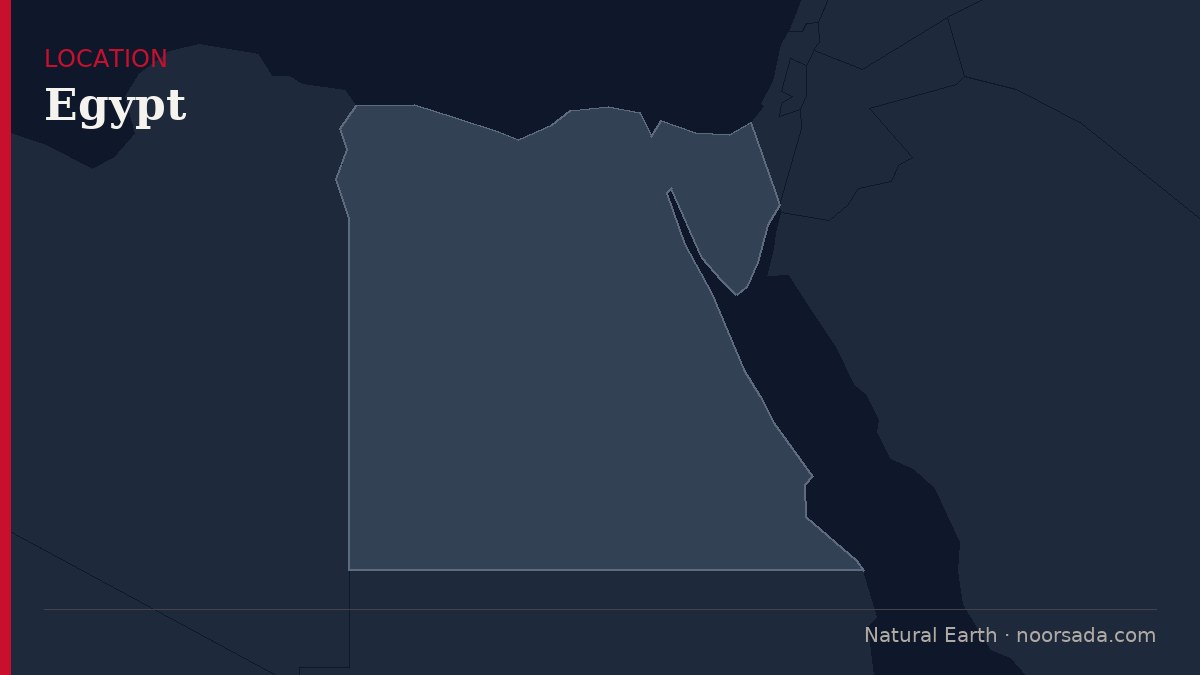
The most revealing sentence out of Washington this week came from a senior official who did not want to be named. Asked whether Ukraine would feature when Donald Trump sits down with Vladimir Putin and Xi Jinping in Shenzhen on November 19, the official explained that China «is not really a part of that track» and therefore it did not seem appropriate to include the Ukraine discussion there. Read that twice. It is the first time in this cycle the White House has conceded, in plain English, that the Ukraine file has a track and that the track has a geography — and the geography does not include Beijing.
That is the news. Not the trilateral itself, which will be choreographed around nuclear arms and Iran and produce, by the admission of the same official, no agreement. The news is the quiet separation of files: Shenzhen for the long strategic photograph, Abu Dhabi and Moscow and Dublin for the thing that actually kills people.
Which brings us to the European delegation, assembled on Friday in Dublin under conditions that would embarrass a less experienced continent. Leaders had come to talk about artificial intelligence; they left having negotiated, mostly with themselves, the composition of the team that will represent them in talks they have not yet been invited to. The compromise: national security officials from the E5 — Germany, France, the United Kingdom, Italy, Poland — plus the Commission and the Council. António Costa called it speaking «with one voice.» Seven voices, technically, but one sentiment.
The Kremlin's response arrived the same day and was, in its way, a small masterpiece of deferred insult. Dmitry Peskov said Europeans could join the process «once we understand their genuine intention and readiness to contribute.» Translation: you are welcome at the table when you have paid the entry fee, and we will tell you what the fee is. The Americans had said on Thursday that Putin had already agreed to European participation. By Friday morning Moscow had quietly unagreed, or at least added a clause nobody had been shown.
This is the pattern worth naming. Three parallel processes are now running on Ukraine, and each has a different cast. Washington and Moscow are doing the bilateral work through envoys — Steve Witkoff and Jared Kushner flew to Moscow for two and a half hours with Putin, then onward to Dublin to see Volodymyr Zelensky. A trilateral with Kyiv happened in Abu Dhabi earlier in the week, the first such meeting in nine months. And Europe, having built its delegation on Friday evening, now has to find a door to walk through.
The leverage question the desk asks is the honest one. What does the E5-plus-two actually hold?
Begin with the budget test, because budgets are the one place governments cannot lie to themselves. European states have, across the war, been the largest cumulative source of military and financial assistance to Ukraine, and the sanctions architecture that constrains the Russian economy is overwhelmingly a European construction enforced by European customs authorities. Any settlement that requires the lifting of sanctions, the unfreezing of sovereign assets, or the financing of reconstruction cannot be implemented without European signatures. Washington can convene a room. It cannot write the cheque on Europe's behalf, and it cannot unfreeze what Brussels and its member capitals have frozen.
That is real leverage. It is also leverage of the wrong kind for the moment Europe is in, because it is implementation leverage — the power to refuse to execute — rather than design leverage, the power to shape the terms. Design happens in Abu Dhabi and Moscow. Execution happens later, in the small print, when the public has moved on.
The precise parallel I would offer, with the caveat that parallels always break at the hinge, is the sequence by which European capitals discovered after 1991 that being the largest donor to a post-Soviet reconstruction did not translate into being the largest voice in its political design. The money arrived; the architecture had already been drawn elsewhere. The hinge this time is different — Ukraine itself is a European state with a European candidacy, which gives Kyiv a lever that the post-Soviet republics of the nineties did not have. If Zelensky's delegation insists that European officials sit in the room, that is harder for Moscow to refuse than if Brussels insists on it alone.
The risk to price, not to predict, is the one where Shenzhen produces a warm trilateral atmospherics — nuclear language, Iran language, perhaps a gesture on export controls — and the Ukraine track, run on a separate conveyor, delivers terms to Kyiv and to Europe as a fait accompli dressed up as consultation. In that scenario the E5 delegation becomes the body that signs the implementation annexes of a deal it did not draft. It would not be the first time a continent discovered that its seat at the table was a seat in the anteroom.
I will know this reading was wrong if, by month's end, European officials are visibly in the drafting room in Abu Dhabi or its successor venue — not briefed afterwards, but present during. Until then, the Dublin compromise is an organisational chart in search of an invitation.