This story is currently available in anglais only — a translation isn't ready yet.
Mass graves opened in Sudan's Al-Jazira state as families search for their missing
According to Asharq Al-Awsat's field visits, the dead were buried in mass graves in Al-Hilaliya and Wadi al-Nura; the Sudan Human Rights Observatory attributes more than 1,900 deaths to the RSF.
ℹ️ Lecture par le navigateur · voix studio IA bientôt
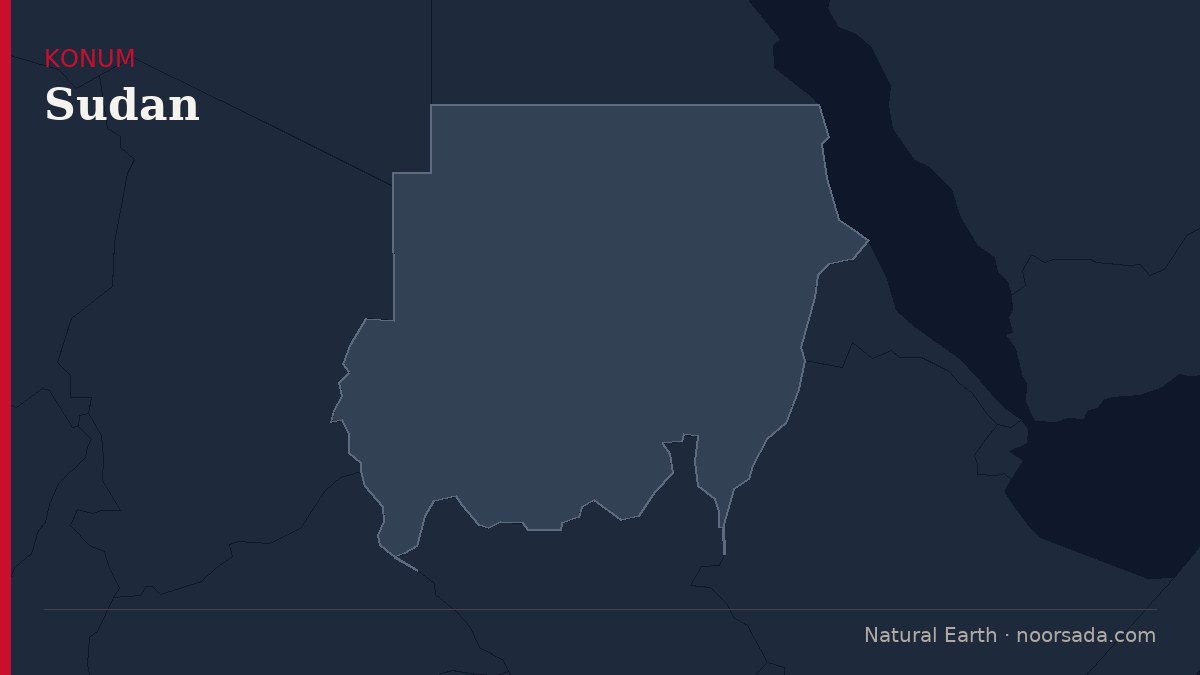
Verde Mohammed, who lives in the Masid neighborhood of Al-Hilaliya, lost five family members in two days. According to Asharq Al-Awsat's report, based on field visits in Al-Jazira and White Nile states, the family members came down with severe diarrhea after drinking water from a well a few steps from the house; no intravenous solution could be found, and Mohammed did not have the money the Rapid Support Forces (RSF) were demanding to allow people to leave the city.
Mohammed said she saw RSF members empty a bottle of liquid into the well, after which waterborne diarrhea cases spread. Awatif Ibrahim, from the same town, described the attack that followed Abu Akle Keykel's defection from the RSF to join the army as a "revenge campaign": "The forces demanded money from those trying to leave, and demanded that women hand over their jewelry under threat of killing one of their family members."
In Al-Hilaliya, Wadi al-Nura and Al-Karadis in White Nile state, people buried their dead in mass graves. Some of the graves Asharq Al-Awsat saw looked like unmarked sand mounds; on others were written the names of the dead and their dates of death. Ashar Mohammed said he lost 37 family members and buried 70 to 80 people in a single day. According to him, the bodies were carried on donkey-drawn carts and 8 to 10 bodies were placed in each grave. Tayyib al-Amin, a member of the local development committee, said the cemeteries were full, which is why a football pitch was set aside for burials.
A public meeting called the Al-Jazira Conference had announced that it documented 527 deaths in Al-Hilaliya between 21 October and 17 November 2024. On 15 November 2024, Reuters reported, citing a medical source, that tests on dozens of people who left Al-Hilaliya came back positive for cholera.
Two years later, the Sudan Human Rights Observatory accused the RSF of deliberately poisoning water sources in Al-Hilaliya and the surrounding villages and estimated the death toll at more than 1,900. The Observatory reported that samples taken from a well contained chemical indicators and that it had kept the samples for independent examination. The Observatory's total death toll and the cause of death of all the victims could not be independently verified.
On 5 June 2024, the RSF attacked Wadi al-Nura, which belongs to the 24 Al-Qurayshi area west of Al-Jazira; reports published after the attack said more than 100 people were killed. Two neighborhood residents, Balle Ahmed and Sabah al-Khair Awadallah, said residents buried more than 117 people on the first day and that part of the grounds of the Wadi al-Nura hospital was set aside for burials. After the attack on Al-Karadis in February 2025, Idris Hussein said that 27 of the bodies collected from the streets and fields the following day were placed in a single grave.
A spokesman for the "Tesis" government, Ahmed Teda Lisan, said he had no information about mass graves in areas controlled by the RSF; he stated that violations were committed by the army and allied forces and by elements within the RSF. A source at the Ministry of Health warned that reburying unidentified bodies without recording the burial site would make it harder for families to find their relatives.
After the RSF captured El Fasher in October 2025, Yale University's Humanitarian Research Lab identified indications of mass burials near the Saudi Hospital in satellite imagery; the World Health Organization reported that it had received reports that more than 460 patients and companions were killed at the hospital.
Sources — how we know this
- PrimaryAsharq Al-Awsat