This story is currently available in anglais only — a translation isn't ready yet.
The DMA's Second Wind: How Brussels is Quietly Rewriting Gulf Cloud Procurement
Markets shrugged upward today. They should have read the Commission's latest designation decisions instead.

The DAX closed at 25,389.10, up 0.83 percent. The euro held at 1.1641 against the dollar. Frankfurt's traders, as is their custom, were watching the wrong screen.
The more consequential text this week is not a price feed but a designation decision under Article 3 of Regulation (EU) 2022/1925 — the Digital Markets Act — and the parallel implementing acts the Commission has been issuing since the spring review cycle opened. The operative language matters, so let us start there. Article 3(1) designates an undertaking as a gatekeeper where it has "a significant impact on the internal market," operates a core platform service that is "an important gateway for business users to reach end users," and enjoys "an entrenched and durable position." The thresholds in 3(2) — €7.5 billion in Union turnover, 45 million monthly end users — are presumptive, not exhaustive. Article 3(8) lets the Commission designate qualitatively, without the numbers. That clause is the one being exercised now, and it is the clause that should interest Riyadh, Abu Dhabi, and Doha.
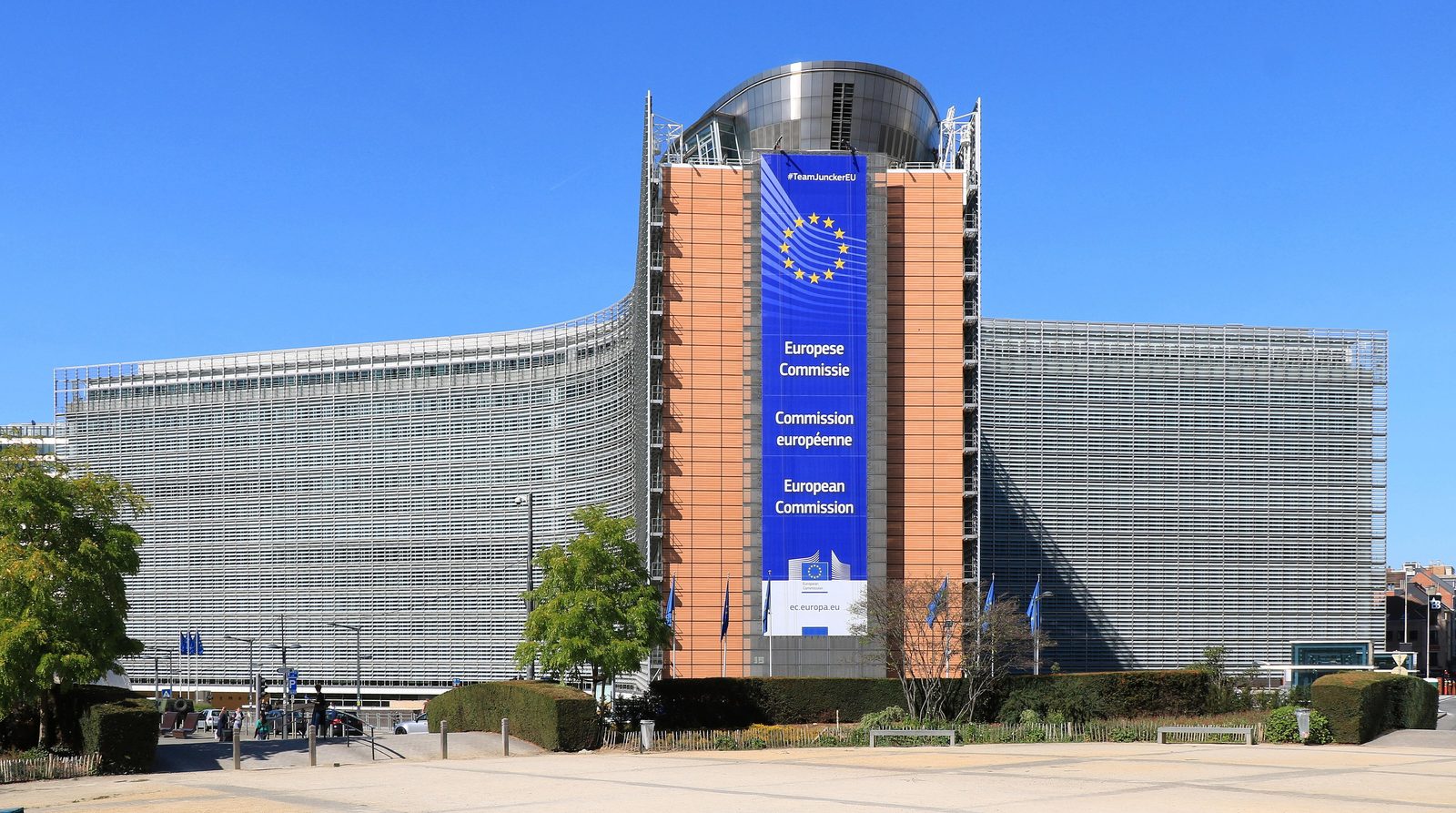
The institutional choreography here is worth getting right, because it has been mangled in coverage. The Commission proposed the expansion of qualitative designation in its 2025 review report. The Council, under the current presidency, did not amend the regulation — it cannot, mid-cycle — but it did issue conclusions in March endorsing a "robust and forward-looking" application. The Parliament's IMCO committee, which is not the homogeneous body external readers sometimes imagine, split along familiar lines: the EPP shadow rapporteur pushed for procedural guardrails, the Renew coordinator pushed for speed, and the Greens/EFA wanted cloud infrastructure folded in explicitly. The compromise text that emerged from the Berlaymont in early May is a Franco-German artefact with Dutch fingerprints. Paris secured the cloud language. Berlin secured the carve-out for industrial data spaces. The Hague extracted a transparency obligation on algorithmic recommender systems that, on paper, looks technical and, in practice, will be the most litigated provision of the lot.
Which brings us to enforcement, where regulations live or die. DG COMP's DMA unit has, by the most recent organigram, roughly 120 staff. The AI Office, sitting under DG CNECT, has fewer. To enforce qualitative designations against cloud and AI infrastructure providers — which is what the Commission has signalled it intends to do this autumn — that headcount needs to roughly double. The budget line exists in the 2026 draft. Whether Member States approve it in the next Coreper round is another matter; the frugal capitals are not in a generous mood, and the file is hostage to the broader MFF mid-term negotiation.
Now, the Gulf transmission, which is where most readers in this region should pay attention. The DMA does not stop at the Union's borders. Article 1(2) is explicit: it applies to core platform services "provided or offered by gatekeepers to business users established in the Union or end users established or located in the Union, irrespective of the place of establishment or residence of the gatekeepers." Translation: a Gulf sovereign wealth fund taking a strategic stake in a hyperscaler, or a national champion procuring cloud capacity from a designated provider, inherits the compliance perimeter. The procurement clauses in PIF's recent infrastructure tenders already reference DMA interoperability obligations. ADQ's tender documentation, I am told, will follow by Q3. This is not Brussels imposing on the Gulf; this is Gulf procurement officers reading the regulation correctly and pricing the risk.
The column writes itself from here, but let me resist the temptation. The honest assessment is that the DMA's second wind is real, that its enforcement apparatus is underbuilt, and that the gap between ambition and capacity will be filled — as it always is — by selective, headline-driven cases. Expect one large designation announcement before the summer recess. Expect it to involve a cloud provider. Expect the Gulf entities with cross-border exposure to receive their compliance letters not from Brussels directly but from their European counterparties, who will have read Article 1(2) and decided not to argue with it.
The DAX can keep climbing. The text, as ever, is the text.