This story is currently available in anglais only — a translation isn't ready yet.
Ukraine and Russia race to build sovereign satellite constellations
Himera put its first communications satellite in orbit on 1 October, while Moscow's Rassvet project targets a commercial launch in 2027.
ℹ️ Lecture par le navigateur · voix studio IA bientôt
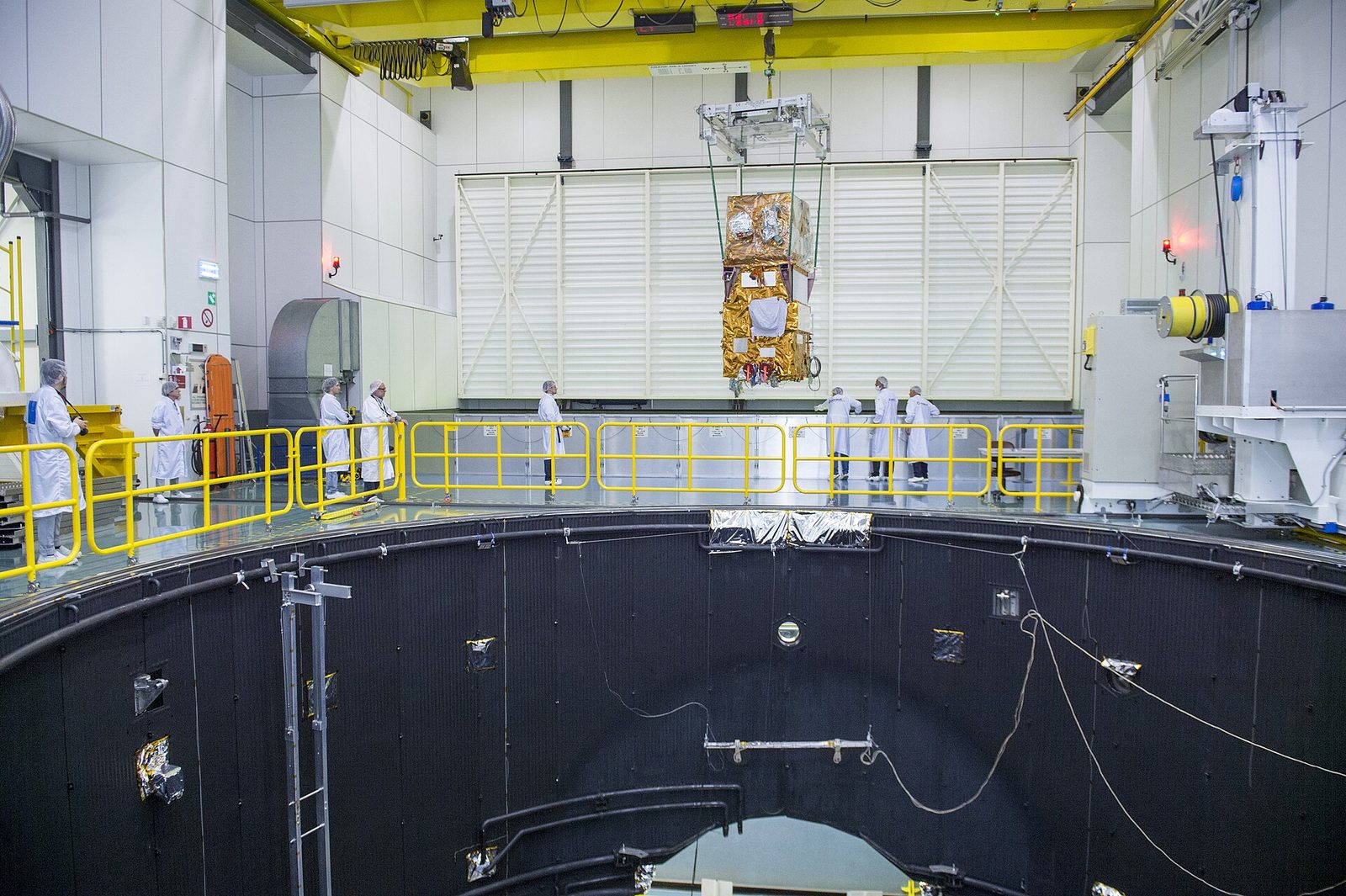
Ukrainian manufacturer Himera placed its first communications satellite, Obria Nano, in orbit on 1 October on a SpaceX Transporter 18 mission, built with Danish manufacturer GomSpace, to cut Ukraine's dependence on Starlink and its military variant Starshield.
Kyiv has suffered several recent setbacks with Starlink. Starshield terminals were throttled again this week, after an earlier episode in October, and the service remains blocked on Russian territory despite repeated requests from Kyiv. Ukrainian long-range drones carry inertial navigation systems, but without a connection they cannot follow mobile targets such as Russian Iskander launchers. Some 200,000 Starlink terminals have been acquired and used on the ground since the start of the invasion.
Himera, previously known for secure military radios, intends to build "a sovereign constellation for civil and military use", said chief executive and co-founder Misha Rudominsky, providing "additional communications infrastructure". The long-term aim is coverage of "the entire Ukrainian territory" rather than the whole globe, unlike Starlink.
"Developing a satellite from scratch can take about five years," Rudominsky said, which is why the first stage uses GomSpace's ready-to-use platform. The next twelve months will go on training teams. No later timetable has been given, and it is too early to say when the Ukrainian army could begin using the first terminals; Obria Nano remains a test.
On Monday the Ukrainian Parliament adopted a law creating space forces within the armed forces, partly to establish a "national secure satellite communications system" for security and defence.
Moscow is further along. When Starlink terminals used by the Russian army lost connection in February, units on the front were disorganised, and the episode appears to have accelerated the Rassvet ("Aurora") project. A Soyuz-2.1b launched the first 16 satellites from the Plessetsk military cosmodrome in March; 16 more followed in July, two of which fell back after failing to reach orbit. Commercial launch is planned for 2027.
Rassvet is officially civil, run by the private company Bureau 1440, which sits inside X-Holding, a conglomerate under US sanctions that also oversees the surveillance software supplier Citadel. Ukrainian military intelligence counts around fifty Russian and Belarusian companies in the project; KMZ, which makes optical equipment for the Russian army, has made facilities available.
The announced operational orbit is around 800 km, but only three craft currently approach that altitude, according to the Rassvet Tracker website, with the rest on a 500 km support orbit. Vitaly Evgorov, founder of the YouTube channel "Le Chat vert et l'espace", said the lower orbit could reduce the size and weight of ground terminals, "very useful for terminals on drones, when every gram counts". Rassvet remains a fragment of a constellation: a terminal waits for a satellite to pass into view, communicates for a few minutes, then switches.
Sources — how we know this
2 independent sources corroborated this
- PrimaryFrance Info
- CorroboratingAl Jazeera English