This story is currently available in anglais only — a translation isn't ready yet.
Wales still second-least competitive UK nation, index finds
The UK Competitiveness Index puts Blaenau Gwent bottom of 349 local authority areas and Wales on 85.6 against a UK average of 100, unchanged in relative terms since 1997.
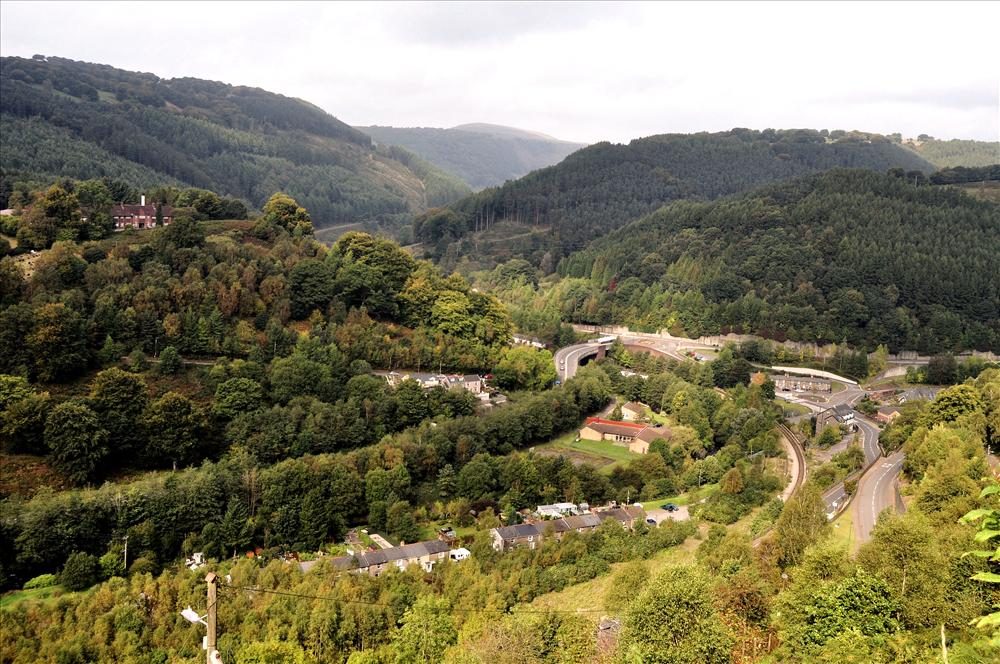
Wales remains the second least competitive part of the UK and is home to the worst-performing local authority area, according to the 2026 UK Competitiveness Index.
The index, launched in 2000 and led by academics at Cardiff University's City Region Co-Lab, Birmingham City University and Nottingham Trent University, ranks areas on ten input and output measures, including business start-up rates, the share of knowledge-based firms, employment rates, higher level qualifications and GVA per head.
Comparing 2026 with 1997 shows how little has changed. Wales was the second least competitive region of the UK in 1997, ahead only of the North East of England, and is in the same position now. Blaenau Gwent is ranked at the bottom of the 349 local authority areas assessed, as it was in 1997. Merthyr Tydfil is 347th and Rhondda Cynon Taf 341st.
Blaenau Gwent's score has risen from 68.3% of the UK average score in 1997 to 72.5%, and Caerphilly, ranked 325th, from 74.9% to 79.7%. In 1997 just one Welsh local authority, Monmouthshire, scored above the UK average; in 2026 just one, Cardiff, reaches it.
Wales scores 85.6 against the UK average of 100, down from 86.2 in 2022. London (114.9) and the South East (102.4) remain the only regions above the UK average.
Among 47 core cities, Cardiff is ranked 13th, Newport 31st with 89.6 and Swansea 41st with 85.1. Of all 349 local authority areas, Cardiff is the highest in Wales at 101st, followed by Monmouthshire at 137th and Flintshire at 158th. Of 47 local enterprise partnership areas and city regions, the Swansea Bay City Region — Neath Port Talbot, Swansea, Carmarthenshire and Pembrokeshire — is bottom with 83.1, Mid Wales is 46th with 84.0, North Wales 41st and the Cardiff Capital Region 37th, down from 88.8 to 87.9.
Report lead Professor Robert Huggins, director of the City Region Co-Lab at Cardiff University, said: "I take no pleasure in talking Wales down, but the evidence has to be faced." He added: "Policy has failed at every geographic level."
GVA per head in Wales was 72.2% of the UK average in 2023, the second lowest of the UK's nations and regions, and household income per head has fallen from 88% of the UK level at its peak in 2003 to 81% in 2023. Early post-devolution economic plans set the goal of raising GDP per head in Wales to 90% of the UK average by 2010; instead, it had fallen to 69% by 2008.
The report identifies a shortage of knowledge-intensive businesses as Wales' central weakness: they make up 8% of businesses in Swansea Bay, against a UK average of 22.7%. Wales also has the highest proportion of young people not in education, employment or training of any part of the UK, despite the Welsh Government having had a framework to reduce that number in place since 2013.
The report's forecasts point to widening gaps within Wales. Monmouthshire is forecast to have the fastest growth in GVA per capita in Wales at 1.6% a year, while Merthyr Tydfil has the weakest forecast of any locality in Britain, with GVA per capita falling by 0.9% a year.
Sources — how we know this
- PrimaryWalesOnline