This story is currently available in anglais only — a translation isn't ready yet.
Russia Fails to Win ITU Radio Regulations Board Seat — Places Go to Kazakhstan and Azerbaijan
At the elections in Doha, the Russian candidate received 58 votes against 111 for Azerbaijan and 70 for Kazakhstan; Moscow also did not enter the 48-member council.
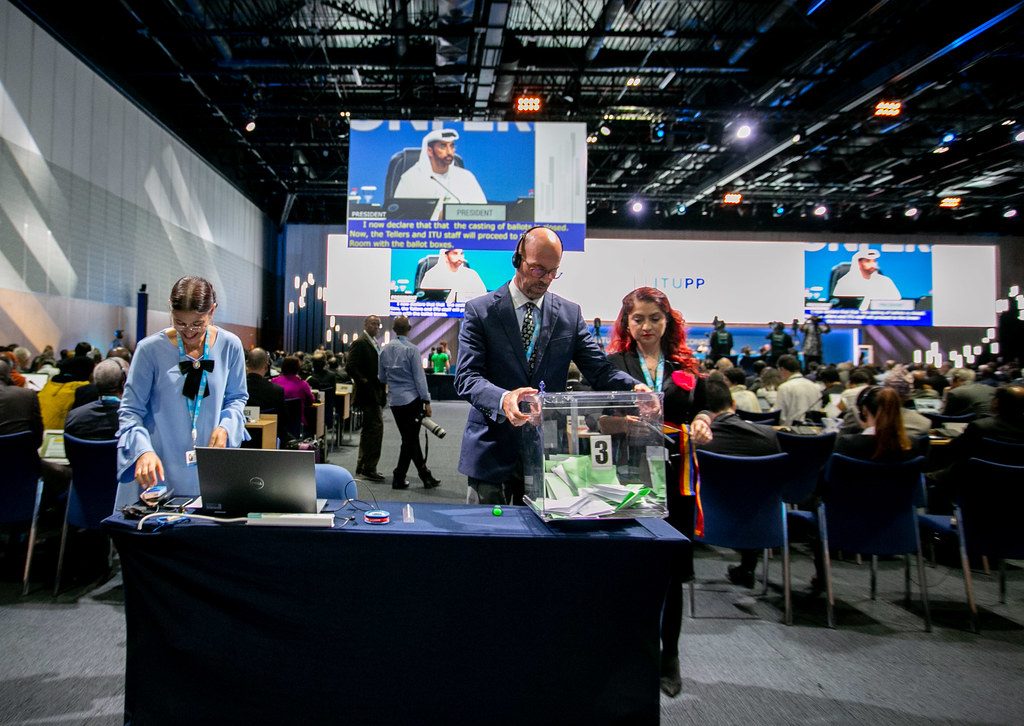
Russia did not obtain leadership posts at the International Telecommunication Union (ITU): at the elections in Doha, its candidate for the Radio Regulations Board received 58 votes, while the winning representatives of Azerbaijan and Kazakhstan took 111 and 70 votes respectively. Moscow also did not enter the 48-member council, which influences the agency's budget, strategy and administration.
As UN diplomats note, Moscow had counted on taking two leadership posts in the organization, which unites 194 member states, in order to weaken its international isolation over the war in Ukraine and gain more control over digital technologies. According to one of the diplomats, Moscow's chances are meanwhile growing: some countries want to normalize trade relations and security ties with Russia and are reluctant to openly oppose it at the UN.
Ukraine's Ambassador to the UN in Geneva, Yevhenii Tsymbaliuk, said after the vote: "Russia should stop its aggression, otherwise it will remain isolated from the main avenues of international policy." According to him, Russian attacks have caused more than $2.5 billion in damage to Ukraine's telecommunications infrastructure, not counting cyberattacks.
Western diplomats had expressed concerns before the vote that Russia's presence in the agency's leadership posts would look dubious, and that its influence on telecommunications policy is growing.
A year earlier, Russia failed to win a seat on the board of the World Health Organization, and in 2023 it did not muster the votes to return to the UN Human Rights Council. The American Doreen Bogdan-Martin was re-elected ITU Secretary-General at the meeting in Doha on Thursday.
The ITU, founded in 1865 to coordinate telegraph communications, allocates radio frequency spectrum and takes part in developing standards for AI and new technologies. The organization has previously supported complaints about interference from Russian satellite signals; a Lithuanian proposal to tighten measures against such attacks is under consideration. Russia's mission to the UN in Geneva declined to comment.
Sources — how we know this
- PrimaryThe Moscow Times