This story is currently available in anglais only — a translation isn't ready yet.
Iranian MP: Nuclear bomb is a 'popular demand' ahead of IAEA Board of Governors meeting
Deligani says Tehran must possess nuclear capability regardless of whether it is used, while an IAEA report warns of a lack of cooperation and the absence of inspections
ℹ️ Lecture par le navigateur · voix studio IA bientôt
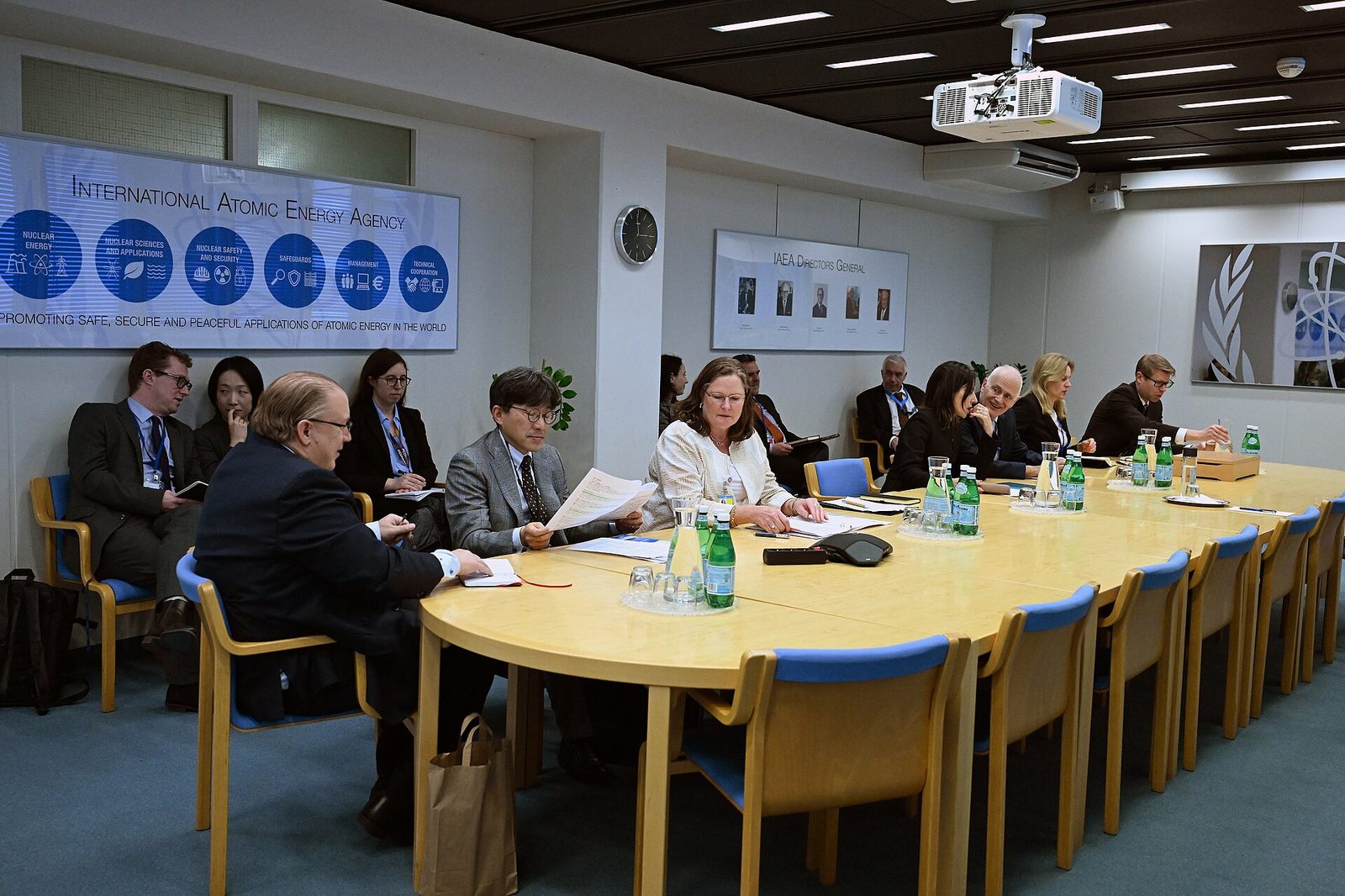
Hossein-Ali Haji Deligani, deputy head of the Article 90 Committee in Iran's Islamic Consultative Assembly, said on Saturday that building a nuclear bomb has become a 'popular demand' in Iran, days before a meeting of the IAEA Board of Governors to discuss Tehran's file.
Fars news agency quoted Deligani as saying: 'Today one of the people's demands is that Iran, in addition to its faith and its missiles, possess a nuclear bomb that it builds and owns.' He stressed that Tehran should possess this capability regardless of its intention to use it: 'We must possess this capability. As for whether it is used or not, that is a separate matter.' He argued that 'the enemy will not launch a nuclear attack on Iran' according to 'current assessments' based on the country's vast area and the scale of the consequences of such an attack.
The Article 90 Committee in the Iranian parliament is responsible for written complaints filed against the performance of the authorities and for responding to them.
Iran has not announced any official decision to change its nuclear doctrine, despite growing calls from lawmakers and citizens to reconsider its position if the war resumes.
Deligani's remarks came a day after the International Atomic Energy Agency announced that it cannot confirm that Tehran has not diverted nuclear material from peaceful purposes. The agency said in a confidential report that it is 'unable to draw a conclusion of the absence of diversion of declared nuclear material' from peaceful nuclear activities in Iran because of the lack of cooperation, and that it is 'increasingly concerned' about a uranium enrichment facility in Isfahan that Iran declared last year and has not allowed to be inspected.
IAEA Director General Rafael Grossi wrote: 'More than a year has passed since the agency lost continuity of knowledge of the stocks' previously declared of low-enriched uranium and high-enriched uranium enriched up to 60 percent U-235 at declared nuclear facilities affected by the June 2024 attacks, calling for the return of inspectors 'at maximum speed'.
Inspectors have not yet returned to the sites bombed by the United States and Israel in June 2024. The agency estimates that, until those attacks, Iran possessed 440.9 kilograms of uranium enriched up to 60 percent, a level a short step away from the roughly 90 percent needed for weapons, and sufficient material, if further enriched, for ten nuclear bombs.
Iranian Foreign Ministry spokesman Esmail Baqaei said on Monday that Tehran has not suspended its obligations under the safeguards agreement with the agency, and that it remains a party to the Non-Proliferation Treaty. Iran informed the agency that discussions on resuming inspections cannot resume amid 'a continuing, explicit and public series of threats from the President of the United States'.
Last Thursday, Iran's Assembly of Experts called for considering the country's withdrawal from the Non-Proliferation Treaty, and for reviewing the defense doctrine and building what it described as the necessary deterrence, considering this 'an unavoidable necessity' and 'a popular and national demand'. Assembly member and Expediency Discernment Council member Mohsen Araki had said two weeks ago that Iran should reconsider its membership in the treaty.
Sources — how we know this
- PrimaryAsharq Al-Awsat (EN)