EditorialVerified
This story is currently available in engelsk only — a translation isn't ready yet.
Hormuz as American territory: the sentence, and the week that produced it
A president says the strait will be annexed 'soon.' Walk back through the wires and you find a war logic already installed — and a gas pump quietly primed to explain it.
Hastighet:
ℹ️ Nettleserstemme · KI-studiostemme kommer snart
SA
Sherif Al-Mahdi
· 3 min read
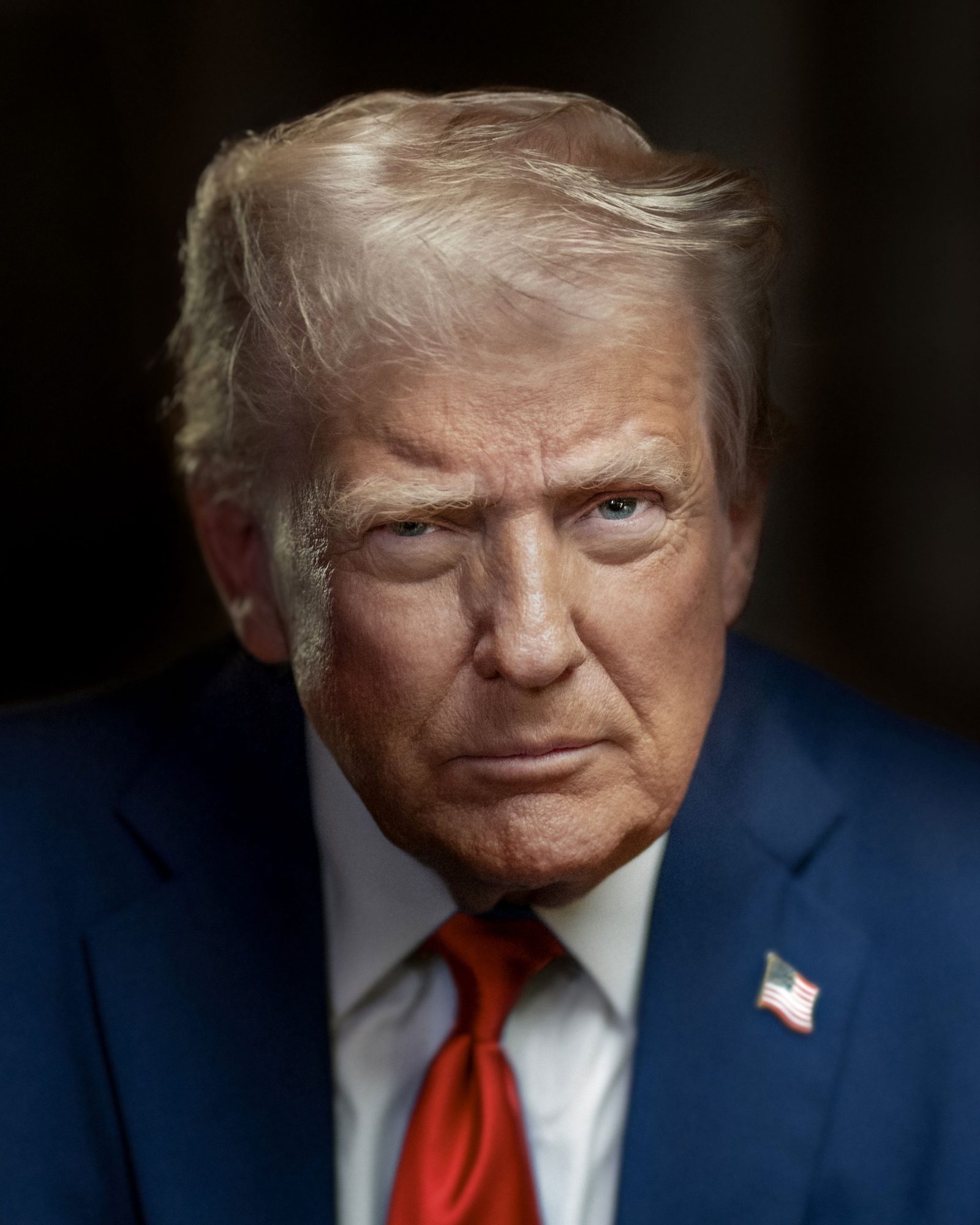
Saturday, mid-morning wires: the President of the United States tells reporters he will declare the Strait of Hormuz American territory "soon," once Iran is defeated. In the same breath he tells Americans to accept higher gasoline prices. Read the sentence twice. It is not a policy paper — it is a claim of sovereignty over the twenty-one nautical miles through which roughly a fifth of the world's oil moves, and an admission that the household is expected to pay for it at the pump. The two halves of that statement are the whole story.
Rewind to Friday. In Moscow, the Russian foreign minister receives reports that two American envoys may fly in to revive a stalled Ukraine track, and answers with a shrug dressed as diplomacy: Putin is ready to meet, but "the question is, what will they bring?" A foreign ministry that expects to be offered something is a foreign ministry that has read the American mood — a Washington that is simultaneously talking annexation in the Gulf and looking for an off-ramp in Europe is a Washington rearranging its fronts. Moscow is being asked, in code, whether it will stay out of the way further south.
Rewind to Thursday and earlier in the week: Paris publicly condemns Israeli seizures of Palestinian homes in the West Bank; Morocco reinforces the fence at Ceuta against another mass crossing; Gaza farmers rent half-dunam plots and rebuild greenhouses because the war economy has become the economy. None of these are the Hormuz story. All of them are the atmosphere in which the Hormuz sentence lands without producing an uproar. A region that has been absorbing shocks for two years hears "American territory" and does not, this morning, riot. That is itself a data point.
The backstage conversation — the one the wires do not carry — is in the finance ministries of the Gulf and in the shipping desks of Rotterdam and Singapore. It is not about whether the annexation is legal (it is not) or whether it will happen on any recognisable map (it will not). It is about whether the sentence itself changes the insurance quote on a VLCC transiting the strait next Tuesday, and whether the tanker owner asks for war-risk cover priced against a US-Iran open conflict rather than the current Houthi menu. That re-pricing does not need a treaty. It needs a headline, and it now has one.
Which brings us to a Cairo taxi driver filling up on the Corniche this weekend. He will not hear the word Hormuz. He will notice, in three weeks or six, that the ninety-five octane has moved again, that the microbus fare on his son's route to Helwan has followed, that his wife's cooking-gas cylinder is heavier on the household budget than last month. Egypt is a net energy importer at the margin; the subsidy math the finance ministry does every quarter is a direct function of the Brent curve, and the Brent curve is a direct function of sentences like the one uttered yesterday in Washington. The 45% renewables target Cairo restated this week — the pledge that is supposed to insulate the grid from exactly this kind of shock — is a 2028 promise. The pump is a Saturday problem.
⚡
Autonomous PickMarketplace
Energy Portfolio
Check your broker for the latest on energy stocks.
View Now →