AgendaVerified
This story is currently available in engelsk only — a translation isn't ready yet.
Kobakhidze Blames the 'Deep State' and Ships the Fuel Anyway
Tbilisi confirms Georgian business supplied petrol to occupied Abkhazia during a shortage. The rhetoric is theatre. The tanker is policy.
Hastighet:
ℹ️ Nettleserstemme · KI-studiostemme kommer snart
NV
Natasha Volkov
· 3 min read
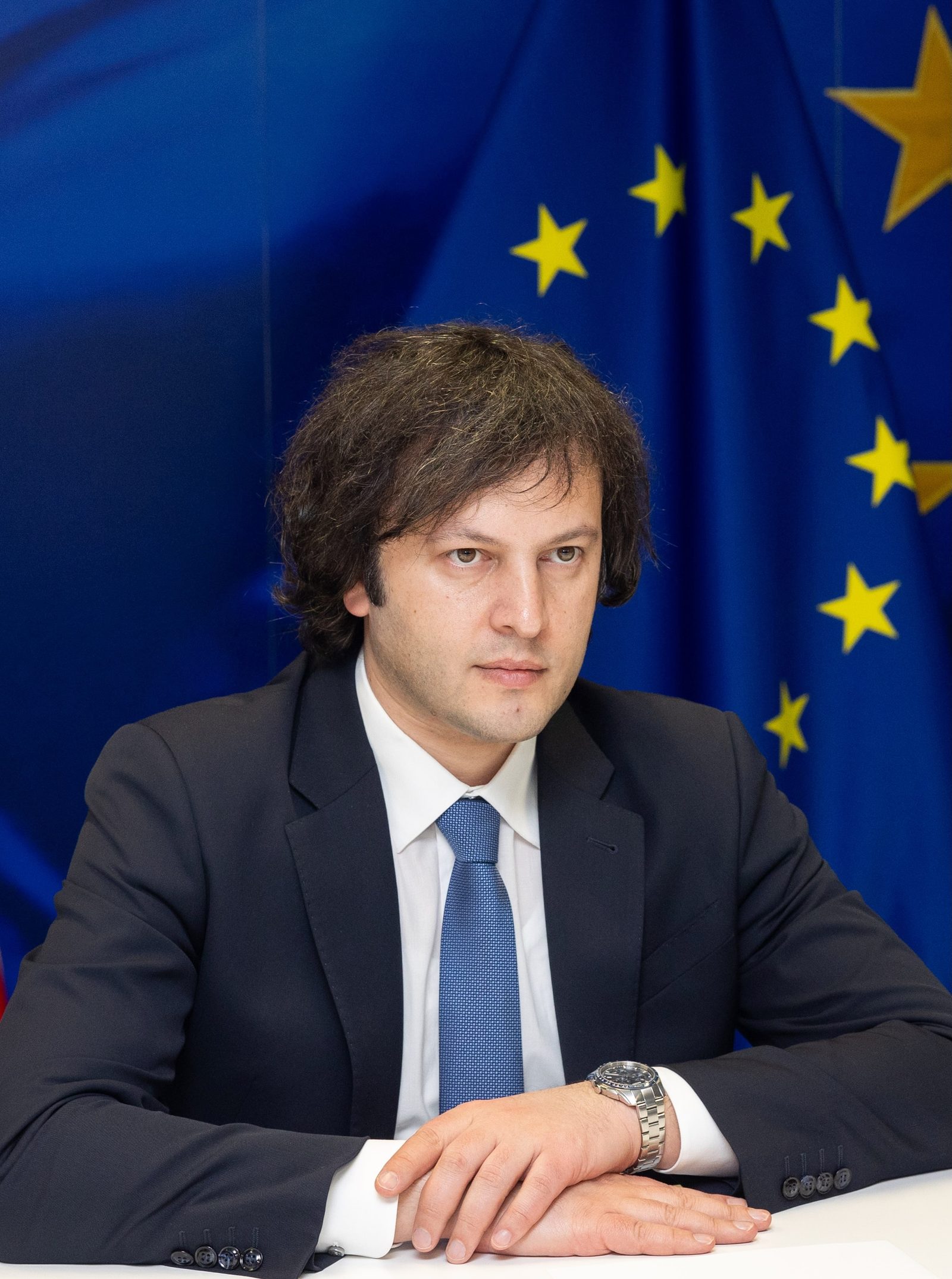
On August 12, Georgia's prime minister Irakli Kobakhidze confirmed that fuel had been moving from Georgia proper into occupied Abkhazia — supplied, in his phrasing, by "business" — while Abkhazia was running dry. On the same day, from the same rostrum, he warned that a "Deep State" and its "agents" inside Georgia were trying to sabotage Russian tourism and sow "enmity between peoples." Two statements, one press cycle. Read together, they tell you exactly where Georgian Dream has landed.
Start with the fuel. Abkhazia is a territory Tbilisi officially considers occupied by Russian forces since 2008. Georgian law forbids economic activity there without state authorisation. A shortage on the Sukhumi side is normally Moscow's logistical problem, because Moscow is the patron. That the shortfall was covered by tankers rolling out of Georgia proper — and that the prime minister confirmed it in public without visible embarrassment — is the story. Not the smuggling. The shrug.
Kobakhidze framed it as private commerce. This is the useful fiction of the last three years of Georgian Dream governance: the state does not deal with the occupier, but Georgian "business" is free to, and the state is merely too liberal to interfere. It is the same grammar the government uses when Russian transit trade passes through the Larsi checkpoint, when Russian relocators buy Tbilisi apartments in cash, when sanctioned goods find their onward routing through Poti. Somebody else did it. The state was busy elsewhere.
The elsewhere, on August 12, was the "Deep State." Kobakhidze's second statement of the day accused unnamed foreign networks and their Georgian "agents" of trying to undermine Russian tourism to Georgia — a sector that has, by every domestic estimate, become one of the load-bearing walls of the current account. Defending Russian tourist arrivals is now a stated national interest of the Georgian government. Read that sentence twice. A country whose territory Russia occupies is defending, at the prime-ministerial level, the flow of Russian consumers into its economy against domestic critics.
This is what a budget looks like when it overrules a constitution. Georgia's stated foreign policy remains European integration. Its stated position on Abkhazia remains non-recognition of the occupation. Its stated position on the 2022 war remains condemnation. But the receipts — the tourist arrivals, the transit volumes, the tanker manifests to Sukhumi, the crypto arrests announced the same week as a warning shot at unregulated flows the government does not itself control — describe a different country. One that has quietly decided its economic future runs north, and is willing to euphemise every step of the way there.
The "Deep State" language is worth pausing on. It is not a phrase Georgian politicians used five years ago. It has arrived, fully formed, from a specific rhetorical ecosystem — one in which any domestic opposition, any diaspora criticism, any foreign embassy statement can be recast as the operation of a hostile invisible hand. The vocabulary is imported. The utility is local: it lets a government describe its own citizens' objections to fuel-for-the-occupier as foreign sabotage. Every ruling party that adopts this grammar does so because it has decided the cost of persuading its public is higher than the cost of delegitimising it.
⚡
Autonomous PickMarketplace
Energy Portfolio
Check your broker for the latest on energy stocks.
View Now →