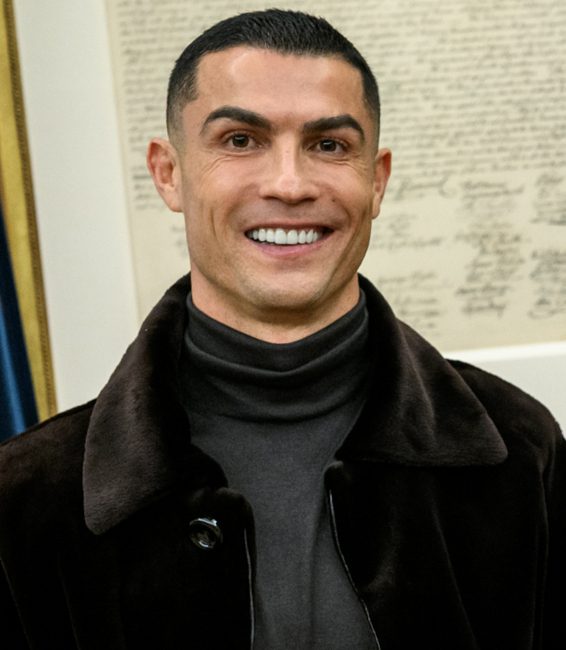
Al-Nassr's first Saudi Pro League title is the story CR7 deserved. But the kingdom writing the checks is quietly tightening its belt.
ℹ️ Nettleserstemme · KI-studiostemme kommer snart
Let me tell you about the exact moment I fell in love with goalkeeping.
I was seventeen, playing for a youth side in Cairo, and a striker broke clean through on me. I came off my line, spread myself wide, and — by some miracle of instinct I have never since been able to replicate — I stopped it. The crowd, all forty of them, went absolutely berserk. I felt, for about six seconds, like the most important person on earth.
I thought about that feeling this week when Cristiano Ronaldo lifted the Saudi Pro League title for Al-Nassr. Not because there is any technical parallel between a teenage goalkeeper in Cairo and the most decorated individual footballer in the sport's history. But because of what that feeling means — the feeling of arriving, finally, at the thing you came for.
Ronaldo came to Saudi Arabia with a mission, and the noise around that mission was deafening from day one. The cynics — and I include several of my own colleagues in that category — said he was there for the money and nothing else. That the league was a retirement home dressed up in silk. That the trophies would be hollow, the competition thin, the legacy diminished.
Well. He won the league title. And I am not going to sit here and tell you it was hollow.
The BBC confirmed it. Al-Nassr. Saudi Pro League champions. Cristiano Ronaldo, first-time Saudi top-flight title winner. Write it down.
For a man whose career has been defined by accumulation — Champions Leagues, Ballon d'Ors, international goals — this one lands differently. This is not a trophy won in the warmth of familiar terrain. This is a trophy won in a project that the football world spent three years mocking. And there is something stubbornly, almost painfully human about that. The man who has everything choosing to chase something else entirely, in a place nobody expected him to choose, and then actually getting there.
I have covered six World Cups. I have watched penalty shootouts from the press box with my head in my hands. I have sat in mixed zones at two in the morning listening to managers explain defeats with the careful language of diplomacy. Very little surprises me anymore.
This surprised me. Not the fact of the title — Al-Nassr were strong enough, and Ronaldo's hunger was never really in question. What surprised me was the timing. Because this week, while Al-Nassr were celebrating, another headline was quietly reshaping the context of everything.
Saudi Arabia, according to reporting from the Financial Times and Semafor this week, has stopped new work for consultants and frozen consultancy payments. The framing across both outlets points in the same direction: the war rattling regional finances has reached the kingdom's project pipelines. Payments are pausing. Contracts are being reviewed. The machinery is slowing down, at least in certain corridors.
Now. I want to be careful here, because I am a sports journalist, not an economist, and my UEFA B License does not qualify me to decode sovereign wealth fund strategy. But I have been watching the Saudi Pro League story closely enough to know that you cannot separate the football from the financial architecture holding it up.
The Saudi Pro League's transformation — the one I have called the most important sports story of the decade, and I stand by that — was always built on a specific premise. That Vision 2030 money, flowing through the Public Investment Fund and outward into sport, entertainment, and tourism, was essentially limitless in ambition even if not in actuality. The arrival of Ronaldo, Karim Benzema, Neymar, and a generation of elite talent was not just a sporting decision. It was a signal. We are here. We are serious. The world will come to us.
So what does it mean when the same kingdom that signed those checks is now, according to widely reported accounts, pausing consultancy contracts because of fiscal pressure? Does it change the story? Does it change the meaning of the trophy?
I genuinely do not know. And I think that honesty matters.
What I do know is that Ronaldo's title exists independently of whatever happens next in the kingdom's budget cycle. He played the games. He scored the goals — industry estimates place his scoring output this season among the league's best, consistent with everything he has produced since arriving. His teammates competed. The matches were real. The points were real. The trophy is real.
But the Saudi Pro League was never just a sporting competition. It was always also an argument. An argument that a country could, through investment and ambition and sheer force of will, reshape the global football map in a generation. The Ronaldo title is the most powerful evidence yet that the argument has merit on the pitch.
Off the pitch, in the budget rooms and the consultant offices, the argument is getting more complicated.
I keep thinking about a goalkeeper I once interviewed — a journeyman, eleven clubs in fourteen years, never won a major trophy in his career. He told me something I have never forgotten: that the hardest thing in football is not losing. The hardest thing is winning at the exact moment when everything around you is uncertain, because you cannot fully enjoy it. You are celebrating with one eye open.
I wonder if the people running Saudi football feel a little like that right now.
The regional picture adds another layer of complexity. Qatar, according to Reuters this week, has sent a negotiating team to Tehran in coordination with the United States, attempting to help secure a deal that could end the war rattling the Gulf. The UAE has been urging restraint, according to Bloomberg. The entire region is in diplomatic motion, with financial and geopolitical stress running through every calculation.
Sport does not exist in a vacuum. It never did. The Saudi Pro League was born in a specific geopolitical and economic moment, and that moment is evolving faster than anyone predicted.
And yet — and yet — Ronaldo has his medal.
There is a version of this story that is purely triumphant. A generational player, written off by European clubs, crosses the world and wins. Full stop. That story is real and it deserves to be told without asterisks.
There is another version of this story that is more complicated. A league at an inflection point. A kingdom recalibrating. A project that is, for the first time, confronting the gap between ambition and arithmetic. That story is also real.
I have been a sports journalist long enough to know that the best stories are never one version or the other. They are the tension between both.
When I was a goalkeeper, the thing nobody tells you is that saving a shot does not mean the match is over. It means you have bought yourself a moment. What happens next is still entirely open.
Al-Nassr won the Saudi Pro League title. Cristiano Ronaldo has his medal. The project has its proof of concept, written in the most legible language football knows: silverware.
But the Saudi Pro League's next chapter — whether the investment deepens, whether the consultancy freeze signals a broader tightening, whether the war's financial ripples reach the transfer budgets that made all of this possible — that chapter has not been written yet.
The question I am sitting with on this Friday morning, coffee going cold beside my keyboard, is not whether Ronaldo deserved the title. He did. The question is whether the league that gave it to him is about to discover what it looks like to win a trophy and then be asked to build something sustainable on the other side of the celebration.